Philippines Fire Pump Requirements Guide
Philippines Fire Pump Requirements Explained
When I look at fire protection in commercial and industrial buildings, I see one truth right away: the fire pump is not a luxury, and it is definitely not a decorative box in the basement. It is a core part of life safety. In the Philippines, the requirements for fire pumps follow the Philippines requirements for fire protection, building safety, and system performance, especially for major properties like factories, warehouses, malls, office towers, hospitals, and high rise facilities. I will walk you through what matters, why it matters, and how these rules keep a building ready when pressure drops and the stakes climb fast.
And yes, this is the part where the boring technical stuff suddenly becomes very important. Like the quiet side character in a movie who saves the whole city in the final act.
What the Philippines requirements expect from a fire pump system
I always start with the purpose. A fire pump must supply enough water pressure and flow to support sprinkler systems, standpipes, and other fire lines during an emergency. In the Philippines, the fire pump setup must match the building size, water demand, and fire protection design. For large commercial and industrial sites, the system usually needs to support the worst case fire scenario in the building, not the easy one. Because fire, as it turns out, does not care about our optimistic planning.
In practice, this means the pump must:
- deliver the required water pressure at the farthest and highest point
- work with the approved fire protection layout
- connect to a reliable water source
- include controls, alarms, and power support
- allow regular testing and maintenance
Also, the system must fit the building type. A warehouse with tall racking needs a different setup from a high rise office tower. So, I never treat fire pump sizing like a one size fits all shirt from a mall kiosk. It rarely ends well.
How I size and choose the right pump
When I size a fire pump, I look at the total demand from the sprinkler and standpipe system, plus any special fire hazard load. Then I check the available water supply and pressure loss across the piping. After that, I confirm that the pump can maintain the required flow at the needed pressure. This step matters because an undersized pump will fail when pressure falls, while an oversized one can create other problems. Either way, nobody wins.
The main pump types often used in commercial and industrial buildings include:
- Electric fire pumps for steady power and simple operation
- Diesel fire pumps for backup when utility power fails
- Jockey pumps to hold system pressure and reduce unnecessary main pump starts
Most larger sites use a full set with a main pump, a backup pump, and a jockey pump. That layer of support gives the system a better shot at working under stress. Think of it like a superhero team, but with more steel, less spandex.
Fire pump room and installation rules I always check
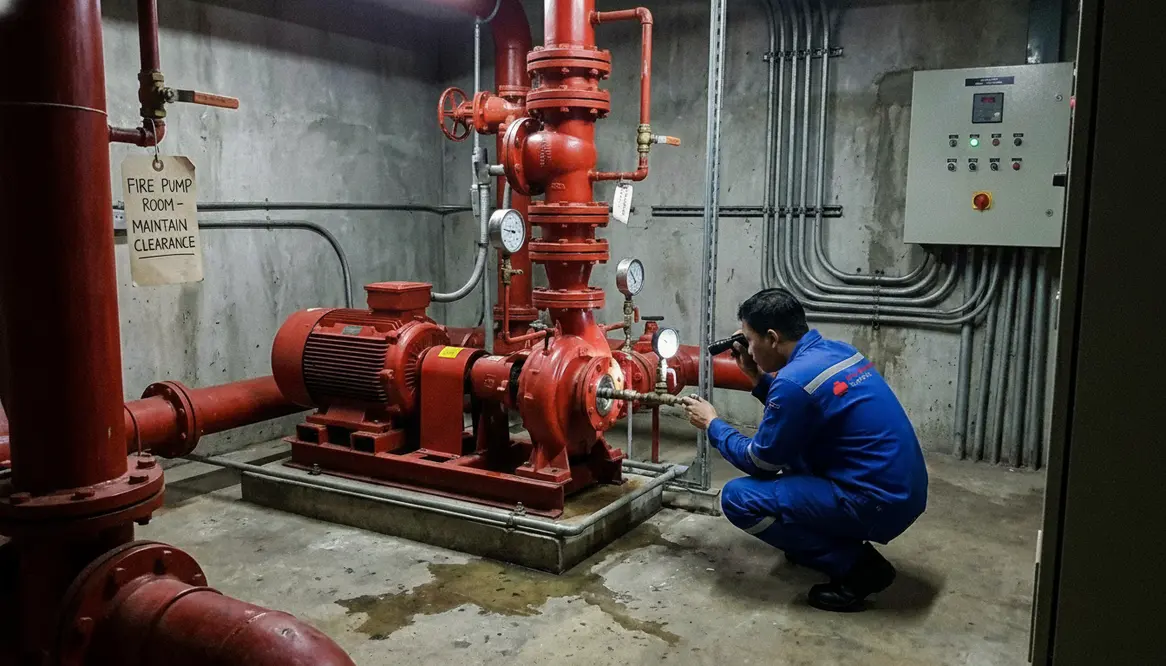
The pump room is just as important as the pump itself. If the room gets flooded, overheats, or becomes hard to access, the system loses reliability fast. For that reason, I check room location, ventilation, drainage, lighting, and access. The space must stay dry, secure, and easy to reach for fire personnel and maintenance crews.
Here are the basic points I look for:
| Item | What I check |
| Room access | Clear entry for testing, repair, and emergency response |
| Ventilation | Enough air to protect the pump and engine from heat buildup |
| Drainage | Quick water removal to avoid damage and downtime |
| Power supply | Reliable electrical service and backup where needed |
| Protection | Safe layout, proper separation, and control access |
In addition, the installation must support easy inspection. If a technician needs to perform a small check, the design should not feel like a puzzle from an action thriller.
Why testing and maintenance keep the system ready
A fire pump that sits untouched is not a fire pump. It is a very expensive promise. That is why testing matters so much under the Philippines requirements. Regular flow tests, pressure checks, controller inspection, and engine start tests help confirm that the system still performs as designed.
I also recommend tracking fuel levels for diesel units, checking suction conditions, and confirming that valves stay in the correct position. Then, I review alarms and power transfer functions. These steps sound basic, but basic is what keeps a system dependable. During a fire event, there is no time for a dramatic reboot sequence like in a sci fi movie.
Philippines fire pump requirements for major buildings and facilities
For large commercial and industrial properties, the rules become more serious because the risk grows with the building size and use. A multi level office tower, production plant, shopping mall, or logistics hub needs a fire pump design that supports high demand and long piping runs. I always look at code compliance, local fire authority approval, and the fire protection plan as one system, not separate pieces.
The best results usually come from early planning. When engineers, building owners, and fire protection specialists work together at the start, they avoid costly changes later. That matters because retrofits can eat time, money, and patience. And patience, like coffee, has limits.
If you want a deeper technical breakdown for large facilities, I suggest reviewing commercial fire pump solutions for the Philippines as part of your planning process. It helps keep the focus on the right buildings, the right system, and the right level of protection.
How the Philippines requirements guide real projects
On real jobs, the Philippines requirements influence everything from the incoming water main size to where the pump room door lands on the floor plan. They affect electrical capacity, generator sizing, fuel storage, and even traffic flow around the building because fire truck access and hydrant locations tie into the overall fire protection strategy.
That is why I like to see the fire pump design appear early in the project conversation, not as a late afterthought squeezed into the leftover basement space. When the pump, tank, and distribution piping are planned together, it is easier to meet the Philippines requirements without rewriting half the project drawings.
FAQ
Conclusion
If I want a fire pump system to protect a major property in the Philippines, I plan it carefully, size it correctly, and maintain it without excuses. That is the real path to compliance and safety. If your building needs a reliable fire pump design or a better grasp of the Philippines requirements, now is the time to act. Review your system, speak with a qualified specialist, and make sure your facility is ready before it ever has to prove itself.