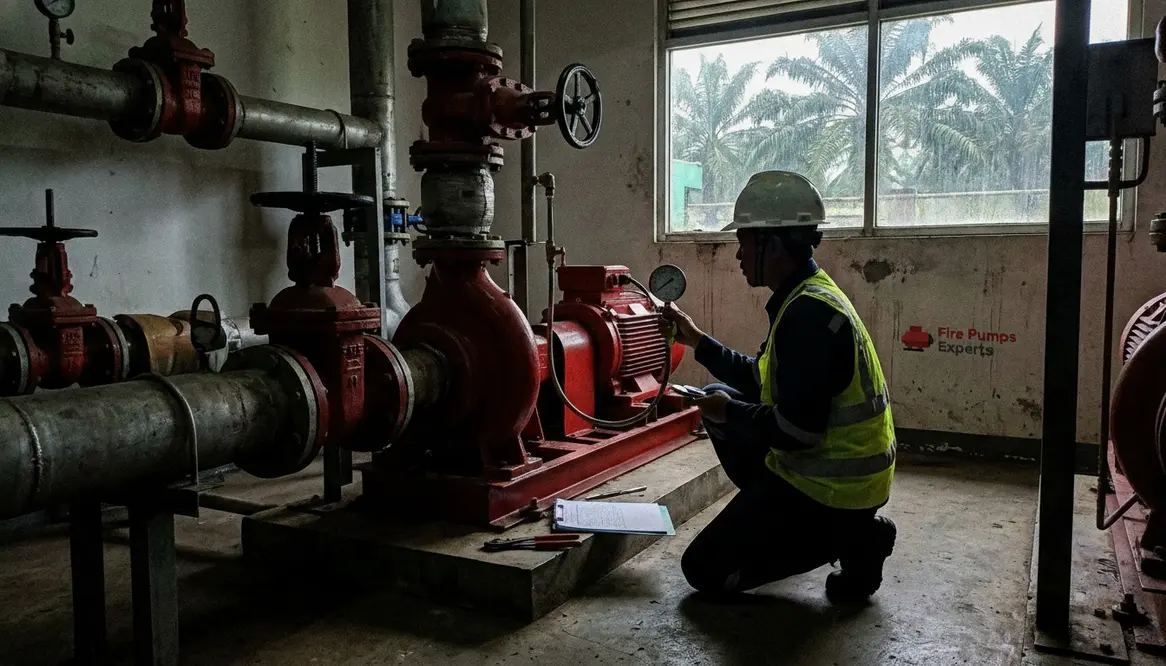
Indonesia Fire Pump Testing and Maintenance Guide
Indonesia fire pump testing for commercial and industrial facilities is not a formality. It is the backbone of real-world fire protection when the alarm sounds and the system has to perform without hesitation.
Indonesia Fire Pump Testing and Maintenance Guide for Commercial and Industrial Facilities
When I talk about Indonesia testing for fire pumps, I am talking about more than a checkbox on a safety form. I am talking about the heartbeat of a commercial building, industrial site, or major property when the alarm sounds and nobody has time for drama. In Indonesia, where large facilities face strict safety needs and harsh operating conditions, fire pump testing and maintenance keep sprinkler systems ready for the moment that matters. I have seen too many systems look perfect on paper and then act like a sleepy side character when pressure drops. That is why this guide matters.
For facility teams, regular fire pump care supports code compliance, reduces surprise failures, and helps protect people, inventory, and expensive equipment. So, let me walk through the process in a clear, useful way.
How I approach fire pump testing in Indonesia
I always start with the basics: confirm the pump type, check the system layout, and review the last service record. Then I look at the driver, the suction source, the controller, and the discharge line. This first pass helps me spot weak points before the actual test begins. After that, I run the pump under real conditions so I can see how it behaves under load, not just how it looks with the lights on and everyone acting confident.
In Indonesia testing, I focus on three core goals:
- to confirm the pump starts when needed
- to verify it reaches the right pressure and flow
- to make sure it keeps performing without unstable vibration, leaks, or overheating
That is the full picture. Not glamorous, sure. But neither is a flooded plant room, and nobody ever said safety work was going to be a Netflix special.
What to check during fire pump testing
Here is where I get practical. A proper test should not rely on one quick glance and a nod from across the room. Instead, I use a structured check that covers the system from one end to the other.
Key inspection and performance checks
Electrical fire pump
- Check voltage stability and supply capacity.
- Verify controller alarms and event history.
- Measure motor current during start and run.
- Confirm automatic start function from pressure drop.
Diesel fire pump
- Check fuel level, quality, and fuel line condition.
- Verify battery charge, terminals, and cables.
- Inspect engine oil, filters, and cooling water.
- Observe crank performance and start-up time.
Pressure behavior
- Watch suction and discharge readings at start-up.
- Confirm stable pressure during steady run.
- Check for pressure spikes at shutdown.
- Compare readings with design expectations.
Mechanical condition
- Listen for odd noise or grinding.
- Inspect seals and couplings.
- Look for leaks on casing and piping.
- Feel for excess vibration at bearings and base.
Control system
- Confirm pressure switches and sensing lines.
- Check signal lights, annunciators, and gauges.
- Test manual start and stop controls.
- Verify transfer from main to standby power where provided.
Also, I always inspect the water supply. A pump can be strong, but if the source is weak, the whole setup still stumbles. It is a bit like giving Batman a bicycle. Strong effort, poor outcome.
How I handle fire pump maintenance on a schedule
Testing tells me how the pump performs today. Maintenance tells me whether it will still perform next month, next quarter, and during the kind of emergency that nobody schedules politely.
I split maintenance into daily, weekly, monthly, and annual tasks. Daily checks may include room condition, fuel, and visible leaks. Weekly work often includes auto start checks and controller review. Monthly service usually covers operational testing, record review, and basic cleaning. Annual maintenance should include deeper inspection of the pump, driver, alignment, battery health, valve condition, and the water supply path.
Environmental stress in Indonesian facilities
Because many commercial and industrial sites in Indonesia run hard and long, I also watch for corrosion, heat, dust, and humidity. These conditions can age equipment faster than the calendar says they should. So, I pay attention to pump room ventilation, pipe condition, and any sign that moisture is sneaking in like a bad sequel nobody asked for.
Why documentation matters for compliance and risk control
I never treat records as paperwork for the sake of paperwork. I treat them as proof that the system received care. Good logs show test dates, readings, faults found, repairs made, parts replaced, and the name of the person who handled the work. That history helps me spot patterns before they turn into failures.
For facility managers, documentation also helps during audits, insurer reviews, and internal safety checks. If a pump fails and the records are thin, the problem grows fast. However, when the logs are clear, I can trace the issue, fix it faster, and show that the site took fire protection seriously.
For teams comparing service options, I recommend reviewing a trusted fire pump testing and maintenance service for commercial facilities in Indonesia so the work matches the size and risk level of the property. A well-documented Indonesia testing program keeps everyone honest, from technicians to insurers to local authorities.
If you need a reference point for technical standards and best practices, you can see examples of guidance at https://firepumps.org, then adapt those expectations to local Indonesian regulations and site conditions.
Common problems I find in commercial and industrial sites
Every site has its own personality, but the same troublemakers show up again and again. I often find low battery power on diesel units, dirty strainers, worn seals, wrong pressure settings, loose fittings, and alarm faults that no one noticed because the room stayed quiet. Quiet rooms feel safe. They can also hide expensive problems. Nature is rude like that.
Why postponing maintenance backfires
I also see plants and major buildings delay service until a fault appears. That approach usually costs more later. Preventive work keeps the system ready and lowers the chance of a full shutdown or emergency repair. When Indonesia testing is treated as a structured routine instead of a crisis response, pumps last longer, budgets stretch further, and fire events stay less dramatic.
FAQ: Indonesia fire pump testing and maintenance
Conclusion
If you manage a commercial building, industrial plant, or major property in Indonesia, I want you to treat fire pump care as a core safety task, not an afterthought. Regular Indonesia testing, smart maintenance, and clean records keep your system ready when the pressure rises. If you want fewer surprises, better compliance, and stronger protection for your site, now is the time to schedule a full fire pump review and keep your facility one step ahead.