Indonesia Fire Pump Requirements Guide
A practical look at how Indonesia requirements shape safe, reliable fire pump systems for commercial and industrial properties.
When I talk about Indonesia requirements for fire pumps, I focus on one thing first: keeping commercial and industrial buildings ready when fire shows up uninvited. In this space, the rules are not there for decoration, like a fancy hat at a board meeting. They exist to protect people, property, and business continuity. So, whether I am looking at a factory, warehouse, mall, hotel, or high rise, I treat the fire pump as the heart of the fire protection system. If that heart fails, the whole system starts acting like a superhero with a flat battery.
In short, if the pump is weak, slow, or unreliable, every downstream piece of protection is just pretending to be ready. That is why Indonesia requirements matter: they push building owners to think about flow, pressure, backup power, and long-term reliability instead of just ticking a box on a drawing set.
What I check first in Indonesia fire pump requirements
I always begin with the building type and fire risk. That matters because Indonesia fire pump requirements depend on the size of the property, the hazard level, and the sprinkler or hydrant system it supports. For commercial and industrial facilities, I look at the water demand, the pressure needed, and how long the system must keep running during an emergency.
In practice, I want the fire pump to support the full system without losing pressure. That means I review the pump capacity, the suction source, the discharge pressure, and the backup power setup. I also check whether the design matches local fire safety rules and accepted engineering standards. If the pump cannot deliver the required flow at the required pressure, then the whole setup is just expensive metal taking a nap.
Core checklist before I trust a fire pump
- Correct pump size for the system demand
- A reliable water source with enough volume
- Working jockey pump support for small pressure drops
- Backup power for emergency operation
- Proper control panel and alarm signals
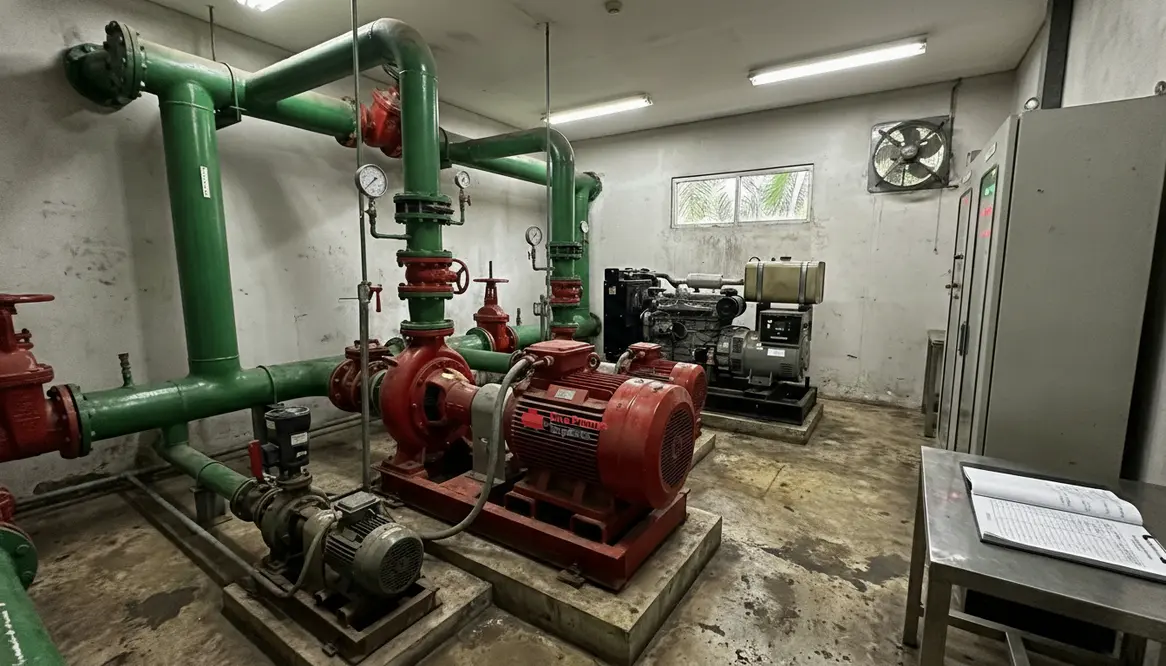
Also, I make sure the fire pump room has enough space, ventilation, and safe access. A cramped pump room is a bad idea. It turns maintenance into a scavenger hunt, and nobody wants that during a fire inspection.
How I explain fire pump setup for commercial buildings
For commercial buildings, I keep the setup simple but strict. The system usually includes a main fire pump, a jockey pump, and a backup pump or power source. Each part has a job. The jockey pump handles small pressure loss. The main pump kicks in when the system demands more water. Meanwhile, the backup source keeps the pump alive if the main power fails. That is the kind of teamwork I like. Think of it as the fire protection version of a well trained band, not a solo act going off key.
In most projects, I also look at the piping layout and valve arrangement. The piping must support the right flow with low loss. Valves must stay accessible. In addition, I check the pump controller, pressure switches, and test connections. These items may look small, but they help the system work fast when every second matters.
If I am working with a large property, I also compare the fire pump design with the sprinkler and hydrant demand together. That is important because a building may need both systems at the same time. And yes, fires do not politely choose one system at a time. They are rude like that.
What I verify for industrial facilities and major properties
Industrial sites need a tougher review. I do not only think about building size. I also think about process risks, stored materials, and whether the facility can keep operating after a fire event. So, Indonesia requirements for industrial fire pumps often push me to check higher flow needs, stronger water supply planning, and better redundancy.
Key focus areas in higher-risk sites
- Higher hazard areas that need more water
- Separate zones that may need different protection
- Longer running time for critical operations
- Reliable fuel or power backup for endurance
- Routine inspection and test plans for uptime
For major property buildings, such as hospitals, malls, and office towers, I also look at life safety priorities. In those places, the fire pump must support evacuation, smoke control coordination, and sprinkler response. So, the pump is not just a machine. It is part of a bigger safety story.
Quick view of what I focus on
| Area | What I check |
| Water supply | Enough volume, stable pressure, and proper source |
| Pump room | Access, cooling, drainage, and safety space |
| Power backup | Generator or secondary source for failure protection |
| System match | Sprinkler, hydrant, and fire demand alignment |
How I handle testing, inspection, and compliance
I always treat testing like a promise, not a paperwork exercise. A fire pump can look perfect on paper and still fail in the field. That is why I focus on periodic flow tests, pressure checks, controller checks, and alarm verification. If the system does not perform under test, I do not trust it in an emergency. Simple as that.
Compliance matters too. I review local fire rules, installation standards, and maintenance records. I also want clear logs that show the pump has been inspected and tested on schedule. Without records, a system may look fine until the day someone asks, “When was this last checked?” and the room goes silent like a suspense movie.
If the project needs deeper guidance, I would point facility owners toward a trusted resource such as commercial fire pump solutions for major properties. That kind of support helps teams stay aligned with practical design, testing, and service needs while staying inside Indonesia requirements for real-world performance.
FAQ
My final take on Indonesia fire pump requirements
If I sum it up, I see fire pump compliance as a must for commercial and industrial safety, not a nice extra. The right design, testing, and maintenance keep the system ready when it matters most. So, if you manage a major property or industrial site, I suggest you review your fire pump setup now, not after a problem. Reach out, check your system, and make sure your protection can do its job when the alarm starts singing.