New Zealand Commercial Fire Pump Requirements
A practical guide to getting fire pump performance, compliance, and reliability right the first time.
New Zealand Fire Pump Requirements for Commercial Buildings
When I look at New Zealand commercial fire protection, I do not see a box to tick and move on. I see a system that can decide how well a building stands up when smoke, heat, and panic all show up uninvited. In a major property, a fire pump often sits in the background like a quiet supporting actor, yet it carries a very large part of the script. If the water supply falls short, the pump steps in and keeps the fire system alive. Simple idea. Serious job. And yes, this is the part where boring becomes important, which is a bit rude, but there it is.
In this article, I will walk through the main New Zealand requirements for commercial buildings, so you can understand what the pump must do, why it matters, and how to keep your site aligned with local rules. I will keep it clear, practical, and just formal enough to avoid sounding like a vending machine with a law degree.
Why fire pumps matter on New Zealand commercial sites
A fire pump is there for the bad day everyone pretends will never arrive. When mains pressure dips, tanks run low, or the building height pushes water to its limit, the pump quietly decides whether your sprinklers and hydrants perform like heroes or extras. On any serious New Zealand commercial property, that is not a detail you leave to chance, guesswork, or last-minute budget trims.
What New Zealand commercial buildings must meet
For commercial fire pump systems in New Zealand, the first rule is this: the pump must match the building’s fire risk and the performance your fire system needs. I always start with the building use, height, size, layout, and water demand. A warehouse, office tower, shopping centre, or industrial site can all need different setups. That is why one size never fits all, no matter how tempting that sounds when people are busy.
The design usually follows the Building Code, fire engineering practice, and the standards that apply to pumps, tanks, and sprinkler or hydrant systems. In plain words, the pump must provide enough pressure and flow for the system to work as designed. If the pump cannot do that, the system is only pretending. And in fire safety, pretending is not a great career move.
Key compliance influences
- Intended building use and fire load
- Height and number of levels above and below ground
- Required sprinkler and hydrant performance
- Available town mains capacity and reliability
- Tank storage, refill rates, and redundancy options
Typical triggers for a dedicated fire pump
- Tall buildings where mains pressure falls short at upper levels
- Large floor areas with long pipe runs and friction losses
- Industrial processes with higher fire loads
- Sites with marginal town supply or limited flow
- Critical New Zealand commercial facilities with strict continuity needs
How fire pump systems are sized and installed
Getting the duty point right
I treat pump sizing as the heart of the job. The pump must support the maximum required flow for the fire protection system, including any pressure loss in pipes, fittings, and elevation. Then the water source must also hold up under demand. That means I look at the tank, town supply, or other approved source as one connected system, not separate parts in different meetings.
This is where New Zealand commercial designers earn their keep: choose a pump that delivers the specified flow at the right pressure, with enough margin for real-world losses, but not so oversized that it becomes expensive, inefficient, and hard to test properly.
Installation and pump room conditions
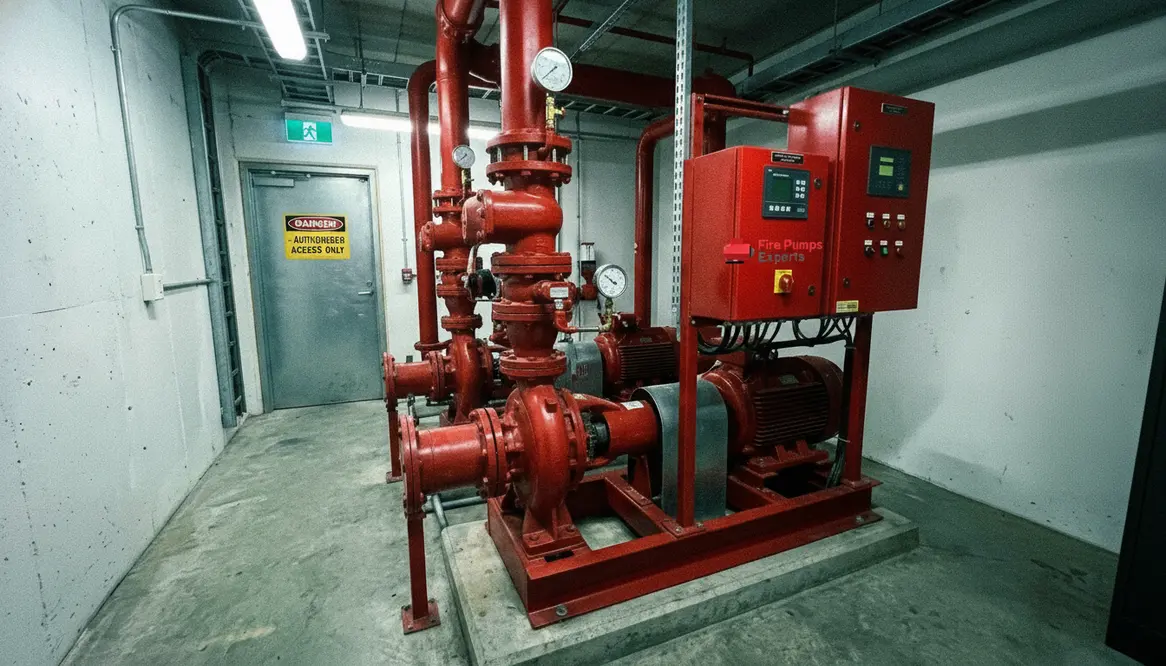
Installation also matters. A commercial fire pump room must allow safe access, proper ventilation, good drainage, secure power supply, and enough space for maintenance. Also, the controls, valves, and alarms must be easy to inspect and test. If the pump room feels like a storage closet for broken chairs and old office fans, I know there is work to do.
Design point
- Size the pump for the real fire demand, not a rough guess.
- Confirm the water source can support the full system load.
- Check pressure losses across the entire pipe network.
Site point
- Keep the pump room clean, dry, and easy to reach.
- Provide reliable power and clear control access.
- Allow enough room for tests, repairs, and routine checks.
Testing, maintenance, and compliance checks
Once the system is installed, the work does not end. In fact, that is where the real relationship begins. New Zealand commercial fire systems need regular testing and maintenance so the pump stays ready when it matters most. I always push for a clear inspection schedule, because fire pumps do not like surprise parties. Neither do insurers.
Routine checks usually cover starting performance, pressure, flow, alarms, fuel or electrical supply, valve position, and signs of wear. If a diesel pump is on site, I also check fuel quality, batteries, and engine condition. For electric pumps, I look closely at power reliability and control panels. After all, a pump that cannot start is just an expensive metal object with ambition.
Record keeping matters too. Good logs help prove compliance, support audits, and show that the owner takes the system seriously. If a fault shows up, the fix should happen fast. A small problem today can become a very expensive headline tomorrow, and nobody wants that kind of publicity.
Simple maintenance habits for safer outcomes
- Stick to the test intervals set by the relevant standard.
- Train on-site staff to recognise alarm conditions and status lights.
- Keep the pump room free of storage, dust, and trip hazards.
- Log every test, fault, and repair in a format that is easy to audit.
- Review performance trends yearly to spot slow, creeping issues.
When to involve a specialist for New Zealand commercial sites
I recommend bringing in a fire protection specialist early, especially for major property buildings, industrial facilities, and complex commercial sites. These projects often involve higher water demand, more zones, larger pump rooms, or mixed fire systems. So, the design needs care, not guesswork from a coffee break conversation.
If you want a deeper technical overview of commercial pump systems, I suggest reviewing this commercial fire pump compliance guide from a trusted industry source such as firepumps.org. It can help owners and managers focus on the right pump standards for commercial and industrial buildings. That said, local advice still matters, because New Zealand rules and site conditions always have the final word. The building does not care about internet confidence. It cares about working equipment.
On complex New Zealand commercial projects, a specialist will typically coordinate with fire engineers, hydraulic designers, and insurers so the pump selection, controls, and testing regime all line up. That shared plan is what stops last-minute redesigns when someone notices the pump room cannot actually fit the specified equipment.
FAQ
Conclusion
If you manage a commercial or industrial property in New Zealand, I urge you to treat fire pump compliance as a core part of site safety, not a side task for a rainy Friday. A well designed, properly tested system protects people, property, and business continuity. So, review your current setup, check your records, and bring in the right specialist before a small issue grows teeth. The best time to act is now, while the building is still calm and the pump is still smiling.