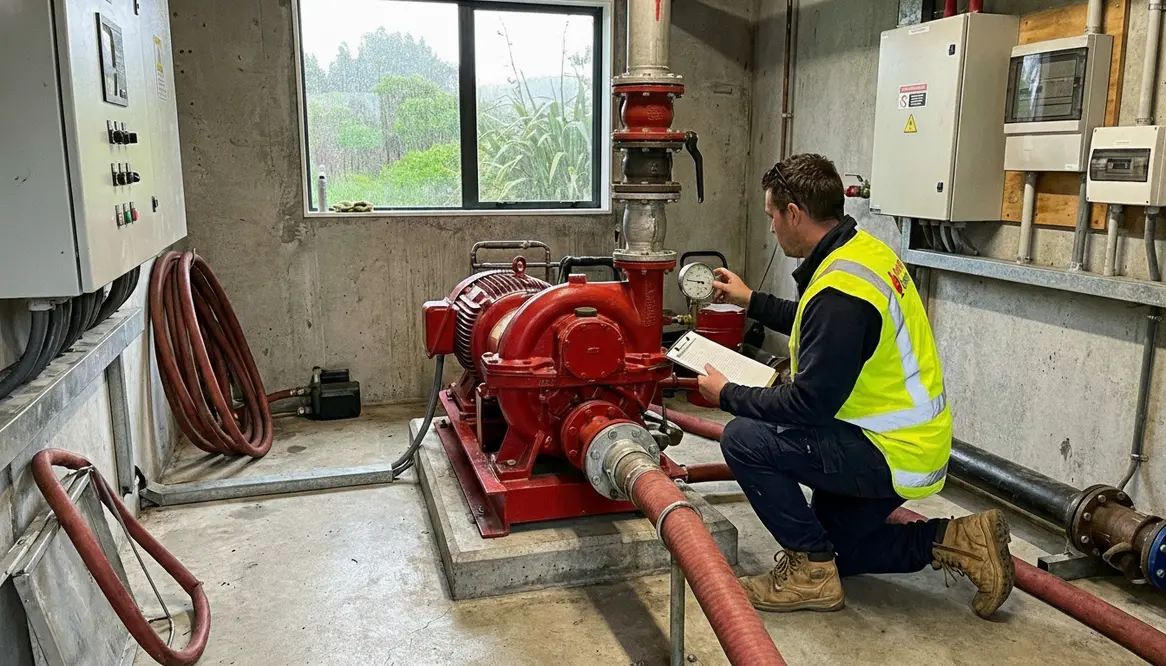
New Zealand Fire Pump Testing and Maintenance Guide
When I talk about New Zealand testing for fire pumps, I am not talking about a box ticking job done by someone with a clipboard and a coffee that went cold three hours ago. I am talking about a life safety system that must work when the pressure climbs and the stakes get very real. For commercial and industrial buildings, fire pumps protect people, stock, equipment, and the whole business operation. So, I treat testing and maintenance like a must do, not a maybe. In the next few minutes, I will walk through the process in a clear, practical way, because nobody needs drama from a fire pump unless it is doing its one job perfectly.
What Fire Pump Testing Means for Commercial Sites
Fire pump testing checks whether the pump can deliver the right pressure and flow when the system needs it most. In major properties, I always look at the full picture, not just the pump itself. That means I review the controller, suction supply, discharge pressure, valves, fuel or power source, and the overall condition of the installation.
In New Zealand, testing supports compliance, insurance confidence, and building safety. It also helps me catch problems early. A weak battery, a worn seal, or a noisy bearing may seem small, but those small issues can turn into a very expensive story fast. Think of it like a superhero training montage. The pump needs practice before the emergency scene starts.
How I Test a Fire Pump System
I start with a visual check. Then I confirm that the pump room stays clear, dry, and easy to access. After that, I move into operational testing. I check starting performance, running pressure, flow results, and shutdown behaviour. I also listen for strange sounds, because a fire pump usually tells on itself if something is wrong. It may not speak English, but it is always trying.
Here is the basic flow I follow:
- Inspect the pump, controller, and pipework
- Check suction and discharge valves
- Test automatic and manual start functions
- Record pressure and flow results
- Review alarms, gauges, and batteries
- Confirm the pump returns to standby correctly
During New Zealand testing, I pay close attention to trends. One odd reading may be nothing. However, repeated drops in pressure or delayed starting usually point to a deeper issue. That is why records matter. They show me what changed, when it changed, and whether the system is ageing like a fine wine or a damp carton left in the sun.
A maintenance schedule I recommend
I keep maintenance simple, regular, and well documented. A fire pump does not need surprise attention at 2 a.m. It needs planned care. For commercial and industrial buildings, I recommend a schedule that covers weekly, monthly, and annual checks.
Weekly and monthly work
- Check for leaks, rust, and loose fittings
- Confirm controller status lights and alarms
- Inspect battery health and charger operation
- Look at fuel levels for diesel units
- Make sure the pump room stays tidy and accessible
Annual work
- Run a full performance test
- Inspect internal wear parts
- Test pressure settings and safety controls
- Review service history
- Replace parts that show wear or age
For New Zealand properties, I also factor in local conditions. Coastal air, dust, vibration, and temperature swings all affect performance. So, I never assume a pump is fine just because it ran last year. That would be like trusting a car because it once made it through one road trip without a warning light. Brave? Sure. Smart? Not really.
Why compliance records matter
What I record
- Test date and time
- Start method and run time
- Pressure and flow readings
- Any faults found
- Repairs completed
Why it helps
- Supports audits and inspections
- Helps with insurance claims
- Shows system health over time
- Reduces unplanned breakdowns
- Proves duty of care
Good records save time, money, and stress. They also make my life easier when I compare old results with current ones. If I see a slow drop in pump output, I can act before the system becomes a problem. That is the quiet power of good maintenance. It is not flashy, but it works, and in this line of work, that is the whole point.
Common problems I look for
Most fire pump issues do not arrive with a loud warning. They creep in. I often see blocked strainers, worn seals, controller faults, battery issues, corrosion, air leaks, and poor water supply. Sometimes the problem sits in the basics, which is why I never skip the simple checks.
If a pump starts too slowly, I check the controller and power source first. If pressure drops under load, I look at valves, suction supply, and possible internal wear. If the pump room feels neglected, I usually find more than one issue. Problems like to travel in groups. They are social that way.
When I handle New Zealand testing for commercial and industrial sites, I focus on quick action and clear repair plans. That keeps downtime low and safety high. It also helps building owners stay ahead of costly failures, which is always a good trade.
FAQ
How often should a fire pump be tested?
At least weekly checks and a full annual performance test are common best practice for commercial sites.
Who should test a fire pump?
A qualified fire protection technician should test and maintain it.
What is the main goal of fire pump maintenance?
The main goal is to make sure the pump works properly during a fire event.
Why are test records important?
They prove compliance, show trends, and help spot faults early.
Can a fire pump fail without warning?
Yes. That is why regular testing matters so much.
Take action before the pump gets a plot twist
If you manage a commercial or industrial building, I strongly recommend you keep fire pump care on a firm schedule. Regular checks, clear records, and prompt repairs protect your building and everyone in it. If you need help with New Zealand testing for fire pumps, now is the time to act. Do not wait for a failed start, a noisy bearing, or a surprise audit to set the mood. Get the system checked, keep it ready, and stay ahead of trouble.