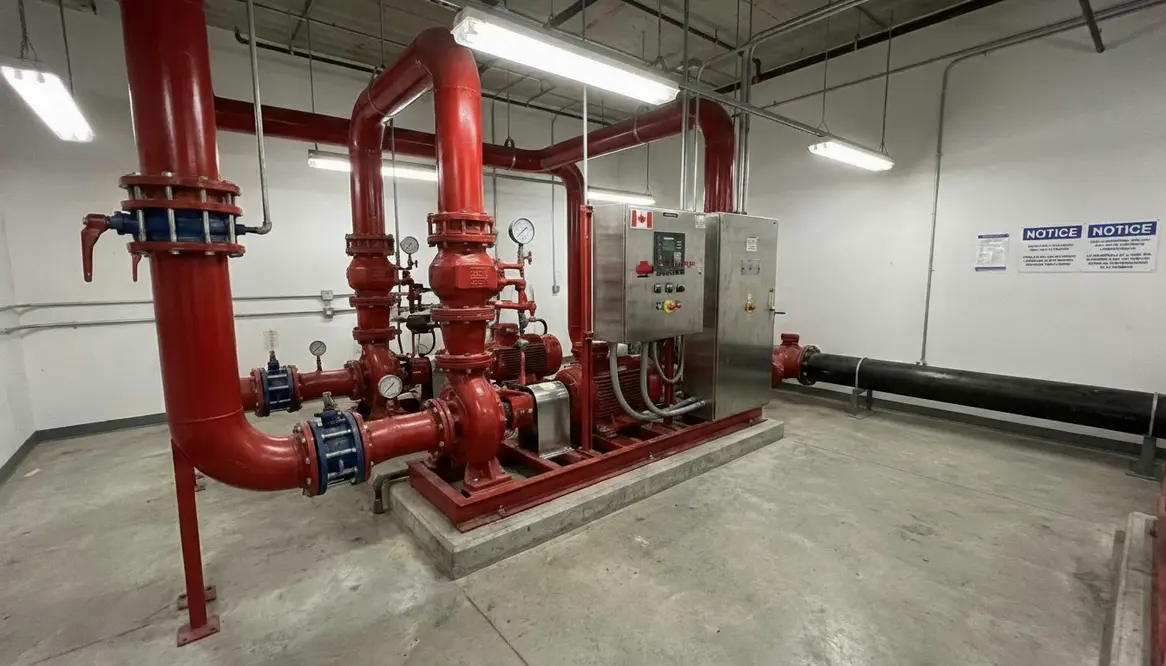
Canada Fire Pump Requirements for Commercial Buildings
Canada Fire Pump Requirements Explained
I have seen a lot of building owners treat fire pumps like the quiet cousin in the mechanical room. Then the alarm sounds, the sprinkler demand rises, and suddenly that cousin is the whole family’s lifeline. In Canada, fire pump requirements matter most for commercial and industrial facilities and major property buildings, because these sites often need reliable water pressure when the system must perform without drama. And yes, drama is great on streaming shows, but not in a pump room. In this guide, I will walk through the main Canada requirements in a clear, practical way so you can see what matters, why it matters, and how to stay on the right side of code.
What Canada fire pump rules usually cover
When I look at Canada fire pump requirements, I focus on three things right away: water supply, pressure, and system reliability. First, the pump must support the sprinkler or standpipe demand for the building. Next, it must provide enough pressure at the farthest point in the system. Finally, it must do that when the building needs it most, not when it feels like showing up late to the party.
In many projects, I see the rules shaped by the National Building Code of Canada, the National Fire Code of Canada, and the CSA standards used for fire pump systems. These rules guide how the pump gets selected, installed, tested, and maintained. As a result, the fire pump becomes part of a larger life safety system, not just a machine with a shiny label and a loud motor.
For commercial and industrial properties, the system often needs to meet the demands of tall buildings, large floor areas, high hazard storage, or complex fire protection layouts. Therefore, the correct pump size and setup must match the real risk, not a guess, not a hope, and definitely not a “we’ll cross that bridge later” attitude.
How I check the fire pump setup in a Canada building
When I review a project, I start with the water supply. If the municipal supply cannot provide enough pressure or flow, the fire pump steps in. If the building uses a tank, I check tank capacity, refill timing, and the full demand curve. Then I look at the suction conditions, because a weak suction side can turn a strong pump into a very expensive disappointment.
I also check the pump type. Most sites use electric or diesel fire pumps, and each one has its own strengths. Electric pumps are common where power is stable. Diesel pumps make sense where backup power or utility risk needs a stronger safety net. Either way, the pump must start fast, run properly, and support the system under emergency conditions.
Canada fire pump checklist
- Correct pump size for the demand
- Proper suction supply and pressure
- Reliable power source or fuel system
- Approved controller and automatic start
- Clear access for inspection and service
- Room conditions that support safe operation
Also, I never ignore the fire pump room itself. The room must stay protected, accessible, and suitable for the equipment. That means ventilation, drainage, heat control, and enough space for maintenance. A fire pump room should not feel like a storage closet that lost a fight with a mop bucket.
Canada fire pump installation and testing
Installation is where the code turns from paper into reality. I need to see the pump aligned correctly, connected to the right piping, and anchored so vibration does not cause trouble later. In addition, the controller must operate as intended, and the suction and discharge piping must support the system without extra stress.
Testing matters just as much. In Canada, fire pump systems require acceptance testing when installed, and they need ongoing inspection and maintenance after that. Because of this, I always push for documented test results. That way, the owner, engineer, and service team can see whether the pump performs the way it should.
What gets checked
- Pump start
- Pressure performance
- Flow rate
- Controller function
- Power transfer or fuel readiness
Why it matters
- Confirms emergency response
- Shows system strength
- Proves the design works
- Prevents control failure
- Reduces downtime risk
Moreover, regular flow tests, no flow tests, and visual inspections help catch issues before a real fire exposes them in the worst possible way. Fire protection systems love documentation. They are not picky, but they do enjoy receipts.
What owners of major properties should plan for
If I manage or advise on a large commercial or industrial site, I plan beyond installation day. That means I look at maintenance schedules, spare parts, staff training, and emergency access. I also make sure the fire pump works with the rest of the fire protection package, including sprinklers, standpipes, valves, alarms, and water supply equipment.
In addition, I remind owners that local authorities and insurers may ask for proof of compliance. So, I keep records neat and current. A missing test report can create more stress than a broken printer on a Monday morning, and that says a lot.
If you want a solid starting point for code-related support, I would suggest reviewing Canadian fire pump compliance guidance for commercial buildings through a trusted industry source, such as https://firepumps.org. That helps connect the technical rulebook to the real world of major properties, where pressure, flow, and reliability must all line up with core Canada requirements for commercial and industrial buildings.
FAQ
Conclusion
If you want your commercial or industrial property to stay ready, I recommend treating fire pump compliance as a priority, not a side note. Review the system design, confirm the installation, and keep testing on schedule. Then, work with qualified fire protection professionals who understand Canada requirements for major buildings. That is how I help owners reduce risk, protect people, and keep the system ready when it matters most. Calm plan, clear records, solid pump. That is the rhythm.