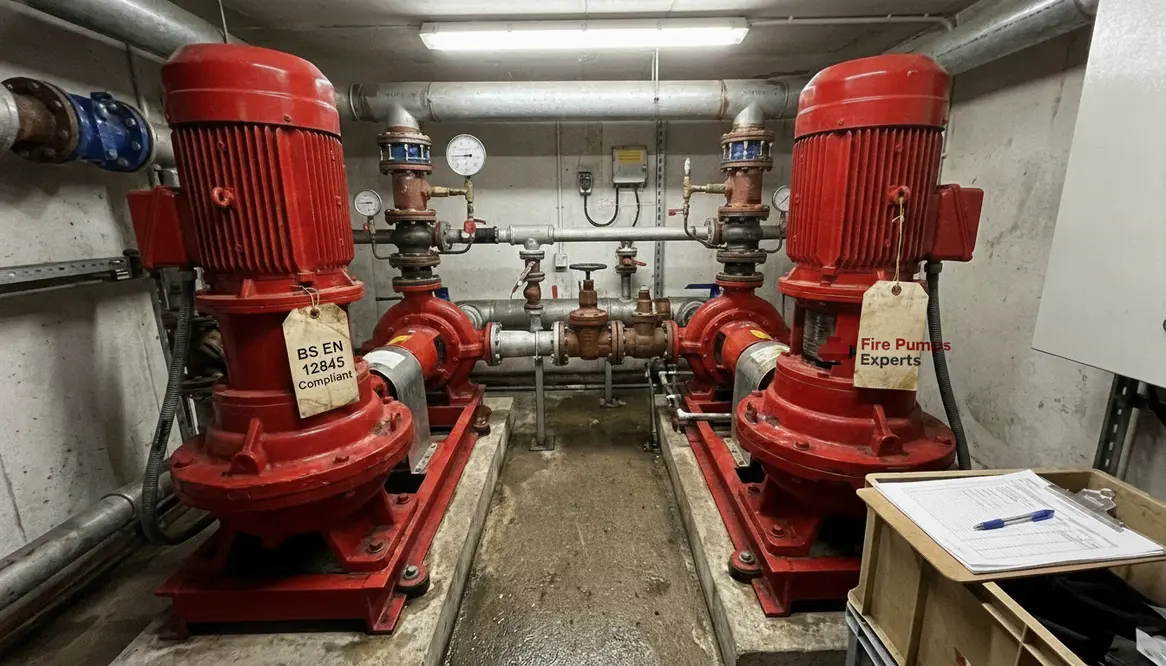
BS EN 12845 vs LPC Rules Fire Pump Requirements
BS EN 12845 vs LPC Rules Fire Pump Requirements is the kind of topic that sounds dry at first, and then suddenly decides to control the whole fire strategy of a building. I have seen many commercial and industrial teams treat this choice like a side note, only to learn later that the pump room is not the place for guesswork. In my view, the right standard shapes reliability, compliance, and how calmly a fire system performs when real pressure hits. So, if you manage a warehouse, office tower, plant, or major property, this comparison matters more than the coffee machine budget, and that is saying something.
Quick answer: what each standard expects
BS EN 12845 sets out sprinkler system rules used widely across Europe and beyond. Meanwhile, LPC Rules come from a long fire protection tradition tied to insurer guidance and practical system design. Both aim for dependable water supply, but they do not always ask for the exact same pump setup, storage method, or redundancy approach. That is where the details start to matter, and where bad assumptions can sneak in wearing a neat tie.
In simple terms, I look at BS EN 12845 as a clear technical framework for sprinkler protection. I look at LPC Rules as a strong insurance led method with deep roots in fire safety practice. The overlap is real, yet the fine print can change pump size, duty arrangement, test demand, and water supply expectations for commercial and industrial sites.
BS EN 12845 fire pump requirements for commercial and industrial sites
When I read BS EN 12845, I focus first on reliability. The standard expects the sprinkler system to deliver enough water at the right pressure for the required duration. Therefore, the pump selection must match the hazard classification, the area of operation, and the water demand profile.
The standard also pushes me to think about the full supply chain. That means the tank, suction path, controls, power source, and pump room conditions all work together. A strong pump alone will not save a weak system. That would be like putting rocket fuel in a shopping cart and calling it a car.
For major properties, BS EN 12845 usually calls for fire pump arrangements that are robust, predictable, and supported by properly designed water supplies, from tanks through to test connections.
Core focus areas for BS EN 12845
Water and duty
- Water supply reliability
- Correct pump duty point
- Duration of supply
Resilience and access
- System resilience
- Pressure stability
- Test and maintenance access
Also, I pay close attention to standby arrangements. In many projects, BS EN 12845 expects a strong case for continuity if the main supply fails. As a result, the design may need a duty and standby pump set, or another approved arrangement that protects the building without drama.
LPC Rules fire pump requirements and where they differ
LPC Rules take a more insurer focused approach, and that changes the flavor of the design. While the end goal still centers on fast and stable sprinkler water delivery, LPC guidance often digs deeper into practical risk control and verification.
In my experience, LPC Rules can be more detailed in how they shape the fire pump room, the tank arrangement, and the testing process. They often place strong value on proven equipment, robust installation, and clear inspection paths. That matters in industrial plants where a system must survive vibration, heat, dust, and the occasional life choice nobody wants to explain in a report.
Compared with BS EN 12845, LPC Rules may ask for stricter alignment with insurer expectations, especially when a site has high value stock, critical production lines, or complex operations. Therefore, the design team needs to know not only what the code says, but also what the insurer and approving bodies expect in practice.
How I compare pump sizing, water supply, and redundancy
Here is the point where the debate gets useful. BS EN 12845 vs LPC Rules is not just a paperwork fight. It changes how I size the pump and how I prove the water supply will hold up under real conditions.
I ask three questions right away. First, what hazard class am I protecting? Second, how long must the system run? Third, can the site maintain pressure and flow if the main source fails or drops? Once I answer those, the design starts to breathe.
BS EN 12845 tends to guide me with a direct engineering path. LPC Rules can bring a more detailed insurer lens that may affect contingency and test expectations. So, if a site has a large sprinkler demand, I often review duty and standby pumps, diesel backup, mains backup, and tank replenishment with extra care.
And yes, the water tank deserves respect. It is not glamorous, but it does the heavy lifting. No tank, no pressure, no party.
When BS EN 12845 and LPC Rules affect project decisions
I see the biggest differences during early project planning. For a new warehouse, distribution center, data hall, or industrial unit, the chosen standard can shape space planning, plant room size, maintenance access, and utility backup from day one.
That is why I tell teams to decide early whether they will follow BS EN 12845 alone, an LPC based route, or a project specification that blends both with insurer input. If they wait until construction starts, they often pay for changes twice. First in steel. Then in regret.
Fire pump requirements also affect commissioning. A system must not only look right on paper. It must pass flow checks, pressure tests, alarm integration checks, and operational tests that show the pump can do the job under load. For major buildings, that proof matters as much as the design itself.
Where I would use expert guidance for BS EN vs LPC Rules
When a site is large, busy, or business critical, I do not treat fire pump design as a solo act. I bring in specialist help early, especially if the building has high hazard storage, layered insurance demands, or tight space around the pump room.
If you want a deeper look at commercial and industrial sprinkler design support, a useful resource is commercial fire pump guidance for major properties. It helps when you need a practical route through standards, equipment choice, and compliance pressure without losing your mind before lunch.
In short, the right fire pump strategy protects the building, supports insurance goals, and keeps operations steady. That is the real win.
Why the BS EN 12845 vs LPC Rules choice is worth your time
Across commercial and industrial sites, the BS EN 12845 vs LPC Rules decision quietly shapes layout, capital spend, and long term resilience. The paperwork might look similar at first glance, but the expectations around pump selection, water storage, redundancy, and testing habits can pull your design in two slightly different directions.
Handled well, that choice gives you a sprinkler system that behaves itself during a fire, keeps insurers comfortable, and does not demand heroics from the operations team. Handled casually, it can leave you with awkward retrofit work, confused approval paths, or a pump room that never quite matches the risk profile it was meant to protect.
FAQ: BS EN 12845 vs LPC Rules Fire Pump Requirements
Conclusion
If you manage a commercial or industrial site, I would not leave fire pump compliance to chance. BS EN 12845 vs LPC Rules can change the whole system design, so the smart move is to check the standard early, confirm the water demand, and build in proper redundancy. If you want a safer, cleaner, and more confident path for your project, now is the time to review your fire pump requirements and get expert support.