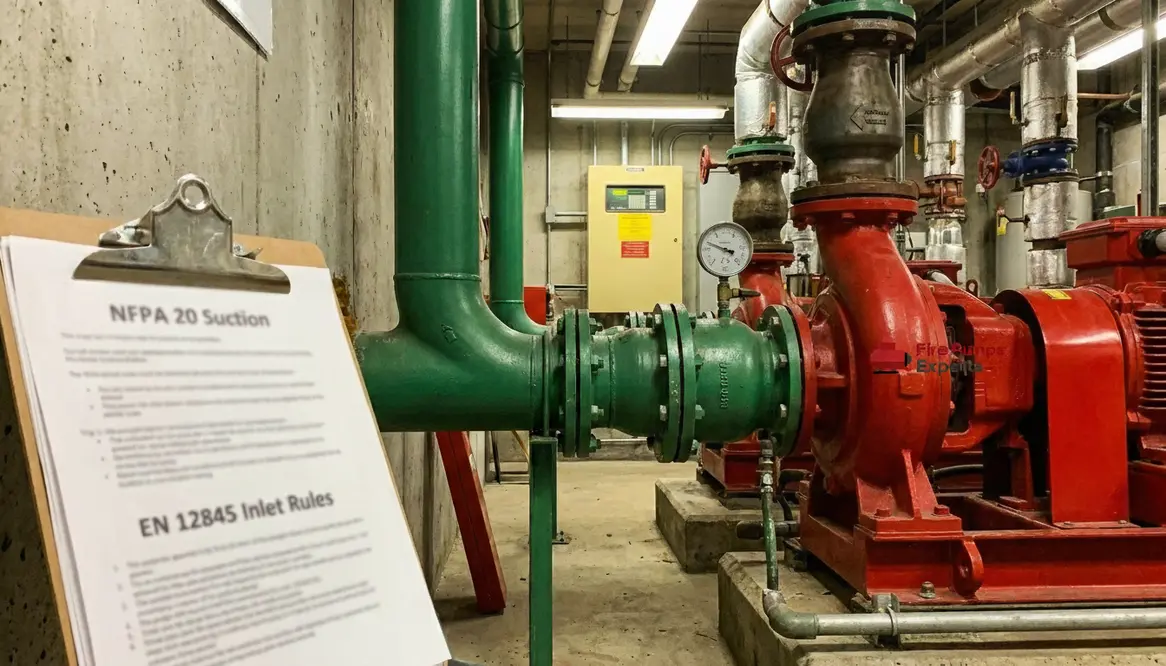
Global Fire Pump Suction Piping Requirements Guide
Global Fire Pump Suction Piping Requirements Compared
When I look at Global suction piping requirements across markets, I see the same goal dressed in different rules: keep the pump fed with clean water, stable pressure, and no drama. That sounds simple, and yet this is where many systems go sideways. One small mistake in the suction line can turn a solid fire pump into a very expensive paperweight. And nobody wants that kind of plot twist during a fire event, not even in a Hollywood disaster movie.
In commercial and industrial facilities, plus major property buildings, suction piping must support fast, reliable water flow. However, codes and local practices can differ. So, I compare the common rules, the real world risks, and the design details that matter most when you want the system to perform under pressure.
What global fire pump suction piping must do
I always start with the same idea: the suction line must help the pump, not fight it. A fire pump needs a steady water supply with low friction loss, no air pockets, and no strange turbulence. If the line pulls air, traps debris, or creates too much resistance, the pump can lose prime, vibrate, or fall below its rated flow.
Across many regions, the main goals stay the same. First, the suction pipe should be sized to reduce velocity. Second, fittings should stay simple and smooth. Third, the piping layout should avoid unnecessary bends, offsets, and high points. As a result, the pump gets a better inlet condition and a safer operating margin.
In practice, I treat the suction side like the opening scene of a thriller. If it starts badly, the rest of the story gets shaky.
How Global suction piping rules compare by region
Different standards may use different language, but they often point to similar design habits. For example, many systems in North America follow NFPA based guidance, while other regions lean on EN, BS, or local fire authority rules. Still, the design logic tends to match.
Here is a simple view of the common differences:
Common design point
Pipe size
Pipe route
Fittings
Reducers
Supports
Testing focus
How it usually appears across regions
Often kept large enough to limit suction velocity and pressure loss
Kept short, direct, and smooth whenever site conditions allow
Long radius bends and gentle changes are preferred over sharp turns
Eccentric reducers often appear at pump suction to help avoid air pockets
Strong pipe support reduces stress on the pump casing and nozzle
Systems must prove stable flow, no leaks, and acceptable inlet conditions
Even so, local approval bodies may ask for extra checks. For example, one project may need a more detailed hydraulic review, while another may need deeper tie in coordination with the tank, suction header, or municipal supply. That is where experience saves time and saves face.
Which design details matter most in real projects
I care most about four things: pipe diameter, alignment, fitting choice, and support. These sound plain, but they decide whether the suction line behaves like a calm river or a confused garden hose after a long weekend.
The suction-side priorities
Pipe diameter matters because higher velocity creates more friction and more risk of inlet trouble. Alignment matters because even a small misfit can create stress and vibration. Fitting choice matters because abrupt changes can disturb flow right before the pump inlet. Support matters because the pump should not carry the weight of the piping. The pump is there to move water, not to hold up the building like some overworked action hero.
Also, I always check for air collection points. A small high spot can trap air and hurt performance. Likewise, I watch for unnecessary valves and accessories near the suction flange. The suction side likes a quiet life. It does not need a crowded stage.
Why commercial and industrial sites need extra care
Commercial towers, warehouses, factories, data centers, and large mixed use buildings depend on consistent fire protection. Therefore, suction piping mistakes can create bigger risks than people expect. A weak suction design can reduce pump output during a critical event, and that can affect life safety, property loss, and insurance results.
Industrial sites bring another layer of complexity. They may face long pipe runs, special water sources, process area limits, or harsh site conditions. In those cases, I pay close attention to corrosion resistance, maintenance access, and the effect of future plant changes. After all, a suction line that works today should still work after the next expansion, and the next one, and yes, even after the facilities manager says, “We’ll just add one more thing.”
Using guidance and references wisely
For buyers and project teams, I recommend reviewing guidance from trusted fire pump experts and code aligned resources such as fire pump suction piping standards for commercial facilities. That kind of reference helps teams compare local rules with proven design practice and avoid costly rework. When teams understand how Global suction piping principles play out on real sites, they make better layout choices and avoid surprises during testing.
Connecting Global suction piping principles to local projects
No matter where the project sits on the map, the pump expects the same basic treatment at the suction flange. Good Global suction piping practice means starting with a generous pipe size, keeping the layout calm and predictable, and protecting the pump from mechanical stress. Local codes then layer on specifics about distances, acceptable fittings, and testing methods.
When teams compare regional rules side by side, they usually find more similarities than differences. The smart move is to aim slightly above the minimum code line, using the best elements from standards and proven field experience. That way the suction side stays efficient, quiet, and ready for the worst day the building will ever see.
FAQ
Conclusion
If you want a fire pump system that performs when it counts, I can help you compare suction piping requirements for your site, your region, and your code path. The details matter, and the right layout protects your building, your people, and your budget. For commercial and industrial facilities or major properties, I recommend a full review before installation or retrofit. Contact a qualified fire protection team now, and let’s make the suction side behave like a pro.