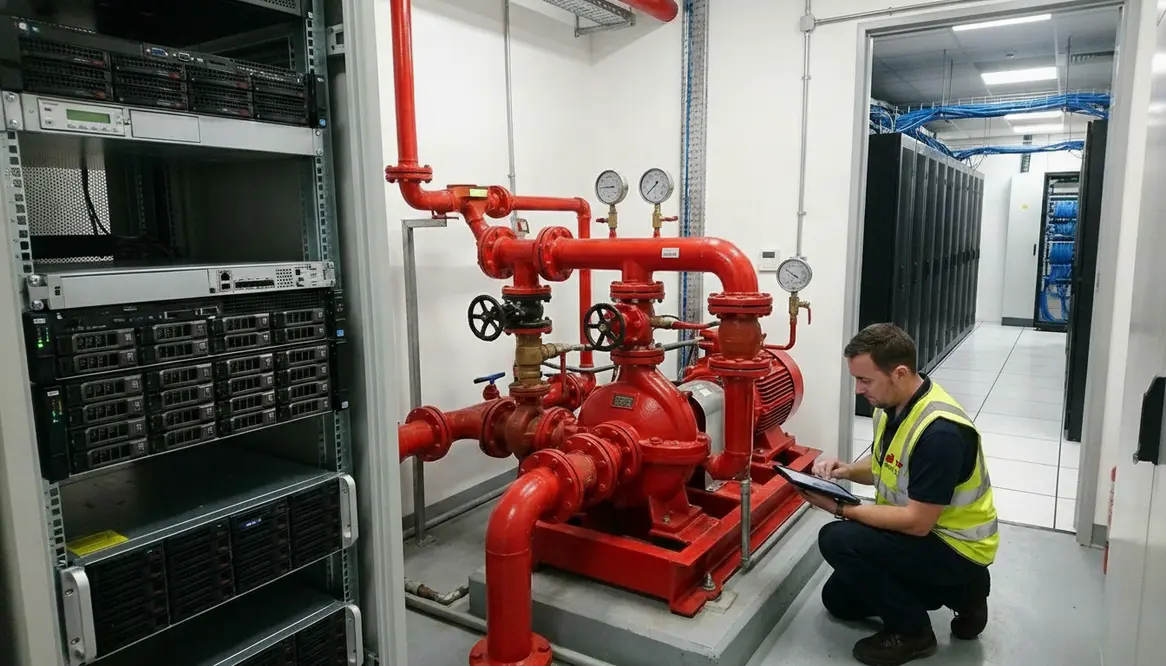
Fire Pump Code Requirements for Data Centers Worldwide
When I look at fire pump data centers worldwide, I see more than steel, servers, and cooling racks. I see a mission to keep critical operations alive when heat, smoke, or water pressure turns unfriendly. In a data center, fire protection is not a side note. It sits right beside uptime, energy use, and building safety. And yes, the code books can feel like they were written by people who really enjoyed making life complicated. Still, once I strip away the jargon, the goal stays simple: deliver reliable water pressure fast, in every major market, for every commercial and industrial facility that cannot afford downtime.
What fire pump codes usually require in data centers
I always start with the same idea: a data center fire pump must support the sprinkler or suppression system with enough pressure and flow to do its job under real fire conditions. Most codes expect the pump to meet the building design demand, plus the loss created by pipe length, elevation, and valves. In practical terms, that means the pump cannot be an afterthought picked from a catalog like a phone case. It must match the hazard level, the rack layout, and the water supply conditions.
Across many regions, I see a shared pattern. First, the fire pump must follow a recognized standard, often tied to local fire code, building code, and sprinkler rules. Second, it must include a dependable power source. Third, it must sit in a protected room with proper access, drainage, heating, and ventilation. And fourth, it must support regular testing. After all, a pump that only works in theory belongs in a museum, not in a mission critical facility.
How international code rules change from region to region
Even though the purpose stays the same, the rules shift by country and city. In the United States, I often see NFPA based requirements guide pump design, testing, and acceptance. In Europe, local fire and building rules may align with EN standards. In the Middle East and parts of Asia, authorities may blend international standards with local civil defense rules. So, I never assume one code fits all. That move can get expensive fast, and not in a fun Marvel way.
For fire pump data centers worldwide, this means the design team must check the local authority having jurisdiction early. I always recommend this because delays often come from a simple mismatch between the base design and the local permit path. A project can pass one set of rules and still fail another. Therefore, the smartest teams review code, water supply, and insurance needs at the same time.
Why pump room design matters more than people think
Here is where many projects slip. The pump itself may meet code, but the room around it does not. I look for clear access for maintenance, enough space around the equipment, reliable lighting, and a floor that can handle water discharge. I also check for heat control, because pump gear does not enjoy a sauna. If a room gets too hot or too cramped, the pump system suffers, and so does the data center.
That is why I treat pump room design as part of the fire protection system, not a side room with a fancy label. Good layout helps testing, repair, and emergency use. It also supports compliance because inspectors want to see more than a pump sitting in a box. They want a system that can be reached, serviced, and trusted when seconds matter.
How I compare the main code points for data center fire pumps
Code area
Water supply
Power source
Pump room
Testing
Controls
What I check
Enough flow and pressure for the full fire load
Electric, diesel, or approved backup option
Access, drainage, ventilation, and protection
Weekly, monthly, and annual test plans
Clear alarms, startup logic, and monitoring
This kind of review keeps the project grounded. It also helps me explain the system to owners who care more about uptime charts than pipe curves, which I respect deeply.
What owners should ask before final approval
Before I sign off on a design, I ask a few direct questions. Is the water supply stable under peak demand? Does the pump start as required without delay? Can the backup power support the fire event? Is the room built for service access and safe testing? And does the plan satisfy both the fire marshal and the insurer? If the answer to any of these is shaky, I slow the project down and fix it.
I also tell owners to think beyond opening day. Data centers live long lives, and code updates do not wait politely in the hallway. So, a system should allow future testing, upgrades, and inspections without major rebuilds. That kind of planning saves money later and keeps the facility ready for growth. That is especially true for fire pump data centers worldwide, where changing standards and expanding campuses can stress any system that was built only for day one.
FAQ: Fire pump code basics for data centers
The most common questions around fire pump code compliance show up on nearly every project, especially when the discussion turns to fire pump data centers worldwide and how one campus compares with another on a different continent.
Conclusion
When I plan fire pump code compliance for a data center, I build for the real world, not the best case fantasy. That means local code review, strong pump room design, steady water supply, and honest testing from day one. If you manage a commercial or industrial facility, now is the time to review your fire protection plan with care. firepumps.org supports major property buildings that need dependable fire pump planning, and I recommend taking that next step before small gaps become very costly surprises. The same mindset that protects fire pump data centers worldwide also protects any single facility that chooses to treat water supply, code compliance, and maintenance as non-negotiable parts of uptime.