Fire Sprinkler Pump System Guide for Buildings
Fire Sprinkler Pump Systems Explained: Complete Guide
When I talk about fire protection for commercial and industrial buildings, I always start with the fire sprinkler pump system. Why? Because water does not care how fancy your building looks. It only responds to pressure, flow, and a system that actually does its job when smoke starts acting up like it owns the place. In a major property, that pump stands between a small incident and a very expensive headline. So, if you manage a warehouse, factory, office tower, or large commercial site, this guide will walk you through what the system does, how it works, and why it matters.
What a fire sprinkler pump system does
At its core, a fire sprinkler pump system boosts water pressure so sprinklers can deliver the flow they need during a fire event. That sounds simple, and in a way, it is. However, the stakes are not simple at all. If the building water supply cannot meet demand, the pump steps in and pushes water through the system with the force required to protect people, inventory, and structure.
In large properties, the supply from the main line may drop under load. Meanwhile, a fire can spread fast, especially in warehouses with high ceilings or dense storage. That is where the pump earns its keep. It helps the sprinkler network stay ready, responsive, and consistent. No drama. No hero speech. Just pressure doing its job.
How the system works in a commercial building
Here is the short version. First, the fire alarm or sprinkler activation signals a drop in pressure. Then, the pump starts automatically or by design controls. Next, it sends water from the supply source into the sprinkler piping at the right pressure. As a result, the sprinklers can discharge water where heat has triggered them.
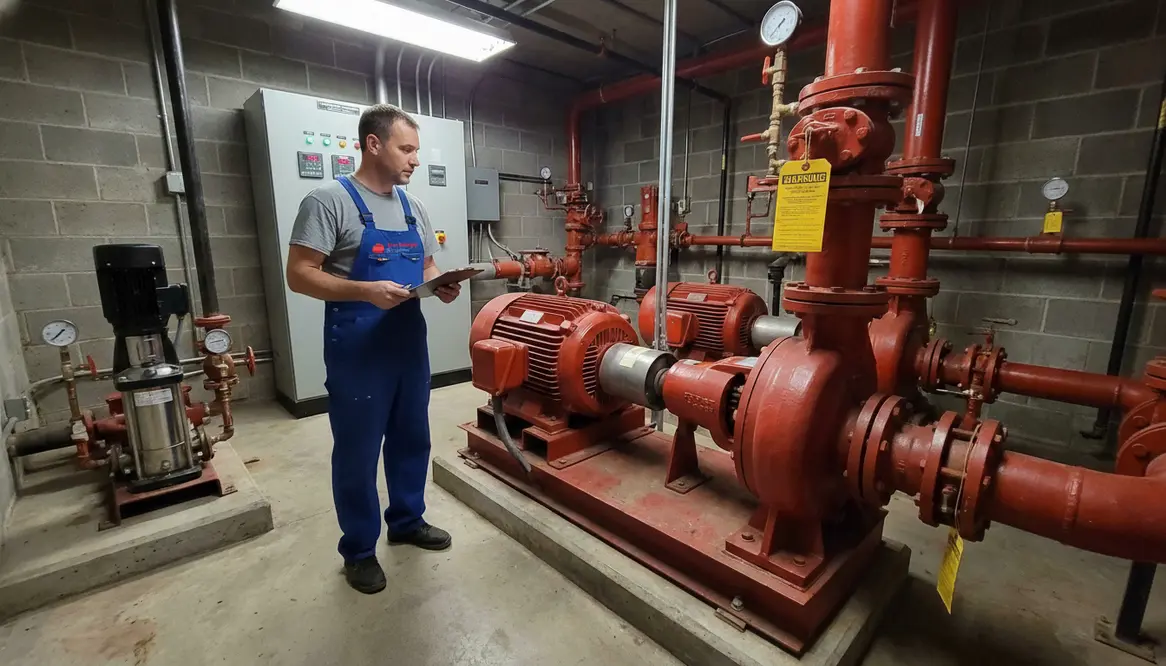
Most commercial and industrial sites use pumps with key parts such as:
- Main pump unit
- Jockey pump for pressure support
- Controller panel
- Suction and discharge piping
- Water source such as a tank or main supply
The jockey pump handles small pressure drops. The main pump takes over during a real fire event. That division of labor matters, because nobody wants the main pump running every time the system sneezes.
Types of pumps used in major properties
Common pump types
Electric fire pumps
Diesel fire pumps
Jockey pumps
Where I see them used
Sites with stable power and strong backup systems
Locations that need strong backup during power loss
All large systems that need pressure control
Electric pumps work well when the site has reliable power and backup generation. Diesel pumps add another layer of resilience, which is why I often see them in larger facilities that cannot afford downtime. Jockey pumps, on the other hand, may not get the spotlight, but they keep the whole setup from constantly cycling like a tired Netflix autoplay screen.
Why design and compliance matter
A pump system is only as strong as its design. Therefore, engineers must size it based on building use, hazard level, height, storage layout, and local code. In Australia, for example, warehouse projects often follow AS 2118 related fire pump requirements. If you want a deeper look, I recommend reviewing this helpful guide on AS 2118 fire pump requirements for warehouses in Australia.
That kind of guidance matters because a factory floor, a logistics hub, and a high rise office do not share the same risk profile. A well matched system helps ensure sprinklers perform under real conditions, not just on paper. And yes, paper compliance feels lovely until the first emergency reminds everyone that reality is less forgiving.
What I check during inspection and maintenance
Regular inspection keeps the system ready. I always look for issues that can quietly weaken performance over time. Corrosion, leaks, controller faults, battery problems, clogged strainers, and weak fuel supply can all create trouble. Furthermore, pumps need testing to confirm startup speed, pressure output, and stable operation.
Typical maintenance tasks
- Weekly visual checks
- Pump run tests
- Controller alarms review
- Fuel and power checks
- Valve and gauge inspection
- Annual full performance testing
These steps may sound routine, and they are. Still, routine is what saves the day. Nobody writes a movie about a valve inspection, but plenty of buildings owe their survival to one.
Fire sprinkler pump system quick facts
If you manage a commercial or industrial property, it helps to treat your fire sprinkler pump system like any other critical asset. Spare parts, power reliability, documented tests, and clear access paths all add up to a system that behaves when the heat is on.
A well designed fire sprinkler pump system is rarely the star of the show, and that is exactly the point. The goal is quiet readiness, not dramatic failure. When pressure holds, sprinklers open where they should, and the fire stays small enough that your biggest problem afterward is paperwork and a smell of wet gypsum board.
FAQ
Below are some quick answers that come up when planning, operating, or upgrading a fire sprinkler pump system in a commercial or industrial building.
Treating your pump as core infrastructure
If you manage a commercial or industrial property, I urge you to treat your fire sprinkler pump system like core infrastructure, not background noise. A strong design, proper testing, and routine maintenance can make all the difference when seconds count. The same way you would not ignore power reliability or critical IT, you cannot afford to assume your pump will simply work without evidence.
Think of the system as a chain: water supply, pump selection, starting method, controllers, valves, pipework, and sprinklers all link together. A weak section anywhere can turn a serious but manageable fire into a loss that drags on insurance, operations, and reputation long after the smoke clears.
Final thoughts and next step
If you manage a commercial or industrial property, I urge you to treat your fire sprinkler pump system like core infrastructure, not background noise. A strong design, proper testing, and routine maintenance can make all the difference when seconds count. So, if you need support for a major property or facility, now is the time to review your current setup, confirm compliance, and make sure your protection is ready before trouble ever knocks on the door.