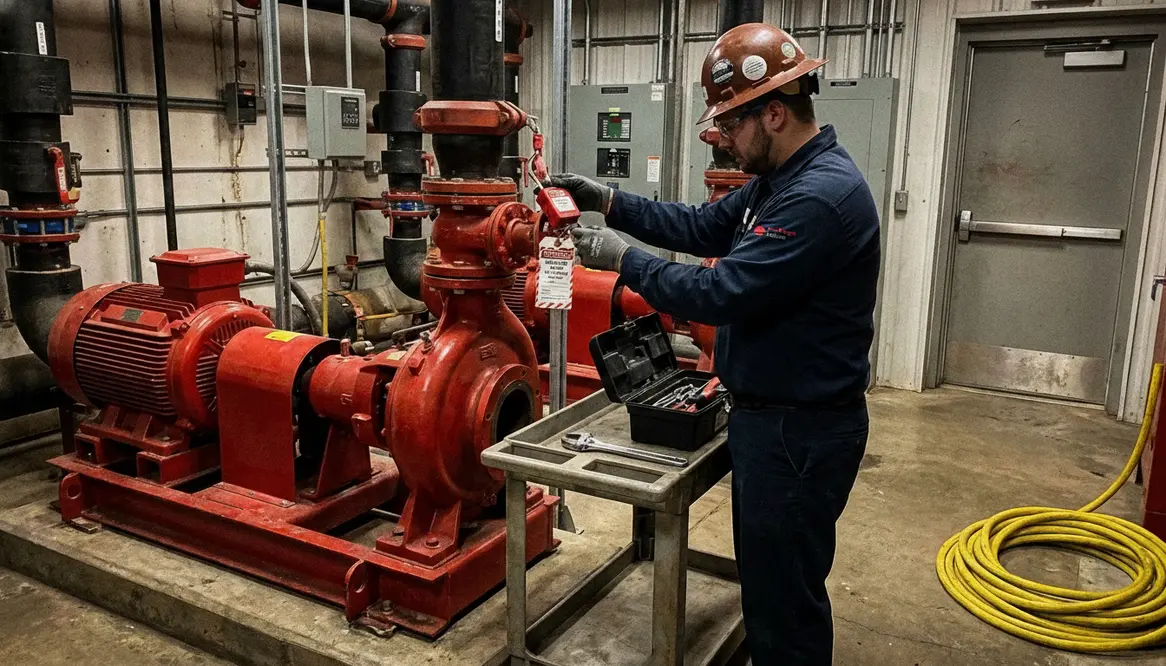
Fire Pump Safety Precautions During Maintenance
I treat fire pump safety like the quiet hero in the back of the building. It does not ask for applause, yet when a fire system needs to work, it had better show up on time. In commercial and industrial facilities, plus major property buildings, I never take maintenance lightly. One loose valve, one rushed test, or one skipped lockout step can turn a routine job into a very bad day. So, I keep the process calm, controlled, and clear. That is how I protect people, equipment, and uptime without turning the plant room into a live action sequel no one asked for.
When I work on a fire pump, I follow a plan before I touch a wrench. That plan keeps the system stable, the team alert, and the building protected. It also helps me avoid the kind of mistakes that make managers stare at the ceiling at 2 a.m. and wonder why they trusted “I think it was fine.”
Why I plan before I touch the pump
I always start with a review of the system, the site rules, and the work order. First, I confirm the pump type, its role in the fire protection setup, and the scope of service. Then I check the last inspection notes, any alarms, and any known issues. This step matters because fire pump maintenance should fit the building’s risk level, not a guess and a prayer.
I also notify the right people. That means facility staff, fire protection partners, and anyone who may rely on the system during the work window. Moreover, I make sure the building has the correct temporary fire protection plan in place if the pump will be offline. In a large warehouse, hospital, tower, or plant, that one step can save a lot of pain later.
Fire pump safety checks during maintenance
I keep the work area clean, open, and easy to move through. Then I use clear tags, barriers, and signs so no one walks in and changes a setting by accident. It sounds simple, because it is. Still, simple steps stop complex problems.
Core checks I never skip
- I isolate the pump only when the work plan calls for it.
- I lock out and tag out power before any hands on work begins.
- I verify pressure levels before and after each task.
- I inspect couplings, seals, bearings, and valves for wear.
- I keep the suction and discharge lines clear and stable.
- I check for leaks, vibration, heat, and odd noise during restart.
That list may not sound thrilling, but neither does a pump failure. And unlike a superhero origin story, this one should not begin with “everything seemed fine until it was not.”
How I protect the system while I work
I never assume the pump is safe just because it is not running. Instead, I treat every part of the system like it could move, pressurize, or fail without warning. For that reason, I release pressure in a controlled way and confirm that the pump cannot start unexpectedly. Keeping fire pump safety front and center means I act like the system is alive even when it is quiet.
I also protect nearby equipment. For example, I keep tools, cloths, and spare parts away from controls, panels, and rotating parts. In addition, I use the correct personal protective gear for the site, such as gloves, eye protection, and hearing protection where needed. A maintenance area should feel like a work zone, not a scene from a chaos montage.
Just as important, I keep the fire water supply in mind. If I disturb the suction side, strainers, or valves, I can affect the full system. Therefore, I move slowly, test often, and restore each part in order. This approach helps me keep fire pump maintenance steady and safe from start to finish.
What I check before I return the fire pump to service
Before I put the pump back online, I make sure every step has been completed and recorded. Then I confirm that all covers, guards, fittings, and connections are secure. After that, I remove lockout and tagout devices only when the area is ready and the team knows what is happening.
I also run a full operational check. I look for proper pressure, smooth startup, stable flow, and no alarm issues. Moreover, I listen for changes in sound because a pump often tells the truth before a gauge does. If I hear a new rattle or see a drop in performance, I stop and investigate. That pause can prevent a much bigger repair later.
Fire pump safety maintenance tips for large facilities
In a commercial or industrial site, I think in layers. First comes the pump. Then comes the water supply. Then comes the building’s response plan. All three must work together. So, I train the team to know who owns the system, who checks it, and who calls for help when something looks off. Keeping fire pump safety structured this way turns separate tasks into one reliable process.
I also suggest using a trusted resource for broader guidance, such as commercial fire pump maintenance support. For major properties, that kind of focused help can make a real difference. It keeps the work aligned with the demands of large sites, where the stakes are high and the margins are slim.
My three-phase focus
Before maintenance
I review records, notify the site team, secure the area, and confirm backup protection.
During maintenance
I isolate power, control pressure, inspect parts, and keep the system clean and stable while I keep fire pump safety at the front of every decision.
After maintenance
I test operation, document results, restore service, and confirm the system is ready.
Quick fire pump safety snapshot
What keeps people safe
- Clear communication before any shutdown
- Strict lockout and tagout on every job
- Controlled pressure release every time
- Personal protective equipment that fits the site
What keeps systems ready
- Routine checks on couplings, seals, and bearings
- Clean suction lines and stable discharge paths
- Thorough post-maintenance testing
- Documented results and clear follow-up plans
When these habits become normal, fire pump safety stops being a box to tick and becomes the way the whole team works.
FAQ
Conclusion
I never treat fire pump service like a quick chore, because the building depends on it when it counts most. If you manage a commercial, industrial, or major property site, now is the time to tighten your process and review your maintenance plan. I urge you to work with a trusted team, check every step, and keep fire pump safety at the center of each service visit. Small discipline today can prevent a costly emergency tomorrow.