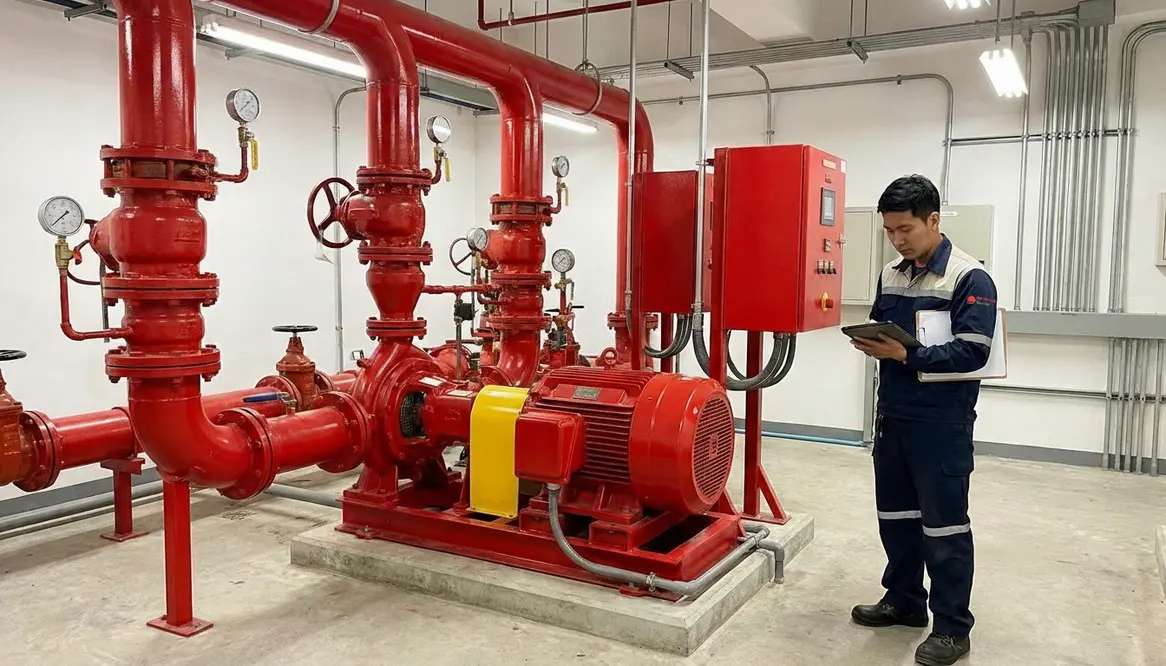
Fire Pump Maintenance Contract for Businesses
Fire Pump Maintenance Contract Guide for Businesses
When I look at a commercial or industrial building, I do not see walls and wires first. I see risk, uptime, and the quiet promise that life safety gear will work when it must. That is why our fire pump maintenance contract matters so much. It sets the rules for inspections, testing, repairs, and record keeping before a small issue turns into a very expensive surprise. And yes, the fire pump is not glamorous. It will never trend on social media. But when trouble hits, it becomes the star of the show fast.
What a Fire Pump Maintenance Contract Should Cover
I always start with scope. A strong agreement should spell out exactly what the provider will do for your commercial or industrial site. That includes routine checks, flow testing, alignment checks, packing or seal review, controller inspection, alarm verification, and system performance review. In addition, it should define emergency response time, reporting format, and who handles parts and labor.
The best contracts remove guesswork. They tell me what gets inspected, how often it happens, and what happens if a fault shows up. That matters because a fire pump is not a “set it and forget it” machine. It needs attention, just like a main power system or a chilled water loop. Otherwise, it can fail at the worst possible moment, and nobody wants that plot twist.
How I Review Service Scope and Frequency
I treat the maintenance schedule as the backbone of the agreement. For most business properties, I want a plan that matches the building’s size, hazard level, and water demand. Therefore, I check whether the contract follows local code, insurance needs, and the pump maker’s rules. If the plan sounds vague, I push back.
Here is the simple rule I use: the bigger the operation, the more precise the service plan should be. For major property buildings, a one size fits all approach is weak. A warehouse, a hospital tower, and a multi tenant industrial site do not age the same way. They also do not fail the same way. So I ask for tailored intervals, clear test logs, and service notes that explain findings in plain language.
Key Contract Points I Check
Service Column
- Routine visual checks
- Weekly, monthly, and annual test timing
- Flow and pressure results
- Controller and alarm review
- Repair process and approval steps
Business Column
- Cost clarity and billing terms
- Site access rules
- Downtime planning
- Documentation for audits
- Emergency contact chain
Why Clear Pricing and Response Terms Matter
Price matters, of course. However, the cheapest contract can become the most expensive one if it hides service gaps. I look for clear pricing on inspections, callouts, replacement parts, and emergency work. Then I check whether the provider charges extra for reports, travel, or after hours support. Tiny fees have a funny way of multiplying like rabbits in a finance spreadsheet.
Response time is just as important. If a fire pump issue appears, I need to know how fast help will arrive. So I want the contract to name response windows for urgent service and normal service. I also want a backup contact if the first tech is off site. That level of clarity helps industrial and commercial owners avoid delays that can affect safety and compliance.
Questions I Ask Before I Sign
I do not sign until I ask a few direct questions. These help me spot weak terms before they cost me time or money. For example:
Does the agreement follow the right code and manufacturer guidance?
I want proof, not a vague promise.
Who signs off on repairs after testing?
I need a clear approval path.
What records will I receive after each visit?
I want service reports that help with audits and insurance reviews.
Does the provider serve commercial and industrial sites only?
That focus matters because major properties have different demands.
Can the contract grow with my site?
If my operation expands, the plan should expand too.
Where Firepumps.org Fits In
When I want a deeper look at service standards, I also review trusted industry resources. For example, I use Fire Pump Maintenance for Commercial and Industrial Facilities as a reference point when I compare service expectations and building needs. That kind of guide helps me align the agreement with real world demands for major properties, not small scale setups that do not face the same load or compliance pressure.
In practice, this helps me build a smarter plan. I can compare what the provider offers with what a large building actually needs. Then I can spot missing items before they become headaches. And in this line of work, avoiding headaches is a beautiful thing.
Making a Fire Pump Maintenance Contract Work for Your Site
For a major property, a fire pump maintenance contract should never feel like a generic template with your name pasted on top. It should read like a field manual for your exact system, written by someone who has actually stood in the pump room and listened to the motor spin up. If the agreement only talks in broad terms, I know it is time to push for specific test points, test methods, and reporting details.
I also want the contract to name who is responsible for each task on site. That includes who escorts the technician, who has authority to shut down systems for testing, and who keeps copies of the inspection reports. When that is written down, I am not chasing people during a noisy test trying to figure out who can approve a minor repair. The fire pump maintenance contract becomes a script everyone can follow without guesswork.
Another point I watch closely is how corrective actions are handled. It is not enough to say, “we will report deficiencies.” I want timelines, cost ranges where possible, and a clear path from “problem found” to “problem fixed and documented.” When that is spelled out, the fire pump maintenance contract does more than tick boxes for compliance; it supports uptime, insurance negotiations, and long term budgeting.
FAQ
Conclusion
I treat a fire pump maintenance contract as a safety tool, not just a paper trail. If I want a commercial or industrial building to stay ready, I need a plan with clear scope, fair pricing, strong response terms, and solid records. So I recommend reviewing your current agreement now, line by line, before a small gap becomes a costly problem. If you manage a major property, now is the time to tighten the plan and protect the system.