Australian Fire Protection Standards Guide
Complete Guide to Australian Fire Protection Standards
When I talk about Australian fire protection standards, I am really talking about the rules that help keep commercial and industrial buildings, plus major property assets, ready for the worst day on the calendar. These standards guide how I plan, install, test, and maintain fire safety systems so a building can protect people, limit damage, and stay compliant. In plain terms, they help stop a small problem from turning into a headline. And yes, fire does not care about your deadlines, your tenant mix, or your budget meeting. It arrives like a bad sequel. So I take these standards seriously, because smart fire protection keeps business moving.
What Australian fire protection standards cover in practice
These standards set the rules for fire detection, alarms, sprinkler systems, hydrants, hose reels, emergency lighting, smoke control, and passive fire protection. They also shape how I inspect and maintain systems over time. In commercial and industrial spaces, this matters because people move fast, equipment runs hot, and risk can build quietly. As a result, the standards aim to reduce fire spread, support safe evacuation, and improve response time for fire crews. I also treat them as a working map, not just paperwork, because a map that stays in a drawer does not save anyone.
Which rules matter most for commercial and industrial sites
For major buildings, I usually focus on the National Construction Code, the Australian Standards that support it, and local state or territory rules. Together, they shape the fire safety design for each site. For example, one building may need a sprinkler system across several levels, while another may need stronger smoke control because of large open spaces or heavy plant use. Therefore, I always match the solution to the building type, use, size, and risk profile. A warehouse is not a shopping centre, and a data hall is not a theatre. The fire does not get that memo, but I do.
How I approach compliance from design to maintenance
I see compliance as a full life cycle, not a one time event. First, I check the building’s purpose, layout, and risk level. Next, I confirm which systems the site needs and how they must work together. Then I look at installation quality, commissioning, and record keeping. After that, I focus on ongoing inspection, testing, and repair. In other words, I do not just ask, “Was it installed?” I also ask, “Does it still work on a wet Tuesday when nobody feels like climbing a ladder?” That is where real compliance lives.
Fire protection systems I check most often
On commercial and industrial sites, I usually review these core systems:
- Fire detection and alarm panels
- Sprinkler systems for fast suppression
- Hydrants and hose reels for firefighting access
- Smoke control and ventilation systems
- Emergency and exit lighting
- Passive fire barriers, doors, and penetrations
- Fire pumps and water supply support
Each one plays a different role. However, they work best as a team. A strong alarm without working sprinklers is like Batman without the Batmobile. Still useful, but not the full show.
Australian fire protection standards for fire pumps and water supply
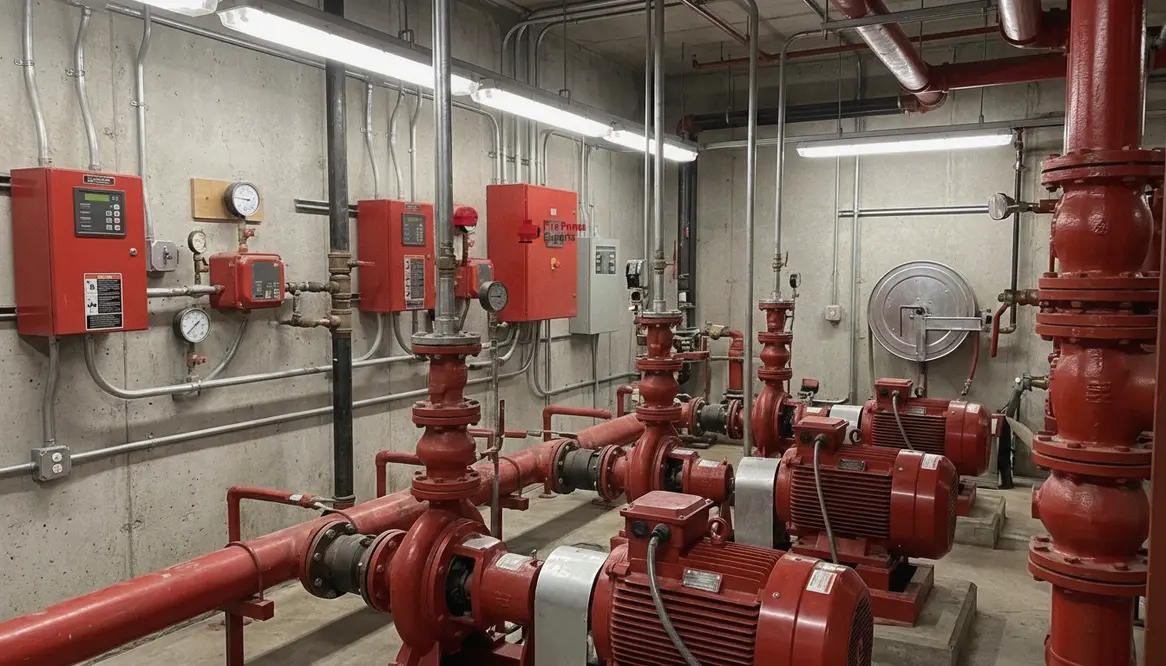
Fire pumps matter because they help deliver reliable water pressure when a system must perform under stress. In large commercial and industrial properties, water demand can rise fast. Therefore, I pay close attention to pump sizing, redundancy, testing, and maintenance access. I also check how the pumps connect with tanks, valves, and control systems. If the water source fails, the whole system loses muscle. That is why I recommend keeping the pump room clean, accessible, and ready for service at all times. For more detail on site specific solutions, I use a trusted reference such as Australian fire pump compliance guidance for commercial facilities, which helps support better decision making for large properties.
Why testing and maintenance protect your business
Testing is not busywork. It is proof. Regular checks help me catch faults before they become expensive or dangerous. For example, a blocked sprinkler head, a weak battery, or a faulty valve can stay hidden until the wrong moment. Then the building learns a very expensive lesson. Routine maintenance also helps reduce downtime, support insurance needs, and improve audit outcomes. More importantly, it gives managers confidence that their site can respond under pressure. That peace of mind is worth its weight in steel.
Quick comparison of common compliance tasks
| Task | Why it matters |
| System inspection | Finds damage, faults, or missing parts |
| Functional testing | Confirms systems activate as designed |
| Logbook updates | Creates a clear compliance record |
| Repairs and upgrades | Keeps the site aligned with current rules |
Frequently asked questions about Australian fire protection standards
Conclusion
If you manage a commercial, industrial, or major property asset, I recommend treating fire compliance as a core business task, not a side note. Australian fire protection standards give you the structure, but proper planning, testing, and upkeep make the system effective. So if you want fewer risks, better compliance, and stronger protection for your site, now is the time to review your setup, close the gaps, and keep your fire systems ready for action.