Australian Fire Protection Standards AS Compliance Guide
AS Standards for Fire Protection Explained: Complete Guide
I have seen plenty of people treat fire protection like a box to tick, right up until the alarm sounds and everyone suddenly becomes a part time expert. That is why Australian fire protection standards AS matter so much for commercial and industrial facilities, as well as major property buildings. These standards shape how systems get designed, installed, tested, and maintained so they do their job when pressure rises and seconds matter. In this guide, I will break down the key points in a clear way, using plain language and a practical view that helps you stay compliant without needing a law degree or a drama series plot twist.
What Australian fire protection standards AS mean in real life
These standards set the rules for fire safety systems across Australia. In simple terms, they tell me how to build a safer building and how to keep it working. They cover things like hydrants, sprinklers, pumps, alarms, and emergency systems. They also guide how often I need checks, tests, and repairs.
For commercial and industrial sites, this matters even more. A warehouse, hospital, office tower, or shopping centre cannot afford guesswork. So, the standards create a shared playbook for builders, facility managers, contractors, and inspectors. That way, everyone speaks the same language, and nobody wings it like a bad sequel.
Why compliance matters for major facilities
Compliance protects people, property, and business continuity. First, it helps lower the risk of fire spreading fast. Next, it supports safe evacuation and faster emergency response. Then, it helps reduce downtime, insurance trouble, and legal pain. Nobody enjoys explaining a system failure to a board, an insurer, or a regulator. That meeting tends to feel longer than a tax audit with a broken chair.
For major properties, compliance is not just about passing an inspection. It also helps keep systems reliable over time. If a pump fails, a valve sticks, or a sprinkler line underperforms, the entire site can face serious risk. Therefore, good compliance becomes part of daily risk control, not just a one time event.
Key standards I look at first
Fire system design
- Matches the building type and risk level
- Sets the right coverage and water supply needs
- Helps prevent weak points in the system
Installation and setup
- Uses approved parts and correct layouts
- Follows tested methods for safe performance
- Checks that systems work with the building design
Inspection and testing
- Confirms that each component still works
- Finds faults before they become costly
- Supports records for audits and compliance reviews
Maintenance and repair
- Keeps systems ready for real emergencies
- Extends equipment life
- Reduces the chance of surprise failures
How I apply AS standards on site
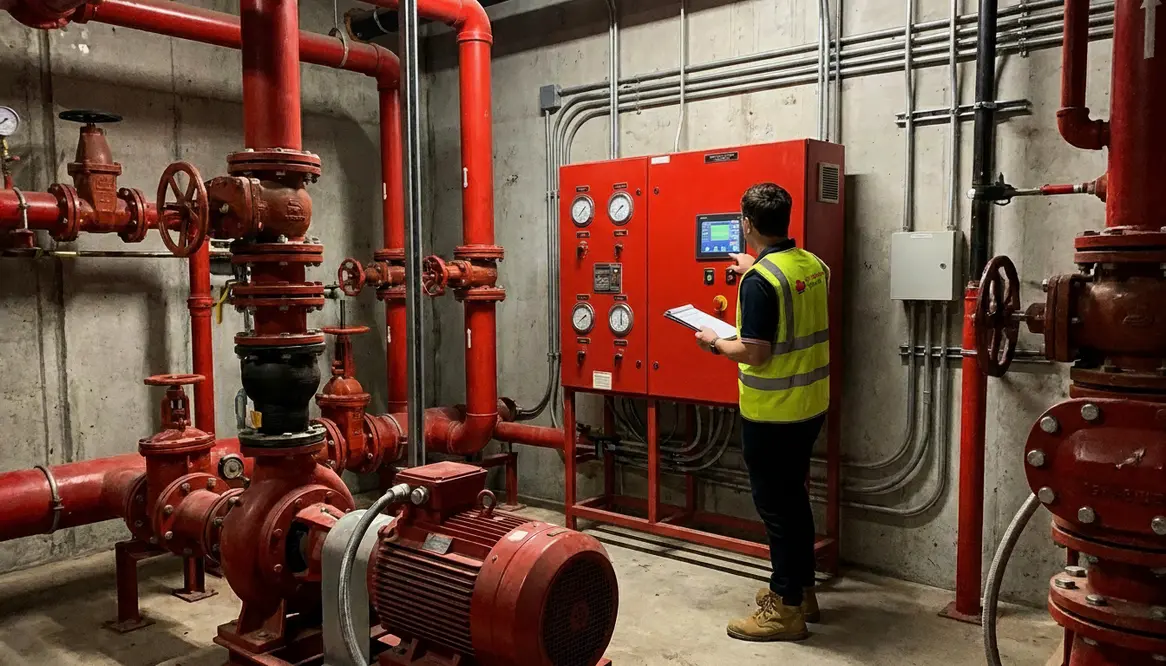
I start with the building use, the hazard level, and the existing fire protection setup. After that, I compare the site against the relevant standards and look for gaps. Then, I review service logs, test results, drawings, and equipment labels. If a site includes pumps, I pay close attention to performance and flow, because a pump that only looks confident is about as useful as a superhero with a paper cape.
Regular testing is vital. For example, fire pumps must meet the correct performance needs during scheduled checks. If you want a practical deep view on this topic, I recommend this guide to AS 2419 fire pump testing and maintenance compliance in Australia. It gives useful detail that supports better site planning and maintenance decisions.
The parts of compliance that people often miss
Many teams remember the big items, such as alarms and sprinklers. However, the smaller details often cause trouble. For example, labels must stay clear, access must remain open, and records must stay current. In addition, contractors need the right training and site access, or the best testing plan can fall apart fast.
I also see confusion around shared responsibility. Building owners, facility managers, and service providers all play a role. So, compliance works best when each person knows what they own and what they must report. Otherwise, the system becomes a game of “I thought you handled that,” which is never a strong safety strategy.
Quick check for commercial sites
If I want a fast compliance snapshot, I ask these questions:
- Do I know which standards apply to this building?
- Are test and maintenance records current?
- Do all fire systems match the site risk?
- Have faults been fixed without delay?
- Can the system still perform under real fire conditions?
Australian fire protection standards AS in everyday operations
In day to day work, Australian fire protection standards AS influence everything from the way contractors schedule their visits to how budgets get set for upgrades. When teams understand which clauses affect their specific building type, decisions become clearer, arguments get shorter, and upgrades stop feeling like guesswork.
The real power of Australian fire protection standards AS shows when incidents are prevented rather than just managed. Clear maintenance routines, documented testing, and well trained staff mean issues are caught while they are still cheap, instead of during a real emergency when every second counts and every mistake is on display.
FAQ
Conclusion
I would treat fire protection standards as a business tool, not just a rulebook. When I follow them properly, I protect people, reduce risk, and keep major facilities ready for real emergencies. If your site needs stronger compliance, better testing, or clearer maintenance planning, now is the time to act. Review your systems, close the gaps, and make sure your fire protection setup works when it counts most. Because in this line of work, “we’ll deal with it later” is a very expensive sentence.