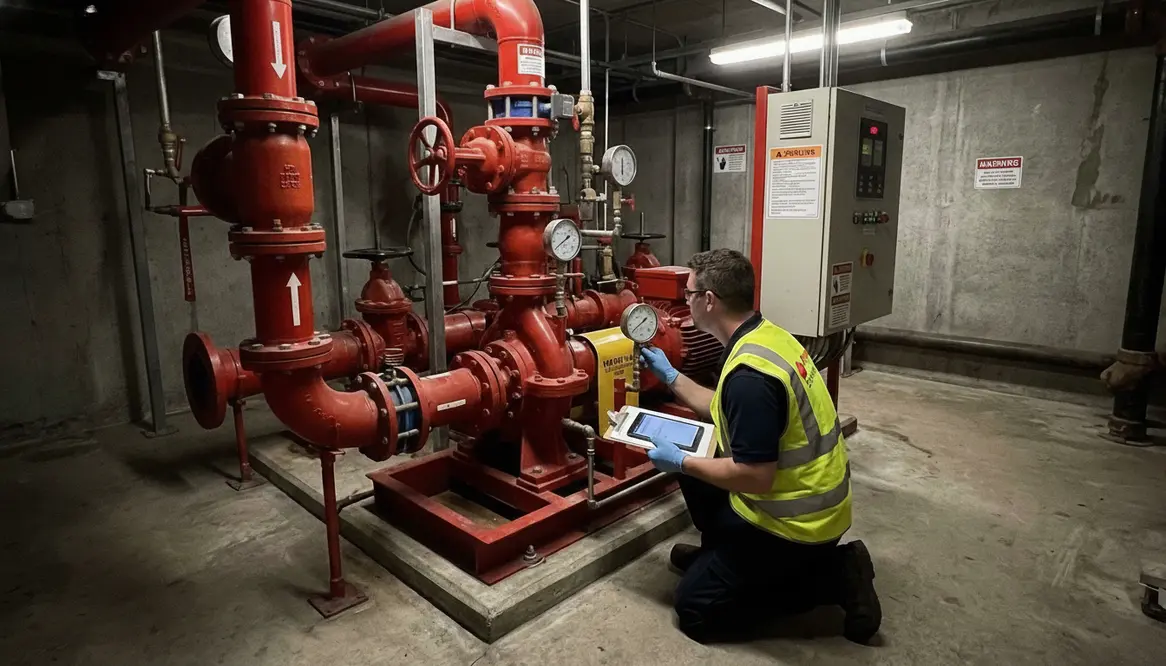
It is the process of checking a fire pump to make sure it works to the Australian standard, including inspections, operational checks, and performance verification against the requirements of the system design.
How often should a fire pump be tested?
It should be checked on a set routine. Basic items are often completed daily or weekly depending on the system, with deeper checks completed at regular service intervals that confirm performance under load.
What do I check during testing?
I check starting and control response, pressure and flow performance, valves, alarms and controls, and the condition of the driver (power supply or fuel, plus battery, cooling, and related health indicators). I also look for visible wear, leaks, overheating, and unusual vibration or noise.
Why does test history matter?
Test history helps spot performance drops before they turn into failures. Comparing results over time makes small issues visible early, which is what keeps reliability consistent.
Who needs AS 2941 testing?
Commercial and industrial sites, major property buildings, warehouses, plants, and any other large facilities that rely on fire pump systems as part of their fire protection arrangement.
Conclusion
If you manage a commercial or industrial facility, I recommend treating fire pump testing as a core safety task, not a side job. A pump that starts cleanly, holds pressure, and records well gives real peace of mind when it counts. So, if your system needs a closer look, now is the time to act. Review your testing plan, fix weak points, and keep your fire protection ready for the day it truly matters. Consistent AS 2941 fire pump testing is how you keep that readiness from becoming a “hope for the best” strategy, and it is a lot less stressful than explaining performance problems after an emergency.
Where I get help for Australian fire pump compliance
When a site needs support, I look for a team that understands both the standard and the real life demands of large properties. For local guidance, I also review resources from Kord Fire solutions for fire pump compliance, which can help when I need a clearer view of service planning and system care. If I need broader product or service detail for a different market, I may reference los angeles fire pump service information as a point of comparison. Still, for commercial and industrial facilities, the main goal stays the same: keep the pump ready, documented, and reliable.
FAQ
Conclusion
If you manage a commercial or industrial facility, I recommend treating fire pump testing as a core safety task, not a side job. A pump that starts cleanly, holds pressure, and records well gives real peace of mind when it counts. So, if your system needs a closer look, now is the time to act. Review your testing plan, fix weak points, and keep your fire protection ready for the day it truly matters. Consistent AS 2941 fire pump testing is how you keep that readiness from becoming a “hope for the best” strategy, and it is a lot less stressful than explaining performance problems after an emergency.
Common problems I look for during testing
Fire pumps often fail in predictable ways, which helps if you know where to look. I watch for
First column
Low pressure or weak flow
Air leaks in suction lines
Stiff or stuck valves
Poor battery health
Second column
Fuel supply issues
Overheating during run time
Unusual vibration or noise
Control faults or alarm failures
When I find one of these problems early, I can usually fix it before it becomes a full system failure. That is the value of good testing. It gives me time, and time is often the difference between a quick repair and a major incident.
Where I get help for Australian fire pump compliance
When a site needs support, I look for a team that understands both the standard and the real life demands of large properties. For local guidance, I also review resources from Kord Fire solutions for fire pump compliance, which can help when I need a clearer view of service planning and system care. If I need broader product or service detail for a different market, I may reference los angeles fire pump service information as a point of comparison. Still, for commercial and industrial facilities, the main goal stays the same: keep the pump ready, documented, and reliable.
FAQ
Conclusion
If you manage a commercial or industrial facility, I recommend treating fire pump testing as a core safety task, not a side job. A pump that starts cleanly, holds pressure, and records well gives real peace of mind when it counts. So, if your system needs a closer look, now is the time to act. Review your testing plan, fix weak points, and keep your fire protection ready for the day it truly matters. Consistent AS 2941 fire pump testing is how you keep that readiness from becoming a “hope for the best” strategy, and it is a lot less stressful than explaining performance problems after an emergency.
Here is the test schedule I usually follow
The test schedule depends on the site and the system design, but I always work from a clear routine. First, I check the daily or weekly basic items where required. Then I carry out deeper monthly and periodic tests that confirm full pump performance. After that, I review service logs, repairs, and any faults that came up during the last inspection cycle.
For busy sites, I plan tests so disruption stays low. However, I never rush the job. A fire pump needs proper time under load, proper recording, and proper follow up. Skipping steps to save ten minutes is like trying to outrun a storm because you like the rain less today. It sounds bold, but it rarely ends well.
Common problems I look for during testing
Fire pumps often fail in predictable ways, which helps if you know where to look. I watch for
First column
Low pressure or weak flow
Air leaks in suction lines
Stiff or stuck valves
Poor battery health
Second column
Fuel supply issues
Overheating during run time
Unusual vibration or noise
Control faults or alarm failures
When I find one of these problems early, I can usually fix it before it becomes a full system failure. That is the value of good testing. It gives me time, and time is often the difference between a quick repair and a major incident.
Where I get help for Australian fire pump compliance
When a site needs support, I look for a team that understands both the standard and the real life demands of large properties. For local guidance, I also review resources from Kord Fire solutions for fire pump compliance, which can help when I need a clearer view of service planning and system care. If I need broader product or service detail for a different market, I may reference los angeles fire pump service information as a point of comparison. Still, for commercial and industrial facilities, the main goal stays the same: keep the pump ready, documented, and reliable.
FAQ
Conclusion
If you manage a commercial or industrial facility, I recommend treating fire pump testing as a core safety task, not a side job. A pump that starts cleanly, holds pressure, and records well gives real peace of mind when it counts. So, if your system needs a closer look, now is the time to act. Review your testing plan, fix weak points, and keep your fire protection ready for the day it truly matters. Consistent AS 2941 fire pump testing is how you keep that readiness from becoming a “hope for the best” strategy, and it is a lot less stressful than explaining performance problems after an emergency.
Why testing matters for commercial and industrial sites
Commercial and industrial buildings face higher risk because they often hold more people, more stock, more power, or more production gear. A weak fire pump can slow response and increase damage fast. That is a bad day for any site leader, and an even worse one for the insurance report.
Regular AS 2941 fire pump testing helps me spot faults before they turn into failures. It also supports compliance, site safety, and better emergency readiness. In many cases, a pump issue hides in plain sight. Maybe a valve sticks. Maybe a bearing starts to wear. Maybe a battery does not hold charge. On their own, these may seem small. Together, they can turn a critical system into a very expensive paperweight.
Here is the test schedule I usually follow
The test schedule depends on the site and the system design, but I always work from a clear routine. First, I check the daily or weekly basic items where required. Then I carry out deeper monthly and periodic tests that confirm full pump performance. After that, I review service logs, repairs, and any faults that came up during the last inspection cycle.
For busy sites, I plan tests so disruption stays low. However, I never rush the job. A fire pump needs proper time under load, proper recording, and proper follow up. Skipping steps to save ten minutes is like trying to outrun a storm because you like the rain less today. It sounds bold, but it rarely ends well.
Common problems I look for during testing
Fire pumps often fail in predictable ways, which helps if you know where to look. I watch for
First column
Low pressure or weak flow
Air leaks in suction lines
Stiff or stuck valves
Poor battery health
Second column
Fuel supply issues
Overheating during run time
Unusual vibration or noise
Control faults or alarm failures
When I find one of these problems early, I can usually fix it before it becomes a full system failure. That is the value of good testing. It gives me time, and time is often the difference between a quick repair and a major incident.
Where I get help for Australian fire pump compliance
When a site needs support, I look for a team that understands both the standard and the real life demands of large properties. For local guidance, I also review resources from Kord Fire solutions for fire pump compliance, which can help when I need a clearer view of service planning and system care. If I need broader product or service detail for a different market, I may reference los angeles fire pump service information as a point of comparison. Still, for commercial and industrial facilities, the main goal stays the same: keep the pump ready, documented, and reliable.
FAQ
Conclusion
If you manage a commercial or industrial facility, I recommend treating fire pump testing as a core safety task, not a side job. A pump that starts cleanly, holds pressure, and records well gives real peace of mind when it counts. So, if your system needs a closer look, now is the time to act. Review your testing plan, fix weak points, and keep your fire protection ready for the day it truly matters. Consistent AS 2941 fire pump testing is how you keep that readiness from becoming a “hope for the best” strategy, and it is a lot less stressful than explaining performance problems after an emergency.
How I test a fire pump under AS 2941
I start with a visual inspection. Then I test the pump while it runs, because that is where the truth shows up. I confirm the pump starts on demand and reaches steady operation without delay. Next, I watch pressure and flow so I can see if the pump performs within the right range for the site design.
I also pay close attention to the driver. If the unit runs on diesel, I check fuel level, battery charge, oil, cooling, and exhaust condition. If it uses electric drive, I check power supply, alarms, and control response. Then I review the test records and compare results with past readings. That trend line tells me a lot. A small drop today can become a big failure later. Fire systems love consistency, and honestly, so do I.
Why testing matters for commercial and industrial sites
Commercial and industrial buildings face higher risk because they often hold more people, more stock, more power, or more production gear. A weak fire pump can slow response and increase damage fast. That is a bad day for any site leader, and an even worse one for the insurance report.
Regular AS 2941 fire pump testing helps me spot faults before they turn into failures. It also supports compliance, site safety, and better emergency readiness. In many cases, a pump issue hides in plain sight. Maybe a valve sticks. Maybe a bearing starts to wear. Maybe a battery does not hold charge. On their own, these may seem small. Together, they can turn a critical system into a very expensive paperweight.
Here is the test schedule I usually follow
The test schedule depends on the site and the system design, but I always work from a clear routine. First, I check the daily or weekly basic items where required. Then I carry out deeper monthly and periodic tests that confirm full pump performance. After that, I review service logs, repairs, and any faults that came up during the last inspection cycle.
For busy sites, I plan tests so disruption stays low. However, I never rush the job. A fire pump needs proper time under load, proper recording, and proper follow up. Skipping steps to save ten minutes is like trying to outrun a storm because you like the rain less today. It sounds bold, but it rarely ends well.
Common problems I look for during testing
Fire pumps often fail in predictable ways, which helps if you know where to look. I watch for
First column
Low pressure or weak flow
Air leaks in suction lines
Stiff or stuck valves
Poor battery health
Second column
Fuel supply issues
Overheating during run time
Unusual vibration or noise
Control faults or alarm failures
When I find one of these problems early, I can usually fix it before it becomes a full system failure. That is the value of good testing. It gives me time, and time is often the difference between a quick repair and a major incident.
Where I get help for Australian fire pump compliance
When a site needs support, I look for a team that understands both the standard and the real life demands of large properties. For local guidance, I also review resources from Kord Fire solutions for fire pump compliance, which can help when I need a clearer view of service planning and system care. If I need broader product or service detail for a different market, I may reference los angeles fire pump service information as a point of comparison. Still, for commercial and industrial facilities, the main goal stays the same: keep the pump ready, documented, and reliable.
FAQ
Conclusion
If you manage a commercial or industrial facility, I recommend treating fire pump testing as a core safety task, not a side job. A pump that starts cleanly, holds pressure, and records well gives real peace of mind when it counts. So, if your system needs a closer look, now is the time to act. Review your testing plan, fix weak points, and keep your fire protection ready for the day it truly matters. Consistent AS 2941 fire pump testing is how you keep that readiness from becoming a “hope for the best” strategy, and it is a lot less stressful than explaining performance problems after an emergency.
What AS 2941 fire pump testing covers
AS 2941 focuses on the fire pump as part of a complete fire fighting setup. I use it to guide testing, inspection, and upkeep so the pump stays ready for use. The standard looks at more than just whether the pump turns on. It also asks if it starts cleanly, builds the right pressure, moves enough water, and keeps doing that under real conditions.
In practice, I check the pump set, driver, control panel, valves, fuel supply if needed, and the full path the water takes. I also look for wear, leaks, strange noise, heat issues, and anything that might cut performance. A system can look fine on paper and still fail under load. That is why testing matters. A fire pump is not a movie prop. It needs to work in the real world, not just under flattering lighting.
How I test a fire pump under AS 2941
I start with a visual inspection. Then I test the pump while it runs, because that is where the truth shows up. I confirm the pump starts on demand and reaches steady operation without delay. Next, I watch pressure and flow so I can see if the pump performs within the right range for the site design.
I also pay close attention to the driver. If the unit runs on diesel, I check fuel level, battery charge, oil, cooling, and exhaust condition. If it uses electric drive, I check power supply, alarms, and control response. Then I review the test records and compare results with past readings. That trend line tells me a lot. A small drop today can become a big failure later. Fire systems love consistency, and honestly, so do I.
Why testing matters for commercial and industrial sites
Commercial and industrial buildings face higher risk because they often hold more people, more stock, more power, or more production gear. A weak fire pump can slow response and increase damage fast. That is a bad day for any site leader, and an even worse one for the insurance report.
Regular AS 2941 fire pump testing helps me spot faults before they turn into failures. It also supports compliance, site safety, and better emergency readiness. In many cases, a pump issue hides in plain sight. Maybe a valve sticks. Maybe a bearing starts to wear. Maybe a battery does not hold charge. On their own, these may seem small. Together, they can turn a critical system into a very expensive paperweight.
Here is the test schedule I usually follow
The test schedule depends on the site and the system design, but I always work from a clear routine. First, I check the daily or weekly basic items where required. Then I carry out deeper monthly and periodic tests that confirm full pump performance. After that, I review service logs, repairs, and any faults that came up during the last inspection cycle.
For busy sites, I plan tests so disruption stays low. However, I never rush the job. A fire pump needs proper time under load, proper recording, and proper follow up. Skipping steps to save ten minutes is like trying to outrun a storm because you like the rain less today. It sounds bold, but it rarely ends well.
Common problems I look for during testing
Fire pumps often fail in predictable ways, which helps if you know where to look. I watch for
First column
Low pressure or weak flow
Air leaks in suction lines
Stiff or stuck valves
Poor battery health
Second column
Fuel supply issues
Overheating during run time
Unusual vibration or noise
Control faults or alarm failures
When I find one of these problems early, I can usually fix it before it becomes a full system failure. That is the value of good testing. It gives me time, and time is often the difference between a quick repair and a major incident.
Where I get help for Australian fire pump compliance
When a site needs support, I look for a team that understands both the standard and the real life demands of large properties. For local guidance, I also review resources from Kord Fire solutions for fire pump compliance, which can help when I need a clearer view of service planning and system care. If I need broader product or service detail for a different market, I may reference los angeles fire pump service information as a point of comparison. Still, for commercial and industrial facilities, the main goal stays the same: keep the pump ready, documented, and reliable.
FAQ
Conclusion
If you manage a commercial or industrial facility, I recommend treating fire pump testing as a core safety task, not a side job. A pump that starts cleanly, holds pressure, and records well gives real peace of mind when it counts. So, if your system needs a closer look, now is the time to act. Review your testing plan, fix weak points, and keep your fire protection ready for the day it truly matters. Consistent AS 2941 fire pump testing is how you keep that readiness from becoming a “hope for the best” strategy, and it is a lot less stressful than explaining performance problems after an emergency.
When I talk about AS 2941 fire pump testing, I am talking about more than a box to tick on a maintenance sheet. I am talking about the kind of routine that keeps a commercial or industrial fire system ready when the pressure turns real. In major property buildings, warehouses, plants, and other large sites, a fire pump can be the quiet hero in the background. It sits there like a serious supporting actor, then suddenly it has to perform like the lead in the final scene. No pressure, right?
In Australia, AS 2941 sets the ground rules for fire pump installation, care, and testing. I follow those rules to help make sure the pump works when the system needs water fast. In this article, I will break down what I check, how I test, and why a solid routine matters for commercial and industrial facilities.
What AS 2941 fire pump testing covers
AS 2941 focuses on the fire pump as part of a complete fire fighting setup. I use it to guide testing, inspection, and upkeep so the pump stays ready for use. The standard looks at more than just whether the pump turns on. It also asks if it starts cleanly, builds the right pressure, moves enough water, and keeps doing that under real conditions.
In practice, I check the pump set, driver, control panel, valves, fuel supply if needed, and the full path the water takes. I also look for wear, leaks, strange noise, heat issues, and anything that might cut performance. A system can look fine on paper and still fail under load. That is why testing matters. A fire pump is not a movie prop. It needs to work in the real world, not just under flattering lighting.
How I test a fire pump under AS 2941
I start with a visual inspection. Then I test the pump while it runs, because that is where the truth shows up. I confirm the pump starts on demand and reaches steady operation without delay. Next, I watch pressure and flow so I can see if the pump performs within the right range for the site design.
I also pay close attention to the driver. If the unit runs on diesel, I check fuel level, battery charge, oil, cooling, and exhaust condition. If it uses electric drive, I check power supply, alarms, and control response. Then I review the test records and compare results with past readings. That trend line tells me a lot. A small drop today can become a big failure later. Fire systems love consistency, and honestly, so do I.
Why testing matters for commercial and industrial sites
Commercial and industrial buildings face higher risk because they often hold more people, more stock, more power, or more production gear. A weak fire pump can slow response and increase damage fast. That is a bad day for any site leader, and an even worse one for the insurance report.
Regular AS 2941 fire pump testing helps me spot faults before they turn into failures. It also supports compliance, site safety, and better emergency readiness. In many cases, a pump issue hides in plain sight. Maybe a valve sticks. Maybe a bearing starts to wear. Maybe a battery does not hold charge. On their own, these may seem small. Together, they can turn a critical system into a very expensive paperweight.
Here is the test schedule I usually follow
The test schedule depends on the site and the system design, but I always work from a clear routine. First, I check the daily or weekly basic items where required. Then I carry out deeper monthly and periodic tests that confirm full pump performance. After that, I review service logs, repairs, and any faults that came up during the last inspection cycle.
For busy sites, I plan tests so disruption stays low. However, I never rush the job. A fire pump needs proper time under load, proper recording, and proper follow up. Skipping steps to save ten minutes is like trying to outrun a storm because you like the rain less today. It sounds bold, but it rarely ends well.
Common problems I look for during testing
Fire pumps often fail in predictable ways, which helps if you know where to look. I watch for
First column
Low pressure or weak flow
Air leaks in suction lines
Stiff or stuck valves
Poor battery health
Second column
Fuel supply issues
Overheating during run time
Unusual vibration or noise
Control faults or alarm failures
When I find one of these problems early, I can usually fix it before it becomes a full system failure. That is the value of good testing. It gives me time, and time is often the difference between a quick repair and a major incident.
Where I get help for Australian fire pump compliance
When a site needs support, I look for a team that understands both the standard and the real life demands of large properties. For local guidance, I also review resources from Kord Fire solutions for fire pump compliance, which can help when I need a clearer view of service planning and system care. If I need broader product or service detail for a different market, I may reference los angeles fire pump service information as a point of comparison. Still, for commercial and industrial facilities, the main goal stays the same: keep the pump ready, documented, and reliable.
FAQ
Conclusion
If you manage a commercial or industrial facility, I recommend treating fire pump testing as a core safety task, not a side job. A pump that starts cleanly, holds pressure, and records well gives real peace of mind when it counts. So, if your system needs a closer look, now is the time to act. Review your testing plan, fix weak points, and keep your fire protection ready for the day it truly matters. Consistent AS 2941 fire pump testing is how you keep that readiness from becoming a “hope for the best” strategy, and it is a lot less stressful than explaining performance problems after an emergency.
AS 2941 Fire Pump Testing: What I Check and Why
When I talk about AS 2941 fire pump testing, I am talking about more than a box to tick on a maintenance sheet. I am talking about the kind of routine that keeps a commercial or industrial fire system ready when the pressure turns real. In major property buildings, warehouses, plants, and other large sites, a fire pump can be the quiet hero in the background. It sits there like a serious supporting actor, then suddenly it has to perform like the lead in the final scene. No pressure, right?
In Australia, AS 2941 sets the ground rules for fire pump installation, care, and testing. I follow those rules to help make sure the pump works when the system needs water fast. In this article, I will break down what I check, how I test, and why a solid routine matters for commercial and industrial facilities.
What AS 2941 fire pump testing covers
AS 2941 focuses on the fire pump as part of a complete fire fighting setup. I use it to guide testing, inspection, and upkeep so the pump stays ready for use. The standard looks at more than just whether the pump turns on. It also asks if it starts cleanly, builds the right pressure, moves enough water, and keeps doing that under real conditions.
In practice, I check the pump set, driver, control panel, valves, fuel supply if needed, and the full path the water takes. I also look for wear, leaks, strange noise, heat issues, and anything that might cut performance. A system can look fine on paper and still fail under load. That is why testing matters. A fire pump is not a movie prop. It needs to work in the real world, not just under flattering lighting.
How I test a fire pump under AS 2941
I start with a visual inspection. Then I test the pump while it runs, because that is where the truth shows up. I confirm the pump starts on demand and reaches steady operation without delay. Next, I watch pressure and flow so I can see if the pump performs within the right range for the site design.
I also pay close attention to the driver. If the unit runs on diesel, I check fuel level, battery charge, oil, cooling, and exhaust condition. If it uses electric drive, I check power supply, alarms, and control response. Then I review the test records and compare results with past readings. That trend line tells me a lot. A small drop today can become a big failure later. Fire systems love consistency, and honestly, so do I.
Why testing matters for commercial and industrial sites
Commercial and industrial buildings face higher risk because they often hold more people, more stock, more power, or more production gear. A weak fire pump can slow response and increase damage fast. That is a bad day for any site leader, and an even worse one for the insurance report.
Regular AS 2941 fire pump testing helps me spot faults before they turn into failures. It also supports compliance, site safety, and better emergency readiness. In many cases, a pump issue hides in plain sight. Maybe a valve sticks. Maybe a bearing starts to wear. Maybe a battery does not hold charge. On their own, these may seem small. Together, they can turn a critical system into a very expensive paperweight.
Here is the test schedule I usually follow
The test schedule depends on the site and the system design, but I always work from a clear routine. First, I check the daily or weekly basic items where required. Then I carry out deeper monthly and periodic tests that confirm full pump performance. After that, I review service logs, repairs, and any faults that came up during the last inspection cycle.
For busy sites, I plan tests so disruption stays low. However, I never rush the job. A fire pump needs proper time under load, proper recording, and proper follow up. Skipping steps to save ten minutes is like trying to outrun a storm because you like the rain less today. It sounds bold, but it rarely ends well.
Common problems I look for during testing
Fire pumps often fail in predictable ways, which helps if you know where to look. I watch for
First column
Low pressure or weak flow
Air leaks in suction lines
Stiff or stuck valves
Poor battery health
Second column
Fuel supply issues
Overheating during run time
Unusual vibration or noise
Control faults or alarm failures
When I find one of these problems early, I can usually fix it before it becomes a full system failure. That is the value of good testing. It gives me time, and time is often the difference between a quick repair and a major incident.
Where I get help for Australian fire pump compliance
When a site needs support, I look for a team that understands both the standard and the real life demands of large properties. For local guidance, I also review resources from Kord Fire solutions for fire pump compliance, which can help when I need a clearer view of service planning and system care. If I need broader product or service detail for a different market, I may reference los angeles fire pump service information as a point of comparison. Still, for commercial and industrial facilities, the main goal stays the same: keep the pump ready, documented, and reliable.
FAQ
Conclusion
If you manage a commercial or industrial facility, I recommend treating fire pump testing as a core safety task, not a side job. A pump that starts cleanly, holds pressure, and records well gives real peace of mind when it counts. So, if your system needs a closer look, now is the time to act. Review your testing plan, fix weak points, and keep your fire protection ready for the day it truly matters. Consistent AS 2941 fire pump testing is how you keep that readiness from becoming a “hope for the best” strategy, and it is a lot less stressful than explaining performance problems after an emergency.
AS 2941 Fire Pump Testing: What I Check and Why
When I talk about AS 2941 fire pump testing, I am talking about more than a box to tick on a maintenance sheet. I am talking about the kind of routine that keeps a commercial or industrial fire system ready when the pressure turns real. In major property buildings, warehouses, plants, and other large sites, a fire pump can be the quiet hero in the background. It sits there like a serious supporting actor, then suddenly it has to perform like the lead in the final scene. No pressure, right?
In Australia, AS 2941 sets the ground rules for fire pump installation, care, and testing. I follow those rules to help make sure the pump works when the system needs water fast. In this article, I will break down what I check, how I test, and why a solid routine matters for commercial and industrial facilities.
What AS 2941 fire pump testing covers
AS 2941 focuses on the fire pump as part of a complete fire fighting setup. I use it to guide testing, inspection, and upkeep so the pump stays ready for use. The standard looks at more than just whether the pump turns on. It also asks if it starts cleanly, builds the right pressure, moves enough water, and keeps doing that under real conditions.
In practice, I check the pump set, driver, control panel, valves, fuel supply if needed, and the full path the water takes. I also look for wear, leaks, strange noise, heat issues, and anything that might cut performance. A system can look fine on paper and still fail under load. That is why testing matters. A fire pump is not a movie prop. It needs to work in the real world, not just under flattering lighting.
How I test a fire pump under AS 2941
I start with a visual inspection. Then I test the pump while it runs, because that is where the truth shows up. I confirm the pump starts on demand and reaches steady operation without delay. Next, I watch pressure and flow so I can see if the pump performs within the right range for the site design.
I also pay close attention to the driver. If the unit runs on diesel, I check fuel level, battery charge, oil, cooling, and exhaust condition. If it uses electric drive, I check power supply, alarms, and control response. Then I review the test records and compare results with past readings. That trend line tells me a lot. A small drop today can become a big failure later. Fire systems love consistency, and honestly, so do I.
Why testing matters for commercial and industrial sites
Commercial and industrial buildings face higher risk because they often hold more people, more stock, more power, or more production gear. A weak fire pump can slow response and increase damage fast. That is a bad day for any site leader, and an even worse one for the insurance report.
Regular AS 2941 fire pump testing helps me spot faults before they turn into failures. It also supports compliance, site safety, and better emergency readiness. In many cases, a pump issue hides in plain sight. Maybe a valve sticks. Maybe a bearing starts to wear. Maybe a battery does not hold charge. On their own, these may seem small. Together, they can turn a critical system into a very expensive paperweight.
Here is the test schedule I usually follow
The test schedule depends on the site and the system design, but I always work from a clear routine. First, I check the daily or weekly basic items where required. Then I carry out deeper monthly and periodic tests that confirm full pump performance. After that, I review service logs, repairs, and any faults that came up during the last inspection cycle.
For busy sites, I plan tests so disruption stays low. However, I never rush the job. A fire pump needs proper time under load, proper recording, and proper follow up. Skipping steps to save ten minutes is like trying to outrun a storm because you like the rain less today. It sounds bold, but it rarely ends well.
Common problems I look for during testing
Fire pumps often fail in predictable ways, which helps if you know where to look. I watch for
First column
Low pressure or weak flow
Air leaks in suction lines
Stiff or stuck valves
Poor battery health
Second column
Fuel supply issues
Overheating during run time
Unusual vibration or noise
Control faults or alarm failures
When I find one of these problems early, I can usually fix it before it becomes a full system failure. That is the value of good testing. It gives me time, and time is often the difference between a quick repair and a major incident.
Where I get help for Australian fire pump compliance
When a site needs support, I look for a team that understands both the standard and the real life demands of large properties. For local guidance, I also review resources from Kord Fire solutions for fire pump compliance, which can help when I need a clearer view of service planning and system care. If I need broader product or service detail for a different market, I may reference los angeles fire pump service information as a point of comparison. Still, for commercial and industrial facilities, the main goal stays the same: keep the pump ready, documented, and reliable.
FAQ
Conclusion
If you manage a commercial or industrial facility, I recommend treating fire pump testing as a core safety task, not a side job. A pump that starts cleanly, holds pressure, and records well gives real peace of mind when it counts. So, if your system needs a closer look, now is the time to act. Review your testing plan, fix weak points, and keep your fire protection ready for the day it truly matters. Consistent AS 2941 fire pump testing is how you keep that readiness from becoming a “hope for the best” strategy, and it is a lot less stressful than explaining performance problems after an emergency.
AS 2941 Fire Pump Testing: What I Check and Why
When I talk about AS 2941 fire pump testing, I am talking about more than a box to tick on a maintenance sheet. I am talking about the kind of routine that keeps a commercial or industrial fire system ready when the pressure turns real. In major property buildings, warehouses, plants, and other large sites, a fire pump can be the quiet hero in the background. It sits there like a serious supporting actor, then suddenly it has to perform like the lead in the final scene. No pressure, right?
In Australia, AS 2941 sets the ground rules for fire pump installation, care, and testing. I follow those rules to help make sure the pump works when the system needs water fast. In this article, I will break down what I check, how I test, and why a solid routine matters for commercial and industrial facilities.
What AS 2941 fire pump testing covers
AS 2941 focuses on the fire pump as part of a complete fire fighting setup. I use it to guide testing, inspection, and upkeep so the pump stays ready for use. The standard looks at more than just whether the pump turns on. It also asks if it starts cleanly, builds the right pressure, moves enough water, and keeps doing that under real conditions.
In practice, I check the pump set, driver, control panel, valves, fuel supply if needed, and the full path the water takes. I also look for wear, leaks, strange noise, heat issues, and anything that might cut performance. A system can look fine on paper and still fail under load. That is why testing matters. A fire pump is not a movie prop. It needs to work in the real world, not just under flattering lighting.
How I test a fire pump under AS 2941
I start with a visual inspection. Then I test the pump while it runs, because that is where the truth shows up. I confirm the pump starts on demand and reaches steady operation without delay. Next, I watch pressure and flow so I can see if the pump performs within the right range for the site design.
I also pay close attention to the driver. If the unit runs on diesel, I check fuel level, battery charge, oil, cooling, and exhaust condition. If it uses electric drive, I check power supply, alarms, and control response. Then I review the test records and compare results with past readings. That trend line tells me a lot. A small drop today can become a big failure later. Fire systems love consistency, and honestly, so do I.
Why testing matters for commercial and industrial sites
Commercial and industrial buildings face higher risk because they often hold more people, more stock, more power, or more production gear. A weak fire pump can slow response and increase damage fast. That is a bad day for any site leader, and an even worse one for the insurance report.
Regular AS 2941 fire pump testing helps me spot faults before they turn into failures. It also supports compliance, site safety, and better emergency readiness. In many cases, a pump issue hides in plain sight. Maybe a valve sticks. Maybe a bearing starts to wear. Maybe a battery does not hold charge. On their own, these may seem small. Together, they can turn a critical system into a very expensive paperweight.
Here is the test schedule I usually follow
The test schedule depends on the site and the system design, but I always work from a clear routine. First, I check the daily or weekly basic items where required. Then I carry out deeper monthly and periodic tests that confirm full pump performance. After that, I review service logs, repairs, and any faults that came up during the last inspection cycle.
For busy sites, I plan tests so disruption stays low. However, I never rush the job. A fire pump needs proper time under load, proper recording, and proper follow up. Skipping steps to save ten minutes is like trying to outrun a storm because you like the rain less today. It sounds bold, but it rarely ends well.
Common problems I look for during testing
Fire pumps often fail in predictable ways, which helps if you know where to look. I watch for
First column
Low pressure or weak flow
Air leaks in suction lines
Stiff or stuck valves
Poor battery health
Second column
Fuel supply issues
Overheating during run time
Unusual vibration or noise
Control faults or alarm failures
When I find one of these problems early, I can usually fix it before it becomes a full system failure. That is the value of good testing. It gives me time, and time is often the difference between a quick repair and a major incident.
Where I get help for Australian fire pump compliance
When a site needs support, I look for a team that understands both the standard and the real life demands of large properties. For local guidance, I also review resources from Kord Fire solutions for fire pump compliance, which can help when I need a clearer view of service planning and system care. If I need broader product or service detail for a different market, I may reference los angeles fire pump service information as a point of comparison. Still, for commercial and industrial facilities, the main goal stays the same: keep the pump ready, documented, and reliable.
FAQ
Conclusion
If you manage a commercial or industrial facility, I recommend treating fire pump testing as a core safety task, not a side job. A pump that starts cleanly, holds pressure, and records well gives real peace of mind when it counts. So, if your system needs a closer look, now is the time to act. Review your testing plan, fix weak points, and keep your fire protection ready for the day it truly matters. Consistent AS 2941 fire pump testing is how you keep that readiness from becoming a “hope for the best” strategy, and it is a lot less stressful than explaining performance problems after an emergency.