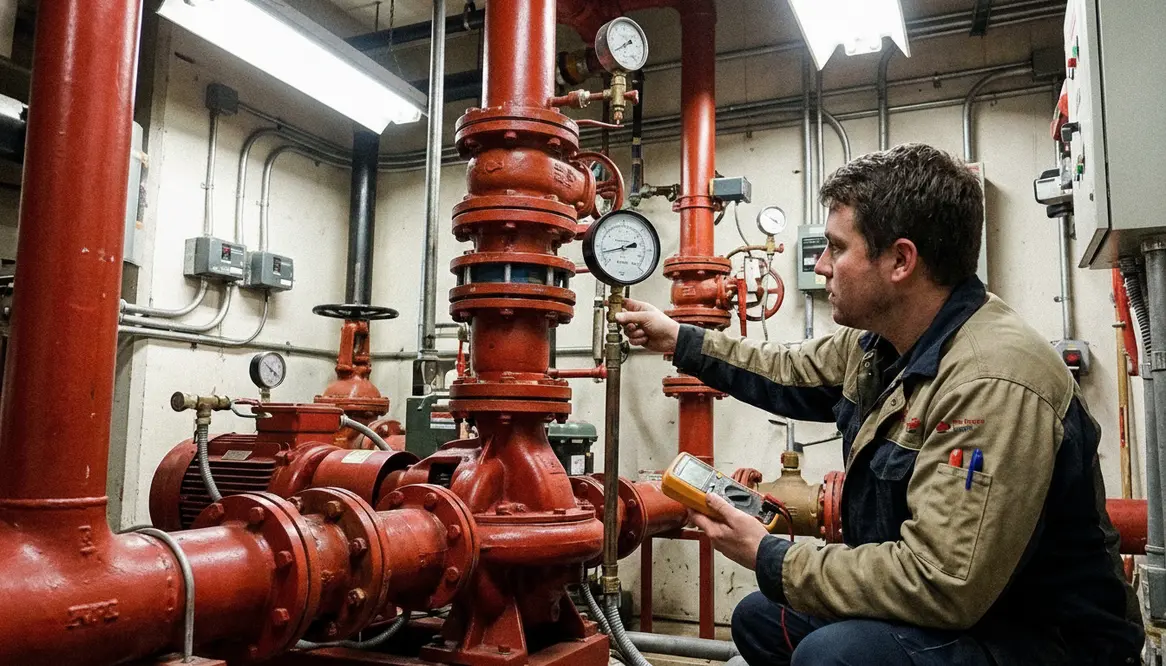
Interpreting Low Fire Pump Flow Meter Readings
What Technicians Look for When a Fire Pump Flow Meter Reads Too Low
When I walk into a plant, a high rise, or a large warehouse and see a fire pump flow meter reading too low, I do not jump to the loudest conclusion in the room. That reading can mean many things, and most of them are fixable. Still, I treat it like a warning light on a dashboard in a spy movie. It may be minor, or it may be the start of a very bad day. For commercial and industrial facilities, and for major properties where fire protection matters every single minute, I look past the number and check the full system. That is where the real story lives.
Why the meter is only the starting point
A low flow meter reading does not always mean the pump failed. In fact, it often points to a problem somewhere else in the line. First, I check whether the meter is even reading correctly. Then I look at the test setup, valve positions, suction supply, and the discharge path. A fire pump can look weak on paper while still working hard in the background. On the other hand, a small issue like trapped air or a partly closed valve can make the reading look worse than it is. So, I start with the meter, but I never stop there.
In many cases, the meter becomes the messenger, not the villain. That is why I always verify the whole chain before I touch anything major.
What technicians check first
When I see low flow, I begin with the basics, because the basics love to cause trouble at the worst time. I inspect the test line, compare gauge readings, and confirm the pump is running at the right speed. If the system uses a churn or test header setup, I make sure the water can move freely. Then I check for hidden resistance in the piping. A dirty strainer, a stuck check valve, or a closed isolation valve can choke flow fast. It is almost rude how simple that can be.
Here is the quick list I use before I go deeper:
- Valve position on suction and discharge lines
- Gauge accuracy and meter condition
- Air pockets in the system
- Obstruction in pipes or strainers
- Pump speed and driver performance
- Water supply strength from the source
How I diagnose the pump and water supply
Next, I look at the pump itself. If the impeller is worn, damaged, or clogged, the pump may spin all day and still deliver weak flow. Likewise, if the driver does not bring the pump up to full speed, the meter will tell a sad little story. I also check for cavitation, because that problem can reduce flow and cause rough operation. Cavitation sounds dramatic because it is dramatic. It is the fire pump version of popcorn popping inside a machine, and nobody wants that.
Then I turn to the water source. If the suction tank level is low, if the city supply cannot keep up, or if the suction pipe has a restriction, the pump cannot move the water it needs. So, I measure suction pressure, inspect the source connection, and compare the data with the pump curve. That curve matters. It tells me whether the pump is underperforming or simply being asked to do something it cannot do.
Signs the reading is not the real problem
Sometimes the meter looks guilty, but the real issue hides in plain sight. If the discharge pressure is normal but the flow looks low, I suspect the meter first. If the pump test results swing up and down without a pattern, I look for air, calibration issues, or unstable supply conditions. Also, if the pump passes one test and fails another, I pay close attention to the test method. A bad setup can make a healthy system look weak.
For a broader service view, I also review los angeles fire pump service and inspection support when I need a solid reference for pump care in large properties. And when a site has mixed electrical and fire protection needs, I often check related resources like commercial electrical support for major facilities because the driver, controls, and power supply all work together.
Quick check guide for low flow cases
Meter side
I verify calibration, sensor condition, and proper installation.
Pump side
I inspect the impeller, speed, vibration, and signs of wear.
System side
I confirm valve positions, line blockage, and test arrangement.
Supply side
I check suction pressure, tank level, and source stability.
Why maintenance history changes the answer
I never ignore the paper trail. Maintenance logs often tell me more than the first reading does. If the same meter has drifted before, I suspect calibration issues. If the pump had recent repair work, I check for install mistakes or loose fittings. If a property has skipped routine testing, I expect hidden wear. That is not magic. That is just pattern reading, and it saves time, money, and a lot of late afternoon headaches.
For commercial and industrial facilities, this matters even more because one weak link can affect the whole protection system. That is why I value routine checks and a clear service plan. Kord Fire also provides fire sprinkler service for large buildings, which helps keep the full protection setup in step with the pump side.
FAQ
Common questions when you see fire pump flow meter reading too low
Conclusion
If I see a fire pump flow meter reading too low, I treat it as a clue, not a verdict. I check the meter, the pump, the valves, and the water supply until the full picture comes into focus. For large commercial and industrial properties, that careful work protects life, assets, and operations. If you want a cleaner answer and a stronger system, bring in a qualified team, review your maintenance plan, and act before a small reading turns into a big problem.