How to Verify Fire Pump Flow Meter Accuracy

What Technicians Check Before Trusting a Fire Pump Flow Meter Test

I have seen a lot of fire pump tests that looked fine on the surface, yet the numbers told a different story. That is why how to verify fire pump flow meter accuracy matters so much in commercial and industrial buildings. A flow meter can save time, but only if it gives a clean, reliable reading. Otherwise, the test becomes theater, and nobody wants safety work that behaves like a bad sequel.

In major properties, I always start with the basics, then I work outward. I check the meter, the piping, the system setup, and the conditions around the test. As a result, I can tell whether the reading reflects the real fire pump performance or just a noisy moment in the system.

Before I trust a fire pump flow meter test, I look at the full picture

A flow meter does not stand alone. It depends on the pump, the suction supply, the discharge line, and the test setup. So, when I review a reading, I first ask whether the test conditions make sense for the building. In a commercial tower or industrial site, even a small setup issue can skew the result.

I also look for signs of unstable flow. If pressure bounces around or the meter jumps in a way that feels random, I slow down. Then I compare the result with past tests. A good technician does not chase one shiny number like it is the final scene of a superhero movie. Instead, I check whether the reading fits the system history and the equipment condition.

How I verify fire pump flow meter accuracy on site

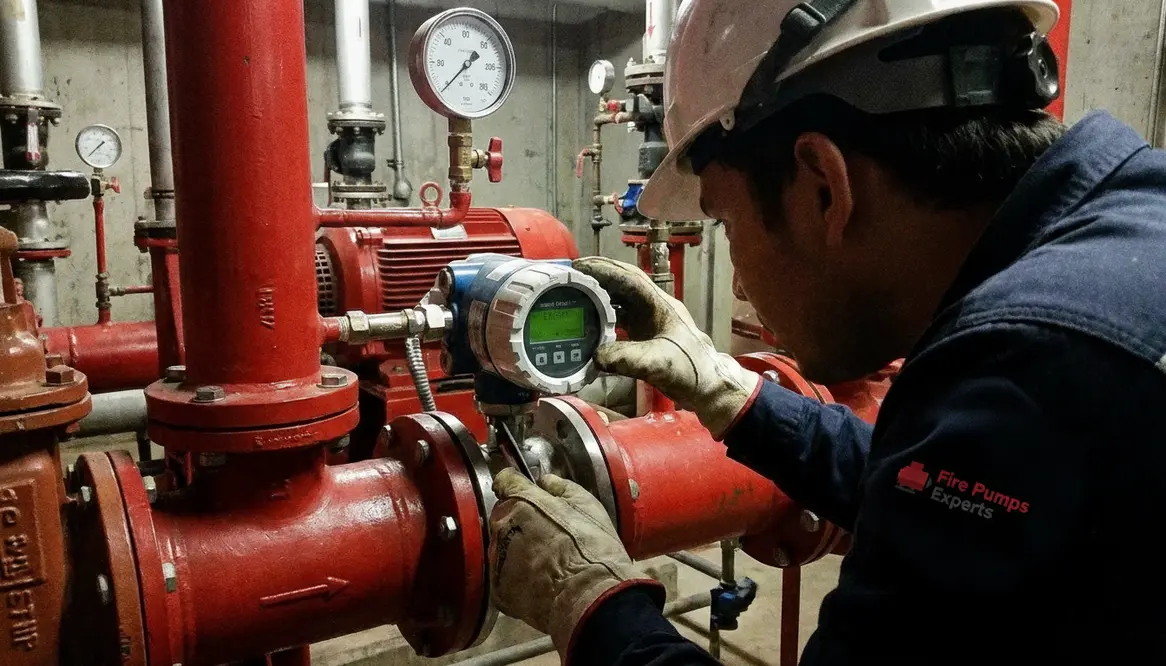
I begin with the meter itself. First, I check calibration records. If the meter has not been calibrated on schedule, I treat the result with caution. Next, I inspect the meter body, sensors, and wiring for damage, scale, or dirt. Even a small buildup can affect the reading. Then I confirm that the meter matches the pipe size and flow range for the system.

I also check the installation location. Flow meters need straight pipe runs and steady flow patterns to work well. If elbows, valves, or reducers sit too close, the reading can drift. So I verify the layout before I trust any data. This step is a core part of how to verify fire pump flow meter accuracy, because the best meter in the world still needs a fair shot at doing its job.

What I inspect in the test setup and piping

Here is the practical part. I review the piping like a mechanic listening to a strange engine sound. The details matter.

What I check

Valve position

Air in the line

Pipe condition

Meter placement

Why it matters

Wrong valve positions can distort flow and pressure

Air makes readings unstable and can hide real performance

Corrosion, scale, or damage can disturb the flow profile

Poor placement can create false high or low readings

After that, I look at the test header and the discharge path. If the water has nowhere clean to go, pressure behavior changes fast. I also confirm that no one has made a field change since the last test. A bypass valve left half open can turn a decent test into a guessing game, and guessing is not a safety plan.

How I compare the reading with pump behavior

I never trust the meter alone. Instead, I compare the meter result with the pump curve, suction pressure, discharge pressure, and motor or engine behavior. If the numbers do not line up, I investigate further. For example, if the meter says flow is high but the discharge pressure falls too sharply, something is off.

I also watch how fast the pump reaches its test point. A healthy system should respond in a steady way. If the pump surges, stalls, or shows unusual vibration, I treat that as a clue. In commercial and industrial fire protection, the reading must match the system response, not just the display screen. For more background on full fire pump service support, I often refer to Los Angeles fire pump service solutions when reviewing regional service standards and maintenance practices.

Why facility history and maintenance records matter

Past records help me spot patterns. If a pump has drifted over several tests, I want to know why. Maybe the meter needs recalibration. Maybe the suction supply changed. Or maybe the system has a mechanical issue hiding behind a decent first look. That is why I review service logs, repair notes, and prior flow test reports before I accept a current reading.

I also use that history to decide whether the meter still suits the system. In some large facilities, process changes or expansions alter water demand. When that happens, the original test setup may no longer tell the full story. If I find repeated inconsistencies, I may recommend a deeper inspection or a cross check with another method. For related electrical and support systems that affect pump reliability, I also look at commercial electrical services for critical facilities as part of the bigger picture.

What I do after the test feels trustworthy

Once the setup checks out and the numbers make sense, I document everything clearly. I record the meter condition, the test location, the system settings, and any odd behavior. Then I note whether the result confirms expected pump performance or points to a problem. This final step helps the facility team make smart decisions without redoing the same work later. It also keeps the process calm, clean, and useful, which is how good fire protection should feel.

FAQ

Conclusion

If you manage a commercial or industrial facility, do not treat a flow meter reading like gospel just because the screen looks confident. I always verify the meter, the piping, the setup, and the pump response before I trust the result. If you want better fire pump confidence, review your records, inspect your test setup, and schedule a professional check. The right test protects the building, the people, and your peace of mind.

Leave a Comment