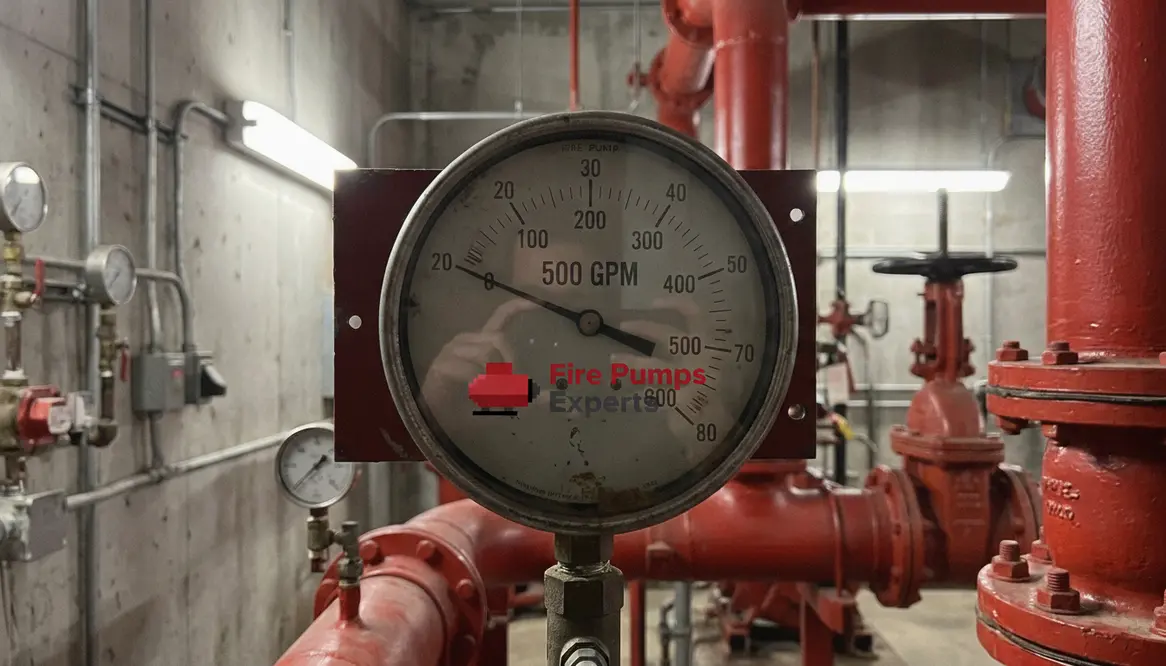
Fire Pump Flow Meter Not Reading Correctly
When I walk into a commercial plant, a high rise, or a major property building, I can usually tell within minutes when something feels off. And yes, one of the first red flags is a fire pump flow meter not reading correctly. If that meter never moves, never flickers, and never seems to care what the pump is doing, I do not call that normal. I call it suspicious. After all, a fire pump is not a museum piece. It should respond when the system demands water, pressure, and proof.
Technicians question a dead still flow meter because the meter is supposed to tell a story. If the story never changes, then either the meter is lying, the system is not moving water, or both. And trust me, that is not the kind of plot twist anyone wants during testing day.
Why a steady meter raises alarm
A flow meter should react when I test the fire pump. If it stays fixed, I start with the basics. First, I check whether the pump is actually moving water. Then I look at the sensing lines, wiring, display, and calibration. A meter can freeze because of air in the line, a bad sensor, a blocked tube, or a failed transmitter. Sometimes the issue is simple. Other times, it is the equipment version of putting on sunglasses indoors and pretending everything is fine.
What makes this serious is the risk. If the meter cannot show flow changes, I lose a key sign that the pump is doing its job. For commercial and industrial sites, that can affect compliance, testing records, and real fire protection performance. A pump that only looks healthy is not the same as a pump that is healthy. Big difference. Huge, even. A little like a superhero who only works in costume.
What technicians check first
When I face a fire pump flow meter not reading correctly, I move through a simple order. This keeps the work clean and cuts down on guesswork.
First column
- I confirm the pump test is creating real flow
- I inspect valves and bypass lines for positions that block movement
- I check for trapped air, loose fittings, or clogged sensing lines
Second column
- I compare the meter reading with pressure and discharge signs
- I inspect power, wiring, and display health
- I review calibration notes and past test results
After that, I look for patterns. If the meter never changed across several tests, I treat that as a clue, not a coincidence. In my experience, repeated flat readings often point to a deeper issue than one bad test. Also, the problem may hide behind a clean faceplate. Equipment can look sharp and still fail hard. That is the industrial version of a fancy suit with no one inside it.
What the meter may be hiding
A flow meter that stays fixed can hide more than one problem. For one, the pump may not be reaching the proper operating point. If the pump test setup is wrong, the meter may never see a real flow change. In other cases, the meter may sit in a section of piping that does not get a clean reading because of turbulence or poor installation. I also see issues when a facility skips regular service. Dust, moisture, and age do their work quietly, and then one day the meter decides to retire early.
This is where good records matter. If I compare today’s test to past reports, I can tell whether the reading drifted, locked up, or failed suddenly. That timeline helps me decide whether I need a repair, a recalibration, or a deeper system review. And for large properties, that matters because one small fault can ripple through the whole fire protection setup.
How I connect the flow meter to the whole fire pump system
I never treat the flow meter as a lone device. It belongs to the pump, the driver, the valves, the controls, and the piping. So if the meter acts strange, I look at the system as one unit. That means I ask whether the pump starts on demand, whether pressure rises as expected, and whether the discharge path stays open. I also check whether the meter type matches the system design and the service conditions. A mismatch here can create false confidence, and false confidence is not a strategy. It is a trap wearing a tie.
For facilities that want a broader service view, I often point teams toward commercial fire pump service support and coordinated electrical care. In many properties, fire pump performance depends on more than one trade working in sync. That is why resources from Kord Electric can help support reliable power and controls, while fire sprinkler service solutions can help keep the overall protection plan aligned. If you need a local example, see los angeles fire pump service for more detail on specialized support for major buildings.
What I do after the problem shows up
Once I confirm the meter is off, I do not guess. I document the reading, confirm the test conditions, and isolate the cause. Then I fix the fault and retest. If the meter still refuses to move, I replace or repair the failing part and verify the full system again. This step matters because a test only proves something when the result changes in a clear way. Otherwise, it is just a noisy morning with paperwork.
For commercial and industrial facilities, this is not the place for wishful thinking. A fire pump must prove itself under load, and the flow meter must tell the truth. When it does not, I treat that as a call to act, not a reason to hope for the best. Hope is lovely. Compliance, though, is better.
FAQ
Conclusion
If your fire pump flow meter not reading correctly keeps showing the same number, do not shrug it off. I always treat that as a warning sign and trace it back through the pump, piping, wiring, and setup. For commercial and industrial buildings, the safest move is clear: inspect, fix, and verify. If you want your fire protection system to stay ready, now is the time to act, review the data, and bring in the right service support before the next test or the next emergency.