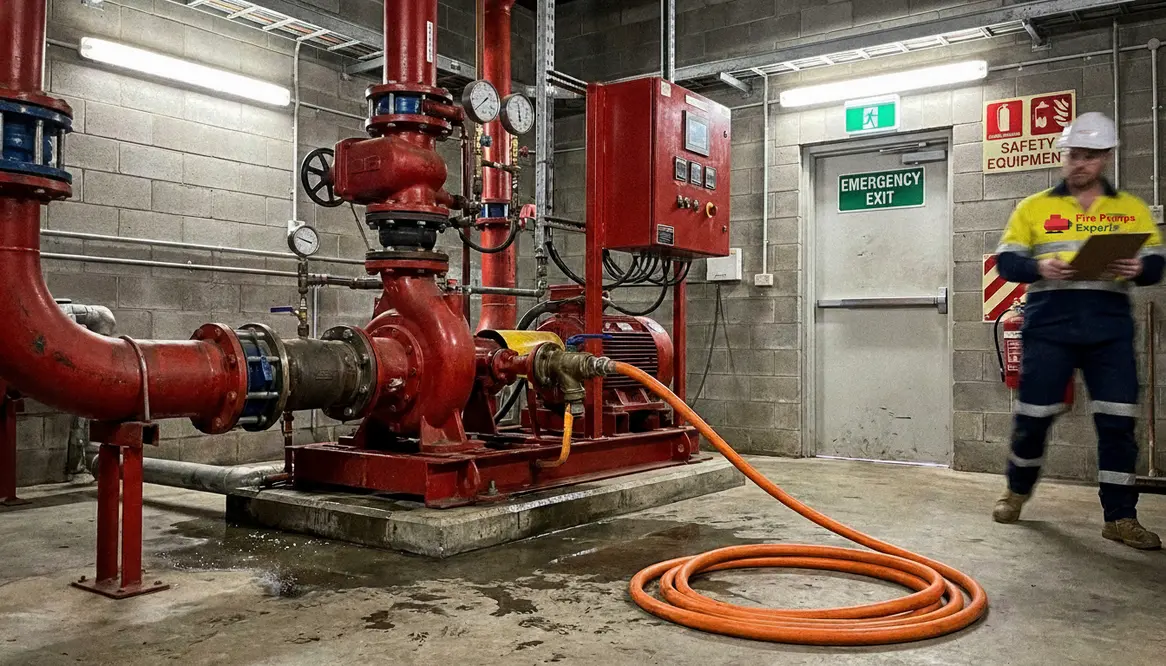
Fire Pump Testing: Complete Australian Guide
I have seen many systems look fine on the surface and still fail when it matters. That is why fire pump testing sits at the heart of fire safety for commercial and industrial sites, as well as major property buildings. It is not glamorous, sure. It is not the kind of task that gets applause at the office. Yet when a pump must deliver pressure during a fire event, nobody in the building cares about style points. They care that the system works. In Australia, regular testing also helps keep you aligned with local safety duties, insurance expectations, and building compliance. So, let me walk you through what matters, what to check, and how I approach it in the real world.
Why fire pump testing matters for Australian buildings
I treat fire pumps like the backup singer who suddenly has to carry the whole concert. They may stay quiet most of the time, but when the alarm hits, they need to perform with no drama. For commercial and industrial facilities, a weak pump can mean low water pressure, delayed response, and serious risk to people and property.
In Australia, testing gives me a clear picture of pump health. It helps me spot worn parts, blocked strainers, poor suction, battery issues, leaking valves, and problems with automatic start. Also, regular checks support compliance with the relevant Australian Standards and site maintenance plans. If I wait for an emergency to discover a fault, the result could be costly and dangerous. That is a plot twist nobody wants.
What I check during a test
When I carry out a pump assessment, I focus on both the pump and the full fire system around it. I do not just stare at one gauge and call it a day. That would be like checking a car by looking at the steering wheel only.
Left side
I start with visual checks. I look for leaks, corrosion, loose fittings, damaged cables, and signs of overheating. Then I test start up modes, pressure levels, and flow performance. After that, I review alarm signals and control panel health. Finally, I confirm the pump returns to standby the way it should.
Right side
I also check fuel supply on diesel units, battery condition on electric units, and suction conditions at the water source. In addition, I watch for unusual vibration or noise, because pumps often “speak” before they fail. A grinding sound is never a good sign unless you work in a coffee shop.
How often I recommend testing
The right schedule depends on the site, the system design, and the local maintenance plan. However, I usually work from a mix of weekly, monthly, and annual checks. Weekly runs help confirm the pump starts and operates. Monthly reviews go deeper into performance and control systems. Annual testing gives the full picture, including flow output and overall condition.
For large commercial and industrial properties, I strongly prefer a written schedule. That way, nobody relies on memory, and memory is a tricky fellow on a busy site. A documented plan also makes audits and inspections much easier.
Fire pump testing steps I follow
I keep the process clear and controlled. First, I confirm the site is ready and the test will not create an avoidable risk. Then I notify the right people, because a surprise pump start can wake up half the building. Next, I inspect the system before I run it. After that, I start the pump and measure pressure, flow, and operating stability. I compare the results with expected values and past results, which helps me spot slow decline before failure.
I also record every reading. Good records matter because they show trends over time. One bad reading may be a fluke. Three bad readings tell a story, and usually not a cheerful one.
Common problems I find and how I deal with them
In my experience, the usual faults are often simple at first, then expensive later if ignored. I often find air leaks, dirty filters, worn seals, stale fuel, battery loss, stuck valves, and pressure switch issues. Sometimes the pump starts but cannot hold pressure. Sometimes it runs, but not hard enough. Sometimes the system looks healthy until I test it under load. That is where the truth comes out.
I always recommend repair work from qualified fire protection professionals. Quick fixes may help for a day, but proper correction protects the system for the long run. Also, when I find repeated issues, I look at the root cause rather than just the symptom. Otherwise, I would be treating a fever with sunglasses. Fun image. Bad plan.
Working with local fire protection support
For sites across Australia, I like using a trusted provider that understands commercial and industrial fire systems. If you want more support, I suggest reviewing the Kord Fire protection solutions page for service context and maintenance support ideas. For broader system information, I also recommend this los angeles fire pump service guide as a useful reference point for pump related planning and site readiness.
When I work with a strong team, I can keep testing consistent, reporting clear, and downtime low. That matters for major property buildings where disruption can affect tenants, operations, and safety all at once. And yes, those regular fire pump testing sessions are exactly where reliability is earned, not assumed.
FAQ
Quick answers to the most common questions about fire pump testing in Australia.
Conclusion
If you manage a commercial, industrial, or major property building, now is the time to stay ahead of failure. I can help you build a reliable testing plan, check your fire pump system properly, and keep your site ready for real emergencies. Do not wait for a fire to reveal weak pressure and bad timing. Reach out today, review your current maintenance process, and make sure your fire protection system performs when it matters most. That is the real point of fire pump testing: performance you can trust, not hope you can hope for.