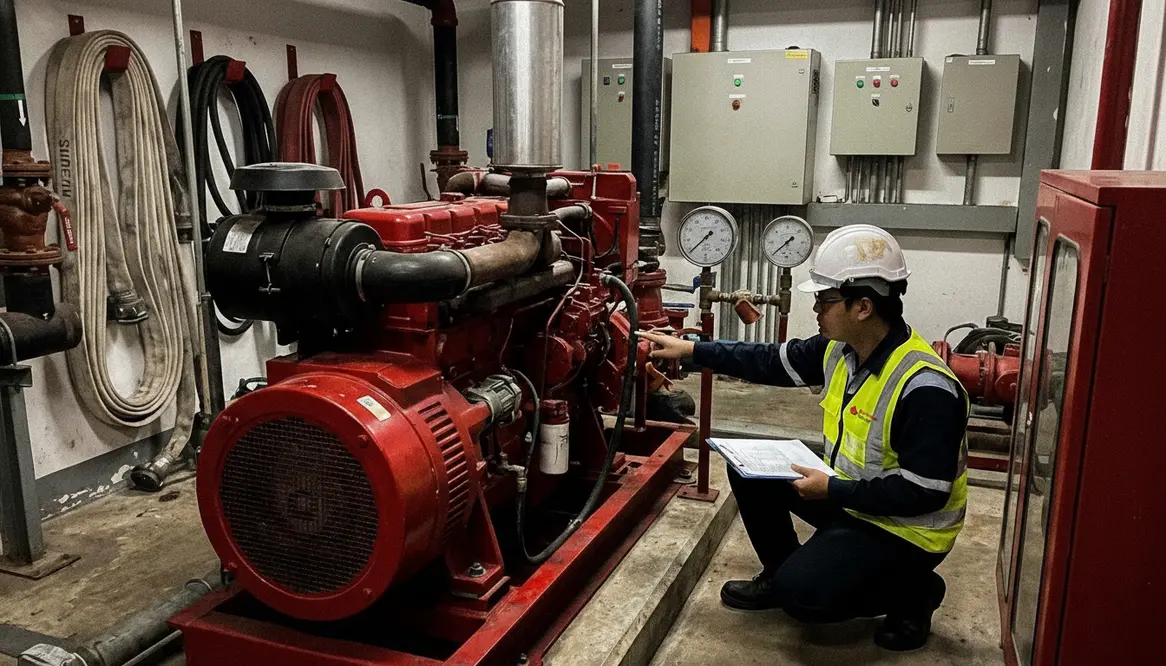
Fire Pump Testing Frequency for Commercial Buildings
How often should fire pumps be tested, what those tests should include, and how a steady fire pump testing frequency helps keep your system ready when it matters most.
How Often Should Fire Pumps Be Tested?
In my line of work, I like to say a fire pump is a lot like a backup singer in a legendary band. You may not notice it every day, but when the lead singer drops the mic, that backup has to hit every note. That is why fire pump testing frequency matters so much for commercial and industrial facilities, as well as major property buildings. If the pump fails, the whole fire protection system can stumble at the worst possible moment. So, let me walk you through how often fire pumps should be tested, what those tests should include, and why a calm schedule now can prevent a very uncalm day later.
What fire pump testing frequency should I follow?
For most commercial and industrial sites, I follow the rules set by local codes and standards, and I never treat testing as a “when I get around to it” task. In general, fire pumps need regular no flow churn tests, weekly visual checks, and monthly or annual performance testing depending on the pump type and the standard in use. The exact schedule can shift based on the system design, water supply, and site risk, so I always start with the applicable code and the facility’s fire protection plan.
In plain terms, the goal is simple: I want to know the pump will start, run, and deliver the right pressure when needed. That means I look beyond the calendar and focus on reliability. A pump that looks fine in the room can still act like a diva under pressure. And unlike a movie villain, it does not announce its arrival.
Weekly checks and what I look for
Weekly inspections help me catch small issues before they turn into expensive problems. I check the pump room, fuel supply where needed, controller condition, power source, and signs of leaks, rust, vibration, or heat. I also make sure the system sits in normal operating mode.
Here is how I split the main checks in practice:
Routine visual check for basic condition, alarms, and room access.
Start up verification to confirm the pump can come online properly.
Run condition review to spot noise, heat, or pressure issues.
Record keeping so trends show up before a failure does.
These checks do not take long, yet they tell a very useful story. If I notice water where water should not be, or a controller light blinking like it is trying to send me a secret message, I dig deeper right away.
Monthly and annual testing for commercial systems
Monthly and annual testing gives me the bigger picture. Weekly checks tell me the pump looks ready. However, performance testing tells me whether it actually is ready. I want to see the pump operate under real conditions, measure pressure and flow, and compare the results to the expected curve.
For many systems, the annual test matters most because it shows the pump’s true output. I also use it to spot wear in the impeller, motor, diesel driver, bearings, or controller. Over time, this test helps me see if the pump is aging well or acting like it needs a vacation.
When I work with large facilities, I also keep an eye on demand changes. A warehouse expansion, new tenant load, or changed water supply can affect performance. So yes, the test schedule matters, but the system conditions matter too. Fire protection is not a “set it and forget it” deal, no matter how tempting that sounds in a busy building.
Why testing protects major property buildings
Fire pump testing does more than satisfy a checkbox. It protects people, inventory, uptime, and the building itself. In a commercial tower, hospital, plant, or distribution center, a failed pump can mean major loss in a very short time. That is why I treat testing as risk control, not paperwork.
Testing also helps with compliance. Inspectors want proof that the system works, and insurers often pay close attention to maintenance records. Just as important, a documented routine can reduce emergency repairs and long shutdowns. In other words, a little attention now can save a lot of drama later. And nobody wants to explain a fire pump failure with the same energy as a bad plot twist in a streaming series.
How I keep testing simple and reliable
I always recommend a clear plan that matches the facility type and pump setup. If you manage a commercial site, you need a schedule that your team can actually follow. If you run an industrial plant, you may need tighter oversight because the risk level and operating demands can be higher.
For a stronger support path, I often point facility teams to fire pump maintenance guidance from Kord Fire, which helps build a more complete service plan. If you want a deeper look at system care and service support, you can also review los angeles fire pump testing services for local SEO relevance and service context.
To keep things on track, I suggest:
- First, assign one person to own the schedule.
- Second, log every inspection and test in one place.
- Third, review results after each test, not months later when the mystery has gone cold.
- Finally, bring in qualified fire protection professionals for annual or more advanced testing, especially on major property buildings with complex systems.
FAQ
If you are tracking your fire pump testing frequency and want quick answers, here are the ones I hear the most.
Conclusion
If you manage a commercial, industrial, or major property building, treat fire pump testing as a core safety task, not a side note. Set a clear schedule, keep your records clean, and act fast when results drift. If you want a stronger plan, reach out to a qualified fire protection team and build a testing routine that fits your site. A reliable pump brings calm. A neglected one brings chaos. I know which soundtrack I prefer.