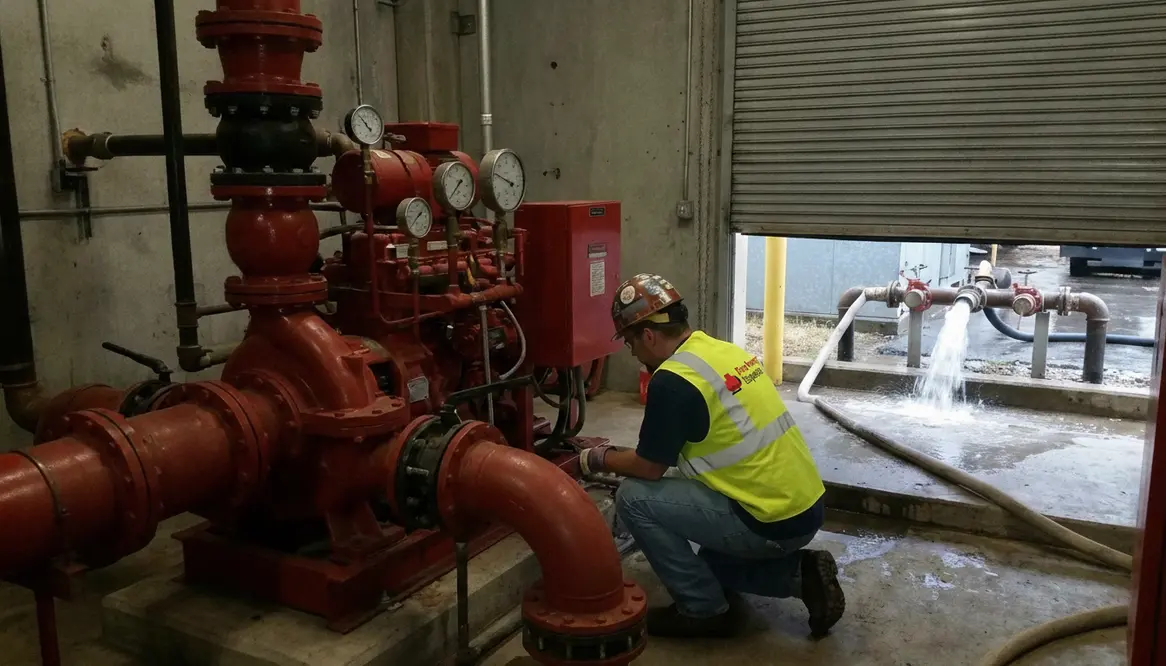
Fire Pump Performance Testing Explained
I take fire pump performance testing seriously because, when a building depends on water pressure in a crisis, “good enough” is not good enough. In commercial and industrial facilities, plus major property buildings, this testing confirms that the pump can do its job when the alarm sounds and the stakes suddenly stop being theoretical. I like to think of it as the fire pump’s annual report card. No drama, no guesswork, just facts. And yes, the numbers matter. In the first 100 to 150 words, I want that clear: fire pump performance testing helps prove the system can support life safety, protect assets, and keep a building ready for the real world, not just the brochure.
What fire pump testing actually checks
When I perform fire pump performance testing, I look at how the pump behaves under real operating conditions. I do not just glance at it and nod like a movie critic pretending to “get” abstract art. I check pressure, flow, speed, suction, discharge, and power draw. Together, these readings show whether the pump meets its expected curve and whether the full fire protection system works as planned.
For commercial and industrial sites, that matters a lot. A warehouse, high rise, plant, or large office building can have long pipe runs, complex layouts, and heavy water demand. Therefore, the test must tell me more than “the pump turns on.” It must tell me whether the pump can maintain strong, steady output when the system needs it most.
Why commercial buildings need regular testing
I see three big reasons.
- First, wear happens. Pumps age, valves drift, gauges lose accuracy, and motors can start acting like they woke up on the wrong side of the bed.
- Second, building use changes. A facility may add storage, equipment, or tenant space, which can change fire load and demand.
- Third, codes and standards expect ongoing proof that the system still performs.
So, regular fire pump performance testing gives facility teams a clear picture before a small issue becomes a very expensive surprise. It also helps reduce downtime, because I can catch problems early, while they are still easy to fix and not yet starring in a “how did this happen?” post incident meeting.
How I test a fire pump step by step
I start with a visual check. Then I confirm the pump room condition, controller status, valve positions, and gauge readings. After that, I run the pump and record data at no flow, churn, partial flow, and full flow points. This is where the real story comes out.
I also compare results against the pump curve and accepted performance limits. If the pump falls short, I do not guess. I trace the cause. It could be a suction issue, a clogged line, a worn impeller, a weak driver, or a control problem. In other words, the pump may be “working,” but not working well, which is a bit like a car that starts but only in theory.
Here is a simple view of what I look for:
What good results look like
Good results are not just about high pressure. They are about balance. I want the pump to reach the right flow, hold useful pressure, and stay within safe operating range. If the readings match the expected curve, then I know the system is behaving the way it should.
However, I also watch for trends. A pump can pass today and still show signs that trouble is coming. For example, if discharge pressure slowly drops from one test period to the next, that can point to internal wear or suction loss. Likewise, if vibration or heat rises, I treat that as a clue, not background noise. Small clues often save big buildings.
How I use the results to plan action
Once I finish fire pump performance testing, I turn the data into a practical plan. I flag repairs, note follow up checks, and recommend next steps for the facility team. If a seal leaks, I call it out. If the controller needs attention, I call it out. If the pump passes cleanly, I still keep the record because history helps with future decisions.
This is also where I point clients toward useful support resources. For example, a facility team can review Kord Fire’s fire protection services for broader system support and planning. And if you want a local service example, you can also look at los angeles fire pump support for related fire pump service information. That kind of reference helps building managers connect testing with ongoing care, which is the real goal.
FAQ
Common questions about fire pump performance testing
If you are comparing schedules, trying to understand what gets measured, or planning for the next round of fire pump performance testing, these answers help keep everything grounded in reality.
Conclusion
When I look at fire pump performance testing, I see more than numbers on a sheet. I see protection, readiness, and peace of mind for major commercial and industrial properties. If your building depends on strong fire pump performance, do not wait for a warning sign dressed up as an emergency. Schedule testing, review the results, and keep your system ready for the day it matters most. I recommend acting now, because safety always pays better than regret.