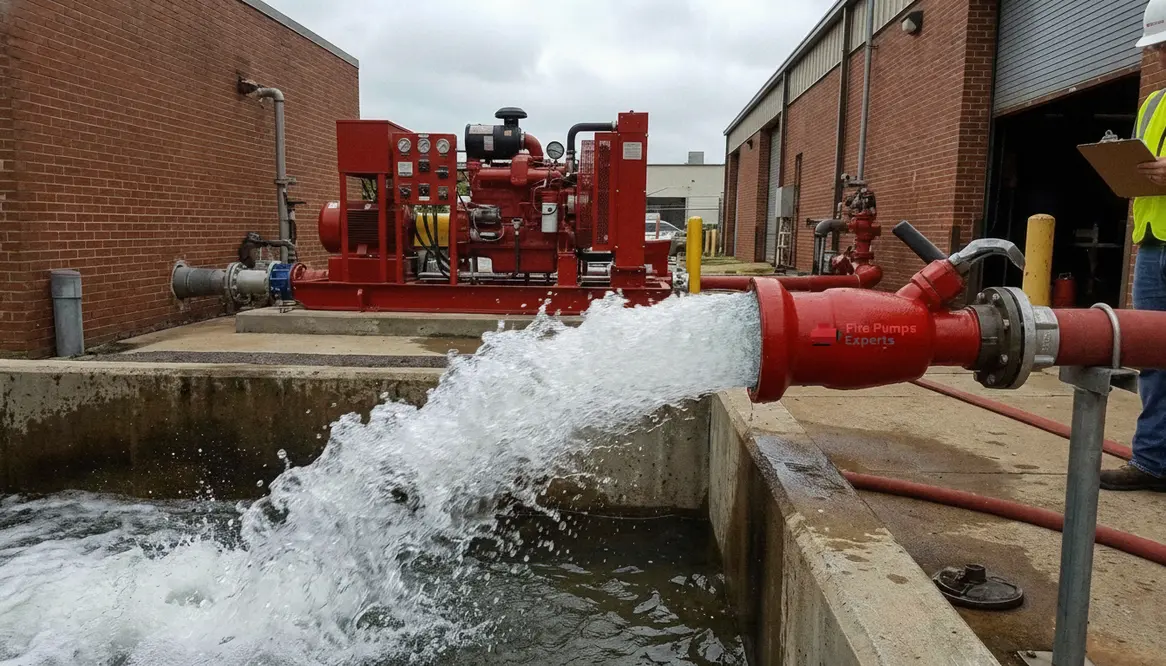
Fire Pump Flow Test for Commercial Industrial Facilities
When I talk about a fire pump flow test, I am talking about a live check of whether the pump can deliver the water volume and pressure a commercial or industrial building may need in an emergency. That matters because when the alarms wake the building at 2 a.m., the pump does not get to be dramatic and “find itself.” It has one job. It must perform. For major property owners, that means the difference between confidence and chaos, and frankly, no one wants a sprinkler system with stage fright.
In this guide, I will walk through what the test does, why it matters, and how I approach it in a way that supports compliance, safety, and long term reliability. I will keep it practical, clear, and focused on commercial and industrial facilities only, because that is where the real pressure lives, literally and figuratively.
Quick Snapshot
A fire pump flow test verifies real performance under demand, not just that the pump sounds like it is ready for action.
- Churn pressure confirms behavior when no water flows
- Rated flow shows performance at designed capacity
- Overload flow reveals how it handles heavy demand
- Suction and discharge pressure support system health checks
What a fire pump flow test measures
A fire pump flow test checks how the pump performs under real demand. I do not just want to know that the pump turns on. I want to know how much water it can move, what pressure it holds, and how it behaves as demand rises. That tells me whether the system can support sprinklers, standpipes, or other fire protection needs across a large property.
During the test, I look at key values such as:
- Churn pressure, which is the pressure when the pump runs but no water flows
- Rated flow, which shows performance at the designed capacity
- Overload flow, which helps reveal how the pump handles heavy demand
- Suction and discharge pressure, which show the health of the system
These numbers matter because a pump can sound fine and still underperform. That is the tricky part. It may look ready, like an action hero with perfect lighting, but the numbers tell the truth.
Why commercial buildings need this test
For commercial and industrial facilities, the fire pump is not a side character. It often supports large water demands, high ceilings, long pipe runs, or complex systems that need strong and steady pressure. As a result, the pump can wear down, lose efficiency, or drift away from its original design over time.
I use flow testing to catch those changes early. In addition, the test helps me confirm that the system still supports the building’s current use. A warehouse, plant, or major property can change a lot over the years. More racks, more floors, more tenant load, more risk. The pump should keep up, and the test shows whether it does.
It also helps with insurance records, code expectations, and maintenance planning. So while the test may feel routine, it supports a much bigger picture. In short, it protects the building from expensive surprises, which is a polite way of saying it keeps the fire safety budget from crying in the corner.
How I run the fire pump flow test
I start with a full review of the pump, controller, gauges, valves, and water supply. Then I confirm the test setup and make sure the building team knows what to expect. That part matters because good communication prevents confusion, and confusion is the enemy of smooth work.
Next, I run the pump under controlled conditions and measure performance at different flow points. I compare the readings to the pump’s design and past results. If the numbers look off, I do not guess. I look for root causes such as clogged strainers, worn impellers, weak water supply, valve issues, or controller problems.
Here is where the fire pump flow test earns its keep: it does not just tell me that something is wrong. It helps me narrow down what kind of problem I am dealing with, so I can respond with the right fix instead of a heroic but useless shrug.
What results mean for your system
Fire pump flow test results can point to both healthy performance and hidden trouble. When the numbers stay close to design, I know the pump is doing its job. However, when pressure drops too fast or flow falls below target, I treat that as a warning sign.
Common signs that need attention include:
- Lower than expected discharge pressure
- Weak flow at rated demand
- Large changes from previous test results
- Unusual vibration, heat, or noise during operation
At that point, I focus on the system as a whole, not just the pump itself. Often, the issue lives somewhere else in the chain. A pump is like the bassist in a good band. You notice it most when it stops holding the whole thing together.
How I keep the process smooth with dual columns
I often organize the work into two simple tracks so the building team can follow along without needing a fire protection PhD.
Before the test
- Review pump records
- Check water source and valves
- Notify building staff and tenants
- Set safe access around the test area
After the test
- Compare readings to design values
- Note any changes or faults
- Recommend repairs or follow up testing
- File results for records and compliance
This simple structure keeps the job organized, reduces downtime, and helps the property team make fast decisions.
Where to find help for your building
If you manage a large property and want a trusted fire protection partner, I recommend reviewing the fire pump testing resources from Kord Fire as a useful reference for maintenance planning and system care. For local service needs, you can also explore los angeles fire pump solutions if your facility needs support in that market. Either way, I always suggest working with a team that understands commercial and industrial systems, because that is where accuracy matters most.
FAQ
Got questions before the next fire pump flow test? These are the ones I hear most often from commercial and industrial facility managers.
Conclusion
If you manage a commercial or industrial property, do not wait for a problem to expose weak pump performance. I use fire pump flow testing to verify readiness, protect assets, and support safer operations. If your system has not been checked recently, now is the time to act. Reach out, review your records, and schedule a proper test before a small issue turns into a very expensive lesson.