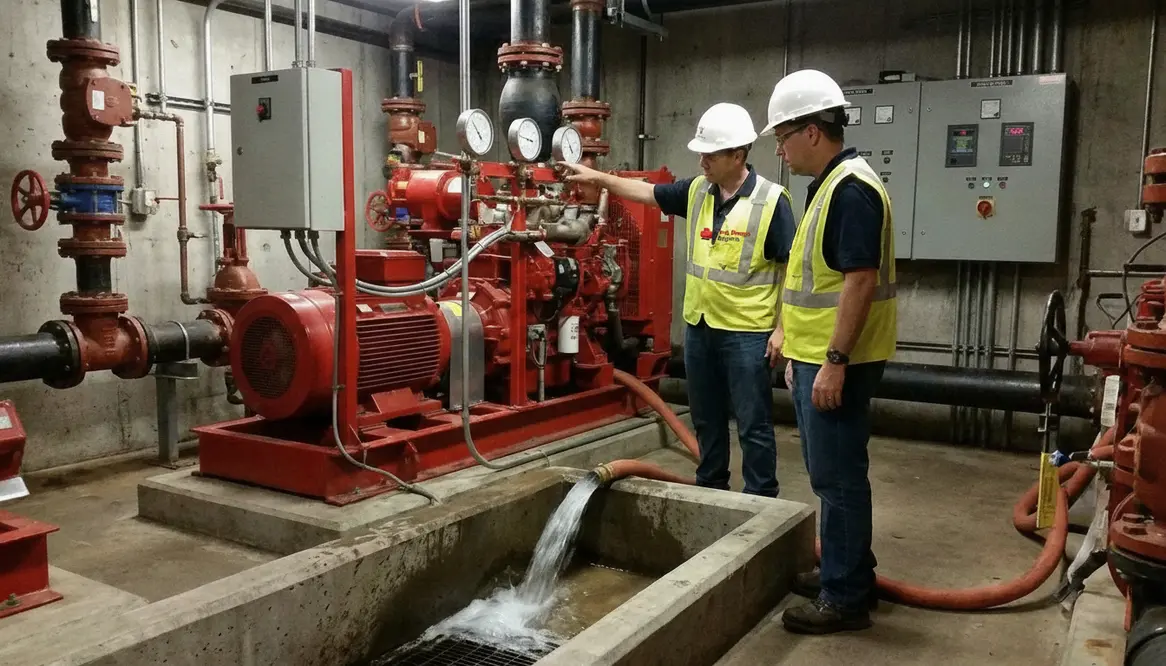
Fire Pump Performance Testing Explained
When I talk about fire pump performance testing, I am talking about one of the quiet heroes of fire protection. It does not wear a cape. It does not make headlines. Yet when a system needs water fast, it decides whether a commercial tower, industrial site, or major property building stays ready or gets a very expensive wake up call. I have seen enough facilities to know this: if you wait until something fails, the plot has already thickened. So let us walk through what this testing means, why it matters, and how it keeps large properties prepared without the drama.
What fire pump testing checks in real life
In plain terms, I use fire pump testing to see whether the pump can move the right amount of water at the right pressure. That sounds simple, and in a way, it is. However, the stakes are not simple at all. A commercial or industrial building may have long pipe runs, high demand, and complex protection needs. Therefore, the pump must do more than spin and sound confident. It must perform under load.
During testing, I look at flow, pressure, power use, suction conditions, and how the pump behaves at different demand points. Also, I want to know whether the pump reaches its expected curve, which is the fancy way of saying, “Does it do the job it promised?” Even Batman would want a receipt for that kind of confidence.
Why it matters
If the pump cannot deliver under the real conditions it will face, the fire protection system is basically improvising. That is not a strategy. It is a hope with paperwork.
The quick takeaway
You are not just checking that equipment exists. You are confirming that water delivery works when it counts.
And yes, I said “quiet heroes” for a reason. A good test is the kind of confidence you never have to brag about.
Why commercial and industrial facilities need it
Large facilities face bigger risks than small sites. For example, warehouses, plants, high rise buildings, and mixed use complexes often rely on strong water delivery to protect people and property. Because of that, I treat performance checks as a core part of risk control, not a box to tick between coffee breaks.
Here is the short version. If a fire pump loses pressure, starts late, or runs below spec, the entire suppression system can suffer. As a result, sprinklers may not deliver enough water, standpipes may fall short, and response time may suffer when seconds matter most. In other words, the pump is not “just equipment.” It is part of the building’s survival plan.
How I run the test from start to finish
I always begin with a visual check. First, I look for leaks, loose parts, damaged valves, and signs of wear. Then I confirm the controller status, power source, and suction supply. After that, I move to the actual performance test. The pump runs under controlled conditions while I measure pressure and flow at set points.
Typically, I compare the results against the nameplate data and accepted standards for the system. If the numbers drift too far, I dig deeper. Maybe the impeller has worn. Maybe the suction line has an issue. Or maybe the pump has simply been ignored for too long, which, sadly, happens more often than people admit. Machines have feelings too. Sort of.
What results tell me about pump health
The numbers tell a story. For instance, strong pressure with weak flow can point to a blockage or suction problem. On the other hand, weak pressure across the board may suggest wear, poor power supply, or mechanical trouble. So I never read the test like a single headline. I read it like a whole news cycle.
To make that easier, I usually break the findings into two views.
Column one
- Pressure at shutoff
- Flow at rated demand
- Motor or engine response
- Valve position and suction condition
Column two
- What each reading suggests
- Whether the pump meets expected output
- Signs of stress or delay
- Possible repair or maintenance needs
This side by side view helps me spot patterns fast. Moreover, it keeps the test practical for building teams that need clear answers, not a mystery novel with extra charts.
Fire pump performance testing and the reports I trust
After the test, I review the data and write a clear report. That report matters because it gives owners, facility managers, and safety teams a record of how the system performed on a real day, not just on paper. It also helps track trends over time. One test may look fine. However, three years of slow decline tells a different story.
This is also where I often point people toward helpful resources. If you want a broader look at fire pump systems and service support, I recommend checking out the fire pump solutions resource at KordFire. It is useful for building teams that need practical guidance. Likewise, for local search support, you can review Los Angeles fire pump service information for related details. That kind of reference can help facility managers compare options and stay on track.
FAQ
Conclusion
If you manage a commercial or industrial property, do not leave fire protection to chance. I recommend treating fire pump performance testing as a routine part of your safety plan, because it protects people, assets, and peace of mind. So, if your system has not been checked lately, now is the time to act. Review the data, schedule the test, and make sure your fire pump is ready before anyone needs it. That is the kind of quiet confidence every major facility deserves.