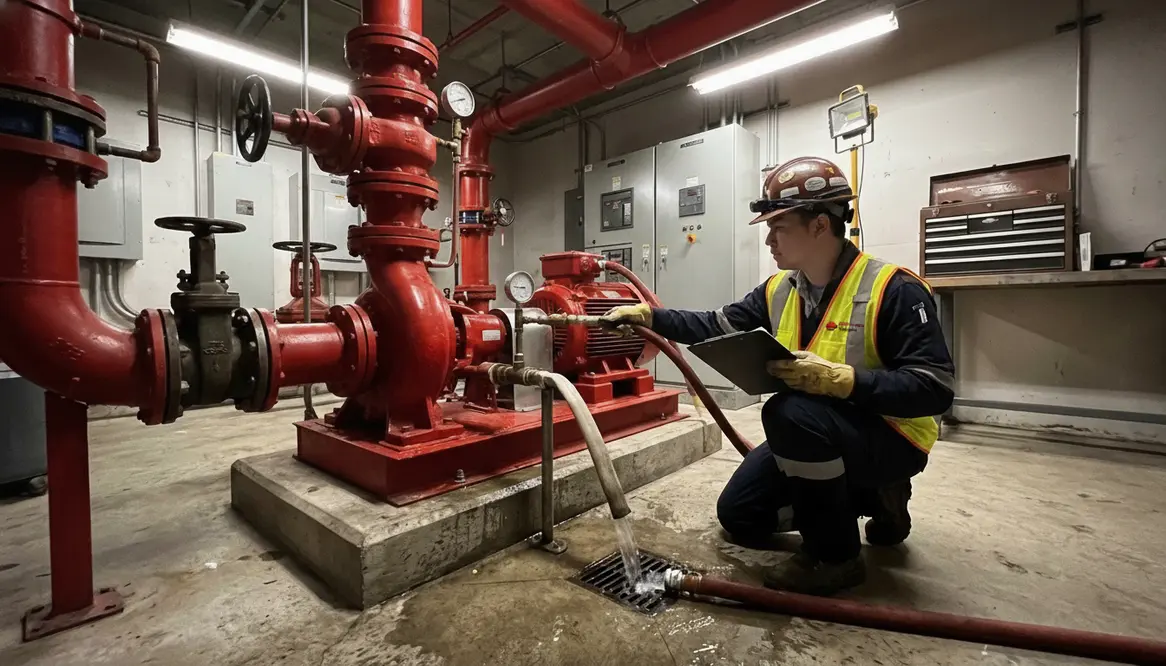
Fire Pump Annual Testing: What I Look For
When I talk about annual fire pump testing, I am talking about more than a box to check. I am talking about a system that stands between a building and a very bad day. For commercial and industrial facilities, major property owners need proof that the pump will do its job when the pressure drops and the fire alarm wakes up the whole place like a scene from a disaster movie no one booked. So, I take this testing seriously, because the stakes are real and the process needs to be clean, clear, and on time.
The goal
Annual fire pump testing should prove the pump can still deliver the flow and pressure the building depends on, not just survive a paperwork-friendly day.
The mindset
Look for clean data, real operation, and early warning signs. Fine is not a number. Fire protection loves numbers.
The payoff
When annual fire pump testing is done right, emergency phone calls are less likely, and operations stay steadier during incidents.
What annual fire pump testing must cover
In my view, the annual test needs to show that the fire pump can still deliver the flow and pressure the building depends on. I check the pump performance under load, the suction and discharge readings, the controller operation, the churn condition, and the overall condition of the unit. Then, I look for leaks, odd noise, heat, vibration, and anything that hints the pump has been working too hard or has started to age poorly, like a rock star on a last tour.
Just as important, I also make sure the test reflects real use, not a polite little exercise. A fire pump should prove it can respond when the system demands water fast. Therefore, I want the test records to show actual data, not vague notes that say everything looked fine. Fine is not a number. Fire protection loves numbers.
How I prepare the system before testing
Before I run the annual check, I look at the full setup. That means I confirm the pump room stays accessible, the power supply is stable, and the valves sit in the correct position. I also check that gauges work and that the test equipment matches the system size. If the pump room has problems before testing starts, the test may not tell the full story.
Then I review past reports. This step matters because trends tell the truth. A pump that loses pressure little by little may still pass today, but the pattern can point to a future failure. So, I compare old results with new ones and watch for drift. It is a bit like checking whether your favorite show has gone off the rails by season three. Sometimes the signs are subtle, but they are there.
Annual fire pump testing requirements for commercial facilities
For commercial and industrial sites, I focus on consistency, documentation, and system health. The pump must be tested in a way that supports code, insurance, and risk control needs. Also, the test should happen on a fixed schedule, with trained people handling the work. A rushed test can miss the clues that matter most.
What I confirm during the test
- Operating pressure at no flow and under load
- Flow results at key points
- Controller start and run behavior
- Power source performance
- Valve position and piping condition
- Signs of wear, heat, or unusual sound
Because major properties often rely on these pumps to protect large spaces, I also pay close attention to how the system reacts over time. A five minute test tells me one thing. A full set of annual records tells me a better story. And in this business, stories should end with working equipment, not emergency phone calls.
What I inspect beyond the pump itself
The pump is the headline, but the rest of the room still matters. I inspect the driver, the controller, the suction supply, and the piping around the unit. I also check for corrosion, blockages, poor alignment, and hidden damage. If the room has drainage issues, temperature issues, or electrical concerns, I want those noted right away.
To make the process easier, I usually break the review into two clear views:
| System area | Why I inspect it |
|---|---|
| Pump and driver | To confirm proper operation and steady output |
| Controller | To verify reliable start and safe control |
| Suction source | To check water supply and avoid pressure loss |
| Piping and valves | To find leaks, faults, or blocked flow |
| Pump room conditions | To reduce risk from heat, water, or access issues |
That kind of review gives me the full picture. And yes, it is less exciting than a superhero battle. Still, it protects very real buildings, very real people, and very real business operations.
How I use reports and expert help
Good documentation keeps the whole process honest. I want the report to list readings, test methods, issues found, and actions needed. If the results show a drop in performance, I do not shrug and move on. I flag it, compare it, and recommend repair or follow up before the problem grows legs.
For facilities that want a strong local resource, I also suggest reviewing Kord Fire protection support as a useful reference point for fire pump and fire system needs. In addition, if you are looking for regional service guidance, this los angeles fire pump service resource can help with system planning and maintenance support. Since fire pump work affects large commercial and industrial sites, the right help can save time, reduce risk, and keep your team out of avoidable trouble.
FAQ
Conclusion
If you manage a commercial or industrial property, I urge you to treat annual fire pump testing as a core part of your protection plan, not a side task. The test protects your water supply, your equipment, and your people. So, review your records, schedule the next inspection, and fix small issues before they become expensive ones. If you want your system ready when it counts, now is the time to act and stay ahead.