High Rise Fire Protection for Safer Tall Buildings
When I talk about high rise fire protection, I am talking about more than alarms and sprinklers. I am talking about the quiet systems that help a tower stay safe when trouble starts on one floor and tries to climb higher, faster, and meaner than anyone wants. In a building full of offices, tenants, equipment, and people moving through the day, every second matters. That is why I treat fire safety like a serious business, even if the sprinkler room sometimes looks like the most dramatic backstage area in the whole building.
In tall buildings, fire does not behave like it does in a small shop. Smoke rises, heat spreads, and stairwells can turn into escape routes that everyone suddenly wants at once. So I focus on layered protection, strong systems, and clear planning. That is the only way I know to keep a high rise from turning into a scene nobody invited.
Why Tall Buildings Need a Different Fire Plan
I never assume a high rise can use the same fire setup as a low building. First, the height changes how fire moves. Smoke can travel through shafts, lifts, and open spaces with annoying speed. Also, a big building may hold hundreds or even thousands of people, which means evacuation needs order, not chaos and side quests.
For commercial and industrial towers, I look at the building as one connected system. The fire plan must support the structure, the occupants, and the emergency response team. Therefore, I check how the building handles detection, suppression, alarm signaling, pressure control, and access for fire crews. If one part fails, the whole plan can weaken. That is not drama for drama’s sake. That is reality with a fire hose attached.
Fire Protection Systems I Depend On
I rely on a few core layers to build strong high rise fire safety:
Early detection
helps catch smoke or heat before a small problem grows teeth. I want smart detectors in the right places, not random gadgets doing their best.
Automatic sprinklers
control fire at the source. They buy time, which is the most valuable thing in an emergency besides a calm person with a radio.
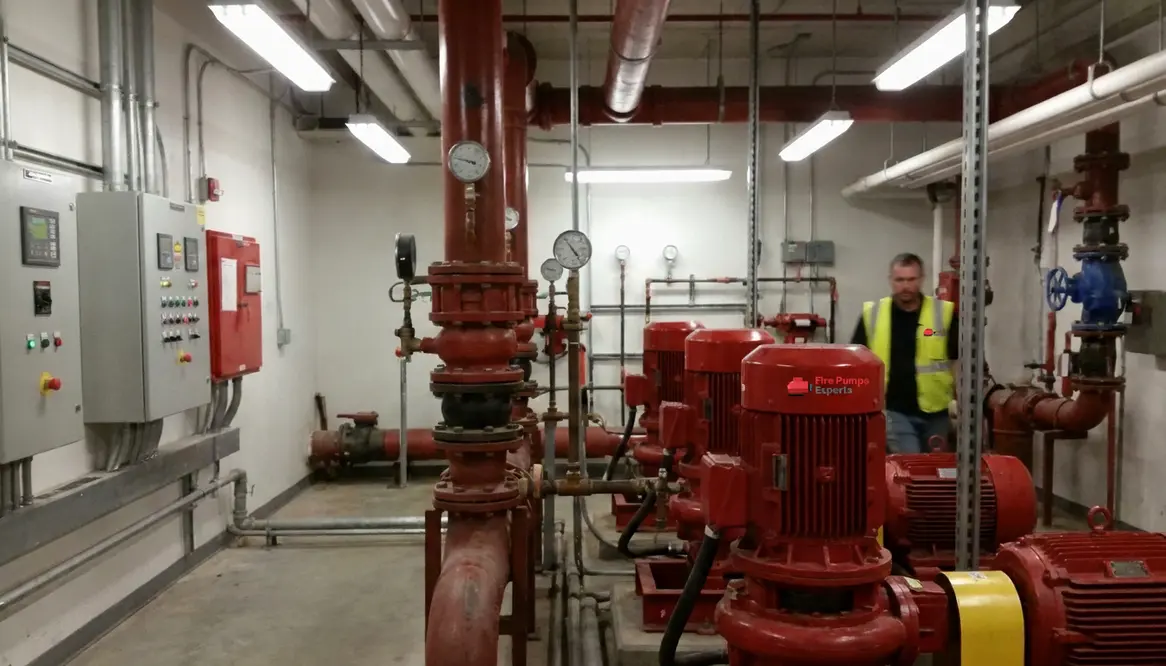
Fire pumps
keep water pressure strong enough for upper floors. Without them, water delivery can fade with height, and nobody wants the top levels to feel left out.
Smoke control systems
help keep escape routes clear. Because if people cannot breathe, the rest of the safety plan becomes a very expensive theory.
Emergency lighting and alarms
guide people out fast. They also help reduce panic, which is useful because panic rarely improves decision making. It just adds volume.
How I Build a Safer Strategy for Commercial Towers
Here, I start with the building use. A tower full of offices has different risks than a property with heavy equipment, storage, or mixed operations. Then I review the layout, fire loads, and access points. After that, I look at where the weakest links live, because they always live somewhere.
Next, I make sure the system design supports the building’s real world use, not just the drawings. In other words, the plan must work on a busy Tuesday, not only in a neat folder. I also look at maintenance schedules, testing records, and staff training. A fire system can look strong on paper, but if no one checks it, that confidence goes soft very quickly.
What I Check in a High Rise Fire System
Inside the building I check alarms, sprinklers, pumps, risers, and emergency lighting.
On the operational side I review inspections, testing, staff drills, and response plans.
Why Maintenance Matters More Than Fancy Equipment
Even the best fire protection gear needs regular care. I have seen too many systems fail because someone thought “installed” meant “done.” That is like buying a gym membership and expecting muscles to appear during lunch.
Routine inspection keeps valves open, pumps ready, detectors clean, and alarms working. It also helps find corrosion, damage, low pressure, blocked heads, and worn parts before they become costly problems. For high rise fire protection, that kind of attention is not extra. It is the job.
Training matters too. Building teams need to know what alarms mean, how to respond, and when to let emergency crews take the lead. Clear roles reduce confusion, and confusion burns time. Fire does not wait while people argue near the elevator bank.
Where I Recommend Expert Support
When I need trusted guidance for complex building systems, I look at specialist resources that focus on large commercial and industrial sites. For example, I can reference Kord Fire protection solutions for major properties as a useful source for large scale fire safety needs. And if I am discussing water delivery systems for bigger facilities, I also point to los angeles fire pump services for a practical look at pump support in demanding buildings.
That matters because tall properties need more than generic advice. They need solutions built for scale, pressure, and fast response. In a high rise, the details are not small. They are the difference between control and chaos.
FAQ
Conclusion
If I want a high rise to stay ready, I do not rely on luck, and I do not trust old habits. I build a clear plan, keep every system maintained, and make sure the people inside know how to respond. If you manage a commercial or industrial tower, now is the time to review your high rise fire protection setup and strengthen the weak points before they become a headline.