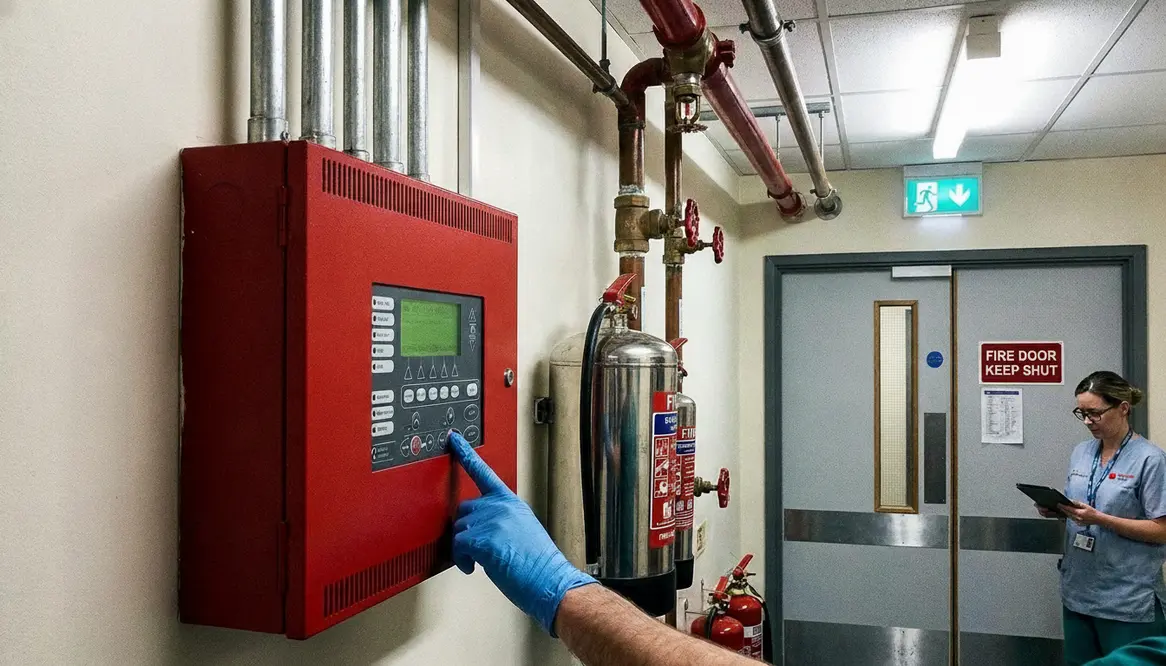
Hospital Fire Protection Systems for Safe Ready Care
Fire Protection for Hospitals: In a place where lives depend on calm hands and quick action, fire safety has no room for guesswork. I look at hospital fire protection systems as the quiet backbone of care, the kind of setup that works in the background while doctors, nurses, and staff focus on patients. And yes, hospitals are already stressful enough without adding a surprise fire drill that feels like a scene from a disaster movie nobody asked for.
Hospitals need more than alarms and sprinklers. They need a layered plan that protects patients who may not move fast, equipment that costs a small fortune, and rooms packed with oxygen, power, and high traffic. So, when I talk about fire protection in this setting, I mean a full strategy that keeps people safe, keeps operations running, and helps the building stay ready every day.
Why Hospital Fire Protection Demands Extra Care
Hospitals face fire risks that most buildings never see. I deal with electrical loads, medical gases, kitchens, laundry areas, and nonstop movement. In addition, many patients cannot evacuate on their own, which changes everything. A normal office can clear out fast, but a hospital must protect people in place when needed.
That is why hospital fire protection systems must do more than react. They must support safe movement, reduce smoke spread, and give staff time to act. I always think of it like building a backup plan for the backup plan. The goal is not drama. The goal is control.
What hospital fire protection systems should include
When I plan for a hospital, I focus on layers that work together:
- Fire alarms with clear sound and visual alerts
- Automatic sprinkler coverage for key areas
- Smoke control to limit spread through corridors and patient zones
- Fire doors and barriers that slow heat and smoke
- Emergency lighting and exit signs that stay visible during power loss
- Water supply support, including fire pumps for large facilities
- Staff training so people know what to do before stress takes over
Each part matters. However, none of them should work alone. A hospital is too complex for single line defense thinking. That approach belongs in old action films, not in a modern care setting.
How I build safety into daily hospital operations
I always start with the building layout. Then I look at patient areas, labs, storage rooms, kitchens, and mechanical spaces. After that, I match the fire protection plan to how the hospital actually works. This matters because a system that looks good on paper can fail in real life if it ignores staff movement or patient needs.
Training also plays a huge role. Staff should know where alarms are, how to move patients, and when to close doors. Meanwhile, routine checks help catch small issues before they grow teeth. I like to think of it as less “wait for trouble” and more “stay ahead of the plot twist.”
Hospital fire protection systems and water supply support
Large hospitals often need strong water flow for sprinklers and hose systems. That is where fire pumps become important. They help keep pressure steady when the building size or height makes a normal supply fall short. For commercial and industrial facilities and major property buildings, this is not a luxury. It is a must.
If I want to understand this better, I look at the hospital fire safety solutions from Kord Fire as a useful reference for building protection planning. I also use los angeles fire pump services as an example of how proper pump support helps maintain dependable water delivery for large sites. In a hospital, that kind of backup can make all the difference when the system needs to perform without hesitation.
Dual column view of the main risk areas
Risk Area
High electrical use, medical gas systems, kitchens, and storage rooms can all raise fire risk. I treat each one as its own problem, because one fix never covers everything.
Protection Focus
I match alarms, suppression, smoke control, and water support to the zone. That way, the hospital gets protection where it matters most, not just a one size fits all setup.
What I check during ongoing maintenance
Even the best system needs care. I check alarms, valves, pumps, sprinklers, doors, and backup power on a regular schedule. I also make sure repairs happen fast, because a small fault today can become a major problem tomorrow. In addition, I review changes in the building. New equipment, renovated wings, or added storage can all change fire risk.
Hospital fire protection systems should stay ready, not just installed. That is the difference between having safety gear and having safety that actually works. A hospital cannot afford “close enough.” Lives are on the line, and that keeps the standard high for good reason.
FAQ
Conclusion
If I want a hospital to stay safe, I do not treat fire protection as a side task. I treat it as part of patient care. The right hospital fire protection systems support daily work, reduce risk, and keep everyone ready when seconds matter. So, if your site needs a stronger plan, now is the time to review your setup, upgrade weak points, and build a system that protects people with confidence.