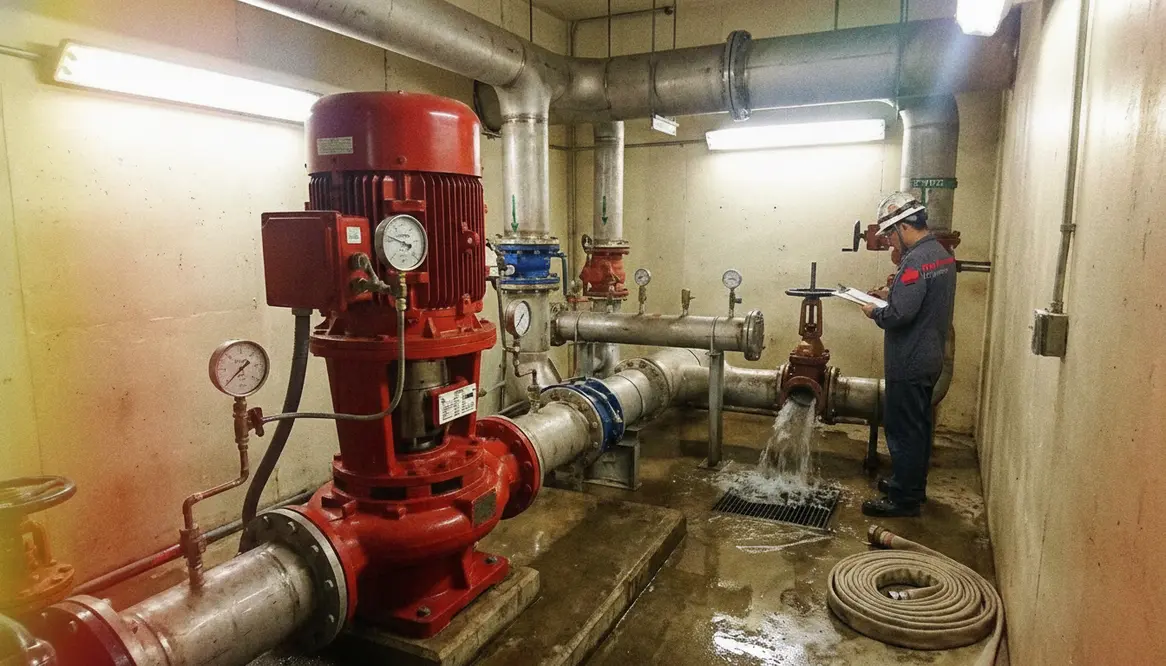
Fire Pump Churn and Rated Flow Why It Fails Under Load
Why a Fire Pump Passes Churn Testing but Fails at Rated Flow
When I talk about fire pump testing, I always start with one simple truth: a pump can look solid at idle and still stumble when it has to do the real work. That is exactly why a fire pump flow test and a fire pump churn test tell two very different stories. In NFPA 25 fire pump testing, the churn test checks how the pump behaves with no flow, while the rated flow test shows whether it can deliver water when the system truly needs it. And yes, a pump can pass one and fail the other, kind of like a movie trailer that looks great but the film itself is a hard pass.
For commercial and industrial facilities, this matters a lot. A fire pump that passes churn but fails at rated flow can put a major building at risk, and that is not the kind of plot twist anyone wants. I have seen the same pattern enough times to know the cause usually sits in the details, not in some mysterious pump curse.
What churn testing really proves
A churn test checks the pump at zero flow. So, the pump runs, but the water has nowhere to go. This test mainly reveals whether the pump starts, holds pressure, and avoids overheating during no demand. It gives me a basic health check, and it often confirms the driver, seals, and bearings are doing their job well enough.
However, a good churn result does not prove the pump can move its full rated volume. That is the catch. At churn, the pump faces little hydraulic strain. At rated flow, the system starts asking real questions. Suddenly, hidden wear, bad suction, or pressure loss can show up. In short, churn tells me the pump is awake. It does not tell me it is ready for a sprint.
Why rated flow exposes the weak spot
Rated flow testing puts the pump under load. This is where weak suction conditions, clogged strainers, bad valves, or worn impellers tend to step into the light. I look at this part of fire pump testing like a stress interview for the machine. At idle, everyone sounds confident. Under pressure, the truth comes out.
Here are the most common reasons I see a pump pass churn but fail at rated flow:
- Poor suction supply that limits water entering the pump
- Partially closed valves that choke flow without fully stopping it
- Impeller wear that reduces capacity even when pressure still looks decent
- Air leaks in suction piping that hurt performance only under load
- Wrong pump speed or motor issues that limit output
- Blocked test equipment or piping that distorts the reading
Also, I have seen systems where the gauge data looks fine at a glance, but the curve drops off fast once the pump reaches demand. That is why I never trust one clean reading. Pumps, like reality TV, can be deceptive when the lights are bright.
How I read the signs during the test
When I evaluate a fire pump flow test, I watch pressure, flow, vibration, and suction conditions together. If the pump holds during churn but fails at higher flow, I first check the suction side. Then I inspect valves, piping, and the driver. I also compare the pump curve to the actual test results. If the numbers drift too far, I know the pump is not meeting its rated duty.
Here is the simple logic I use:
What looks good
- Stable churn pressure
- Smooth motor start
- Normal sound at idle
- No heat issues
What it may hide
- Weak flow capacity
- Limited suction supply
- Loss of pressure under load
- Wear that shows only at higher demand
That is why NFPA 25 fire pump testing matters so much for commercial and industrial facilities. It does not stop at “the pump runs.” It asks a better question: “Can the pump do the job when the building depends on it?”
What I check before I call the pump healthy
Before I say a pump is in good shape, I want proof in the full range of operation. I look at suction pressure, discharge pressure, valve position, test line condition, and the recorded curve. I also review maintenance history, because repeated small issues often point to a bigger one waiting in the wings.
In many cases, the fix is not dramatic. Sometimes I find a closed valve, a clogged component, or a suction problem that gets worse only under demand. Other times, the pump needs repair because wear has slowly eaten away at its output. Either way, the point is the same: churn testing alone gives only half the picture. The rated flow test finishes the story.
If you want a deeper look at pump systems for major buildings, I recommend reviewing los angeles fire pump testing services as a practical reference for commercial and industrial fire protection needs. You can also explore related systems support through electrical service support for critical building systems and fire sprinkler services for large properties.
FAQ
Final Thoughts and Next Step
I never treat a passing churn test as the finish line. For commercial and industrial facilities, I always push the test farther, because the rated flow result tells me whether the pump can protect the building when it counts. If your pump passes idle but slips under load, act now. Review the system, correct the cause, and document the fix. A fire pump should not just sound ready. It should perform ready.