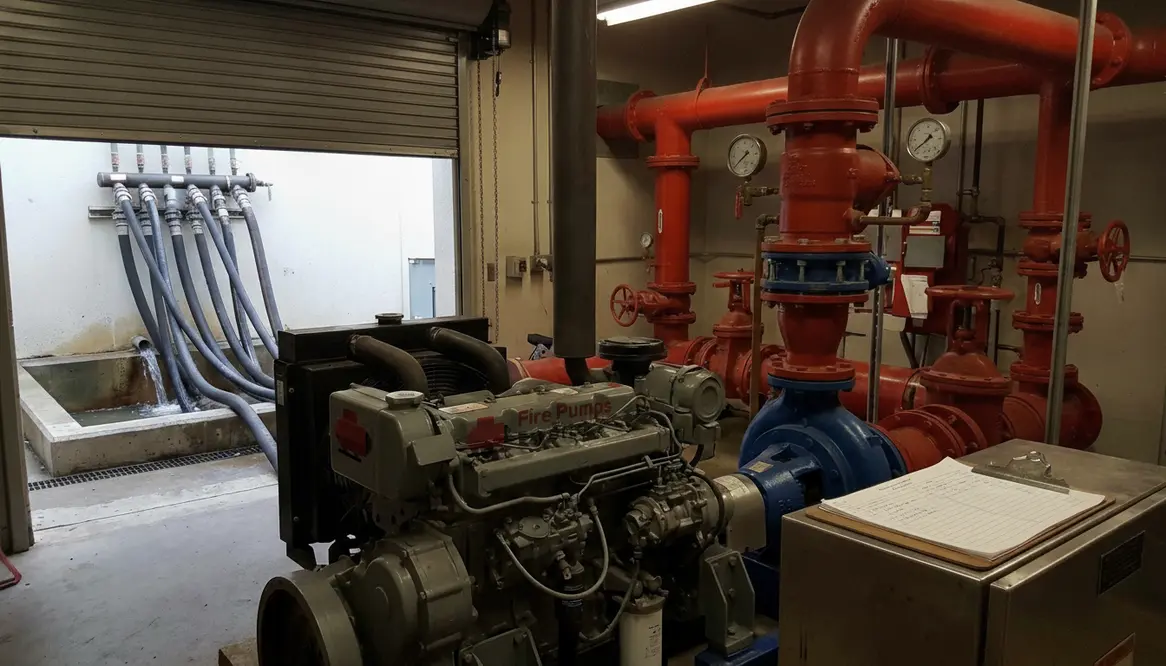
Fire Pump 100% vs 150% Flow Why It Fails
When I look at a fire pump flow test, I do not just want a passing number at one point on the curve. I want the whole story. A pump can look strong at 100% flow, then stumble during fire pump testing at the 150% fire pump test. That gap often surprises owners of commercial and industrial facilities, and honestly, it can feel like the pump was training for one scene and forgot the sequel. In plain terms, NFPA 25 requires us to verify real performance, not just a neat snapshot. So, when a pump passes at full rated flow but fails at 150%, I know there is a reason hiding in the system, the pump, or both.
What the 100% result really tells me
At 100% flow, I see whether the pump can deliver its rated capacity at the expected pressure. That matters, of course. However, it does not prove the pump has enough reserve capacity or that the curve behaves as it should under stress. Think of it like a movie trailer. It may look great, yet the full film still has to hold together when the heat rises. During fire pump testing, the 100% point tells me the pump can perform at the nameplate target. It does not confirm the machine has healthy suction, solid motor power, or stable discharge across the upper end of the curve.
Why the pump falls apart at 150% flow
I usually trace a failed 150% fire pump test back to one of a few common causes. First, suction problems often show up only when the pump asks for more water. Second, the pump may be worn, damaged, or set up poorly. Third, the driver may not keep up when demand climbs. Each issue can hide behind a decent 100% reading, which is why this test matters so much.
Here is the short version: at higher flow, the pump needs more water faster. If the suction source cannot feed it, the pressure drops. If the impeller or casing has wear, the pump loses efficiency. If the motor or diesel driver cannot maintain speed, the curve falls off. In other words, the pump may still look fine at the middle of the stage, but it starts to sweat when the spotlight gets hot.
How I check the system before I blame the pump
I never blame the pump first. Instead, I check the whole system in order. That saves time, money, and a few headaches. Commercial and industrial sites often have long piping runs, aging valves, or water supply limits that turn a simple test into a puzzle. So, I look at the basics first and then move deeper.
Common checks I use before replacing parts
- Suction pressure and water supply stability
- Valve position and control valve condition
- Strainer or debris issues in the line
- Impeller wear, corrosion, or damage
- Driver speed and power output
- Air leaks or bad fittings on the suction side
Sometimes the fix is simple. Other times, the system needs real work. Still, I always confirm the source of the loss before I call the pump guilty. That keeps the work tied to what NFPA 25 expects and helps protect large properties that cannot afford guesswork.
How I read the curve without guessing
Dual view: pump result versus system result
Pump result
If the curve drops too fast after rated flow, I suspect internal wear, poor setup, or a pump that no longer matches the job.
System result
If suction pressure collapses, the water source may be the real issue, even if the pump itself still has decent parts inside.
This side by side view matters because a passing 100% point can hide a weak tail on the curve. And that tail is where the 150% test does its honest work. It asks the system, very politely but very firmly, “Can you still deliver when the demand climbs?” That question reveals more than a quick yes at rated flow ever could.
Why NFPA 25 makes the 150% point so important
I treat the 150% point as a stress check, not a formality. Under NFPA 25, the test helps confirm the pump can handle demand beyond its rated point and still stay within expected performance limits. That matters for commercial towers, warehouses, hospitals, campuses, and other major properties where fire protection must work under pressure, literally and legally.
When a pump fails at 150%, I look for a warning sign that has been building for months. Maybe routine fire pump testing got delayed. Maybe the water supply changed. Maybe the system slowly drifted out of spec. In any case, the failure is rarely a mystery. It is often a clue.
What I do next after a failed 150% test
Once I confirm the failure, I move into root cause work. I compare the test data, inspect the pump, verify the suction supply, and review past records. Then I decide whether the issue is maintenance, repair, or a deeper design problem. For facilities that need a clear path forward, I also use trusted resources like los angeles fire pump service support and related electrical system resources for fire protection. For properties with broader needs, I may also review fire sprinkler service guidance to see how the full protection system fits together.
FAQ
Conclusion
If your pump meets 100% flow but fails the 150% test, I would not shrug it off. I would treat it as a warning that deserves fast, careful attention. The good news is that the test points you in the right direction. The better news is that a proper review can protect your building, your people, and your system from a much bigger problem later. If you manage a commercial or industrial property, I recommend reviewing your data now and planning the next step today.