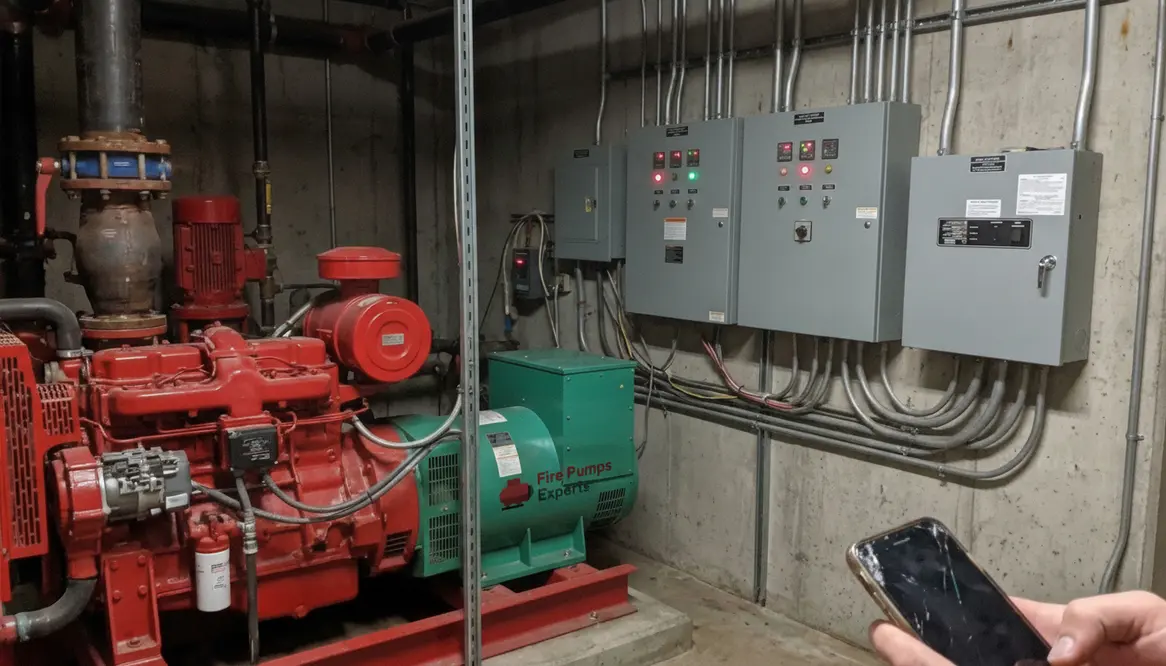
Generator Starts but Fire Pump Fails: Check Transfer Switch
I have seen this scene before. The generator wakes up right on cue, the lights may even flicker with confidence, and then the fire pump generator still refuses to move the electric fire pump. That is the kind of silence that makes even a seasoned manager stare at the panel like it owes them money. In a commercial or industrial building, that moment matters, because the fire pump transfer switch should help power move where it needs to go when life safety is on the line.
So I break the problem into simple steps, and I keep my focus on the parts that matter most for major property buildings. That way, I can find the real cause fast, not just the loudest one.
What I Check When the Generator Runs but the Fire Pump Stays Still
First, I check whether the fire pump actually receives power from the right source. The generator may start cleanly, yet the transfer path may fail. Next, I look at the control settings, because a fire pump can sit idle if the system does not see the right start signal. Also, I verify alarms, phase issues, and any lockout condition that stops the motor from engaging.
In many cases, the issue is not dramatic. It is often a loose control wire, a bad relay, or a failed setting in the controller. However, I always treat it like a serious event, because a small fault can turn into a very expensive surprise. Nobody wants their fire protection system acting like a diva on opening night.
How the Transfer Switch Can Quietly Stop the System
The transfer switch has one job: move power where it belongs. If it does not do that job well, the generator may run while the fire pump remains stranded. I check for signs of worn contacts, failed sensing, manual mode problems, and control power loss. Then I confirm that the switch matches the system design and that no one changed the settings during another repair.
Here is the thing. A transfer switch can look fine on the outside and still fail on the inside. That is why I do not trust appearances. I test the sequence, confirm the source change, and make sure the pump receives the command it needs. Otherwise, the building may have a generator that sounds heroic while the pump is still waiting for its cue.
Common Causes I Look For in Commercial Buildings
I focus on the usual suspects first, because they cause most of the trouble.
1. Control signal failure
If the pump controller does not see the correct start request, the pump will not run.
2. Transfer switch issue
If the switch fails to transfer or send the right signal, the generator cannot support the fire pump.
3. Power phase problem
If one phase drops or reads wrong, the electric fire pump may stay locked out.
4. Controller fault or alarm
If the pump controller sees a fault, it may refuse to start until I clear the problem.
5. Maintenance gaps
If nobody tests the system, small issues pile up like unpaid parking tickets.
What a Proper Test Should Confirm
I want every test to answer a few clear questions. Did the generator start? Did the fire pump transfer switch move properly? Did the pump controller receive the command? Did the pump actually run at the right speed and pressure?
System Point
Generator start
Transfer action
Pump controller
Pump motor
What I Confirm
Engine runs and reaches steady operation
Switch changes source as designed
Signal reaches the pump panel
Motor starts and builds pressure
That kind of check keeps me from guessing. And in this line of work, guessing is a bad hobby.
When I Bring in Fire Pump Service Support
When the issue goes beyond a basic check, I bring in service support that understands commercial and industrial fire protection systems. For example, I review resources like los angeles fire pump service for commercial facilities when I need a deeper look at pump related work in a local setting. I also keep an eye on related system support from fire sprinkler service guidance for major buildings and electrical system coordination from commercial electrical service support.
That matters because a fire pump does not live alone. It depends on power, controls, wiring, and regular testing. So when I troubleshoot, I look at the whole chain, not one shiny link. If you are dealing with an electric fire pump that refuses to respond, it is often the same story: the generator starts, but the control path or transfer path does not deliver.
FAQ
Conclusion: Get the System Checked Before the Next Alarm
If your generator starts but the fire pump does not, do not wait for a real emergency to reveal the rest of the story. I recommend a full inspection of the generator, transfer switch, controller, and pump motor path as one system. That is the smart move, and frankly, it is the calm move too. If you manage a commercial or industrial property, now is the time to call for a proper review and keep your life safety system ready.