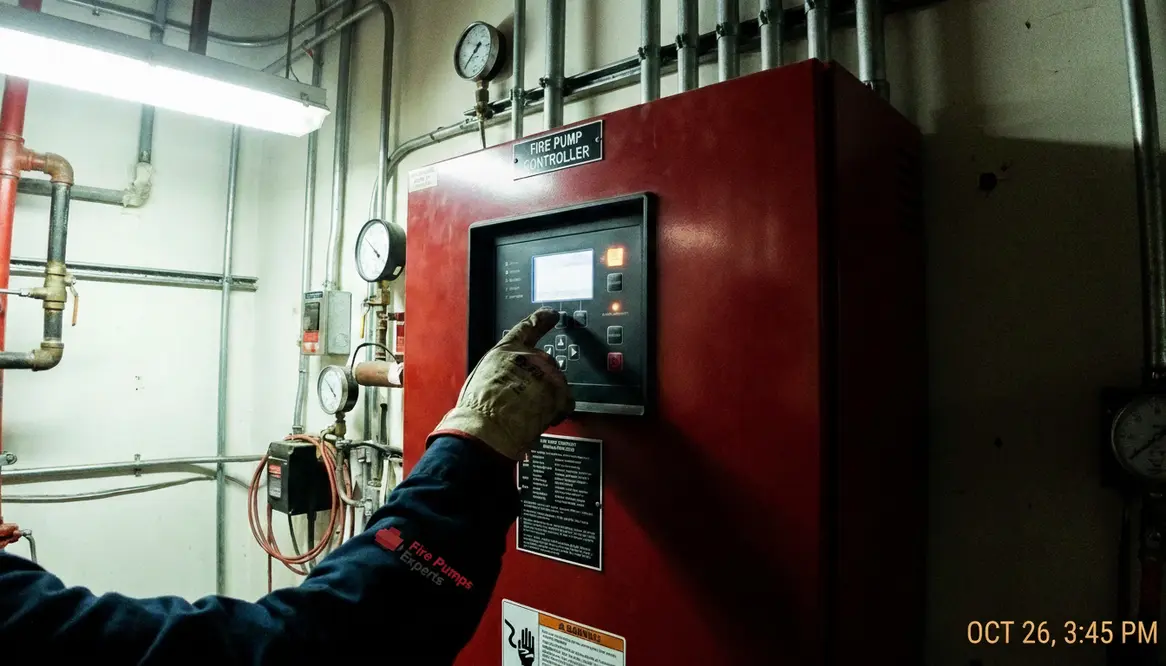
Intermittent Fire Pump Controller Alarms Troubleshooting Guide
Intermittent Fire Pump Controller Alarms: I have seen these alarms do one thing very well. They interrupt your day, then vanish like a magician with a bad attitude. In commercial and industrial buildings, that kind of behavior can point to real trouble inside the fire pump controller, even when the system seems fine a minute later. So, if you manage a major property, I want to help you read the signs, trace the cause, and move with calm purpose before a small fault turns into a costly surprise.
To keep things practical, I will walk through what these alarms usually mean, where I start my fire pump troubleshooting, and how I separate a true issue from a noisy false signal. I will also point you toward helpful resources, including the los angeles fire pump services guide for local reference and the fire pump service page for broader system support. If you are running a warehouse, high rise, hospital, or plant, this matters. A lot.
What intermittent alarms usually mean
Intermittent fire pump controller alarms often mean the controller sees a condition that comes and goes. That can be low battery voltage, a weak signal, a loose wire, a failing pressure switch, or a power issue that arrives late to the party and leaves just as fast. Sometimes the alarm clears on its own, which makes people think the problem fixed itself. It did not. It just took a coffee break.
In my experience, the key is to ask one simple question: what changed right before the alarm? If I find a recent power dip, test run, maintenance visit, storm event, or control panel reset, I already have a clue. Moreover, if the alarm appears at the same time each day, I start looking at building loads, pump cycling, or a control setting that reacts to pressure swings. That pattern tells me more than a dozen guesswork theories ever could.
My first checks inside the controller
When I begin fire pump troubleshooting, I stay calm and work the basics first. I inspect the controller display, alarm history, terminal connections, battery condition, and incoming power. Then I look for loose lugs, worn insulation, moisture, rust, or heat marks. These are the simple villains that cause the most drama. Very Hollywood, very annoying.
Here is the short list I use:
Inside the panel
1. Power source
I check utility power and any emergency source. If voltage sags, the controller may throw alarms and then recover before anyone catches it.
2. Pressure sensing parts
I inspect the pressure switch or transducer. A bad reading can trigger alarms even when the system pressure looks normal on a gauge.
3. Battery and charger
I test battery output and charger health. Weak batteries love to act fine until the exact moment they should not.
4. Wiring and terminals
I tighten and inspect all field wiring. Loose conductors create short, random alarms that waste time and patience.
5. Event history
I review the alarm log. It often shows the order of events, which helps me spot the real cause instead of the loudest symptom.
How I trace the source without guessing
After I check the controller, I follow the signal path. That means I move from the panel to the sensors, then to the pump, then back to the power supply. This step matters because intermittent faults often live outside the panel, not inside it. For example, a pressure switch may work fine when I tap it by hand, but vibrate open under normal pump start conditions. Sneaky. Like a cameo role from a villain in a superhero film.
Also, I compare the alarm time with plant activity. If a large motor starts nearby and the alarm follows, I suspect electrical noise or a voltage drop. If the alarm comes after rain, I look for water intrusion in conduit, junction boxes, or the controller housing. Furthermore, if the alarm happens during testing only, I check whether the test procedure itself creates the fault. That is common in large facilities where systems run under heavy schedules.
What I do to reduce repeat alarms
Once I find the cause, I do not stop at reset and hope. Hope is nice for movies, not for life safety systems. I correct the fault, then I verify the fix under real operating conditions. If the issue came from poor wiring, I repair the connection and secure the cable path. If a sensor failed, I replace it and confirm the new signal stays steady. If the controller power supply is weak, I address the supply before it starts acting like a tired extra in the final act.
At this stage, routine care helps a great deal. I recommend a regular inspection plan for commercial and industrial sites so the system stays steady through normal building load, weather, and daily use. In addition, I compare the current setup with the electrical services reference when I need support around power quality or control wiring, and I also use the fire sprinkler services resource when I want to align the pump system with the rest of the protection network. A fire pump controller does not work alone. It lives in a bigger ecosystem, and that ecosystem likes order.
Why fast action protects major properties
Intermittent alarms may seem small at first. However, they often point to a condition that will grow worse under load. In a major property, that risk can affect safety, downtime, inspection results, and insurance concerns. So I treat these alarms like a warning light on a plane. You do not keep flying because the light blinked politely. You check it now.
If you are seeing fire pump controller alarms pop up and vanish, remember the pattern: it is usually a real condition, just not a consistent one. That is why fire pump troubleshooting starts with the timeline, then moves into the wiring and sensing parts, then verifies everything under normal operation.
FAQ
Conclusion
If your building has intermittent fire pump controller alarms, act now, not later. Start with a careful inspection, review the alarm history, and correct the root cause before the next test or emergency reveals the weakness. If you manage a commercial or industrial property and want help with fire pump troubleshooting, reach out for a proper evaluation. A steady system gives you peace of mind, and in this line of work, peace of mind is worth its weight in steel.