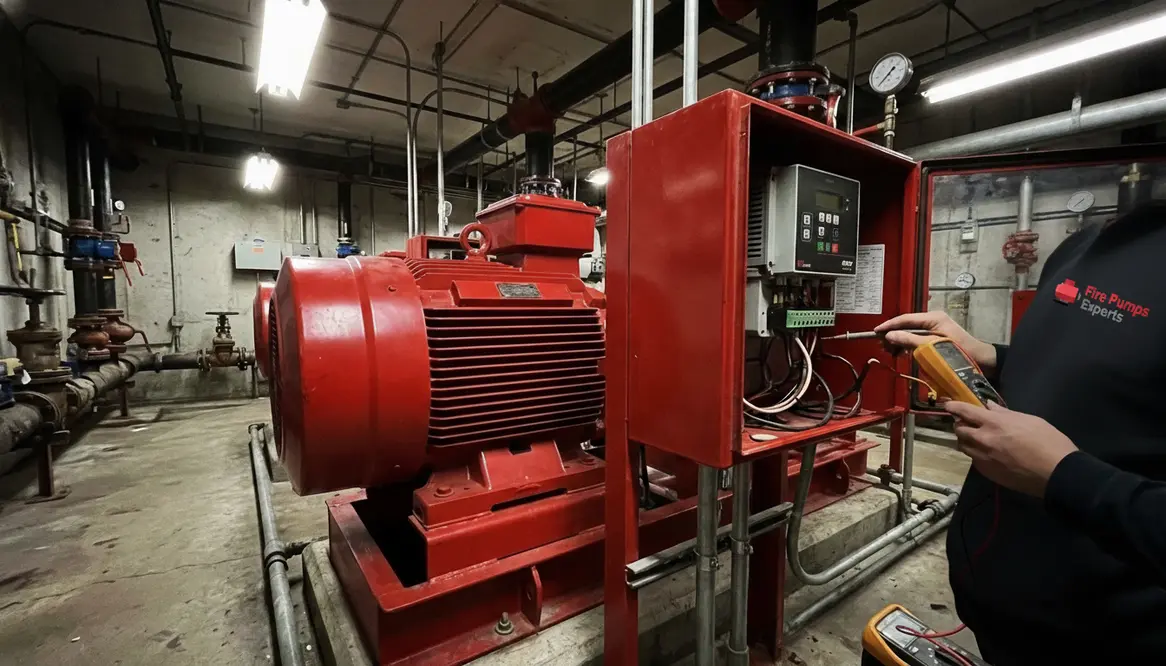
Fire Pump Troubleshooting: High Flow Trip Causes
When I look at a los angeles fire pump service issue during high flow testing, I usually start with one simple truth: the system is telling us something. A fire pump motor does not trip for fun, and an electric fire pump does not quit just to ruin your day. More often than not, it trips because the load, voltage, or controls are pushing past the edge. That is where smart fire pump troubleshooting comes in. In commercial and industrial facilities, and in major property buildings, this matters a lot. If the pump fails under test, it may fail when real fire protection is on the line, and that is a joke nobody wants to hear.
Why the motor trips under high flow
During high flow testing, the pump works near its upper output range. As flow rises, horsepower demand rises too. If the motor cannot supply that demand, it trips on overload. I often see this when the pump is sized close to the edge, or when the system pressure drops faster than expected. In plain English, the motor gets asked to do one more big lift, and it says, “Not today.”
Another common cause is low voltage. When voltage dips, current climbs. Then the motor draws more amps, heats up, and the protective device steps in. That trip may look random, but it usually is not. I also check for phase imbalance, because even a small difference between phases can create heat and stress. Over time, that heat acts like a slow burn on the motor windings. Nobody wants their fire pump acting like a tired extra in a disaster movie.
What I check first on an electric fire pump
First, I look at the test setup. I want to know if the flow path is right, if valves are fully open, and if the test header or meter is creating extra resistance. Then I review the motor nameplate, starter settings, and overload class. If the overload is set too tight, the motor may trip before it ever reaches full test flow.
Next, I compare actual readings to expected values. I want voltage, amperage, pump discharge pressure, and suction pressure all in front of me. That data tells the story fast. If amps climb hard as flow increases, I suspect mechanical load, impeller issues, or a system curve that does not match the pump. If voltage sags, I look upstream at the power source, the conductors, and the switchgear.
Common causes I see during fire pump troubleshooting
Here are the usual suspects I check when a unit trips under heavy demand:
- Low incoming voltage during the test
- Phase loss or phase imbalance
- Overload settings that sit too low
- Incorrect starter or controller setup
- Excessive system backpressure
- Obstructed suction supply
- Mechanical rubbing, bearing wear, or pump misalignment
- Impeller damage or debris inside the pump
As a result, I do not treat a trip as a single problem. I treat it as a chain. One weak link can trigger the whole event. That is why fire pump troubleshooting must look at both the electrical side and the hydraulic side. If I only inspect the motor, I may miss a clogged intake. If I only inspect the water side, I may miss a control issue. It is a bit like checking one tire on a truck and wondering why the trailer still wobbles.
How I read the signs in the test data
When the motor trips at a certain flow point every time, that pattern matters. If it trips right as flow passes a known threshold, I suspect overload or voltage drop under peak demand. If it trips earlier each time, I suspect heat buildup or a worsening mechanical fault. On the other hand, if the trip is random, I look harder at the controller, connections, and utility supply.
I also watch temperature. A hot motor room, poor airflow, or a motor already near thermal limit can make a trip more likely. So can repeated testing without enough cool down time. Even strong equipment has patience, but it is not infinite. Think of it as the fire pump version of a long day in traffic on the 405. Eventually, something gives.
How I prevent repeat trips in commercial facilities
Once I find the root cause, I focus on correction and prevention. I verify starter settings, confirm proper voltage, and make sure the pump curve matches the building demand. I also inspect wiring terminations for heat damage, because loose connections create resistance and resistance creates trouble. That is not the kind of spark anyone wants in a life safety system.
For larger commercial and industrial sites, I also recommend routine review of the full fire protection package. If your facility uses broader support from teams like kordelectric fire pump electrical support or kord fire sprinkler services, coordination matters. The pump, controller, power supply, and sprinkler demand all need to work together. When they do, testing feels smooth. When they do not, the system starts improvising, and improvisation is great for jazz, not so much for fire protection.
Quick FAQ for fire pump troubleshooting under high flow
Conclusion
If your fire pump trips during high flow testing, I would not shrug it off or call it “just one of those things.” I would dig into the data, check the motor, inspect the controller, and review the water side with care. In a major property or industrial facility, that kind of follow through protects more than equipment. It protects people, business, and peace of mind. If you want help, I recommend a full inspection and a clear repair plan today.