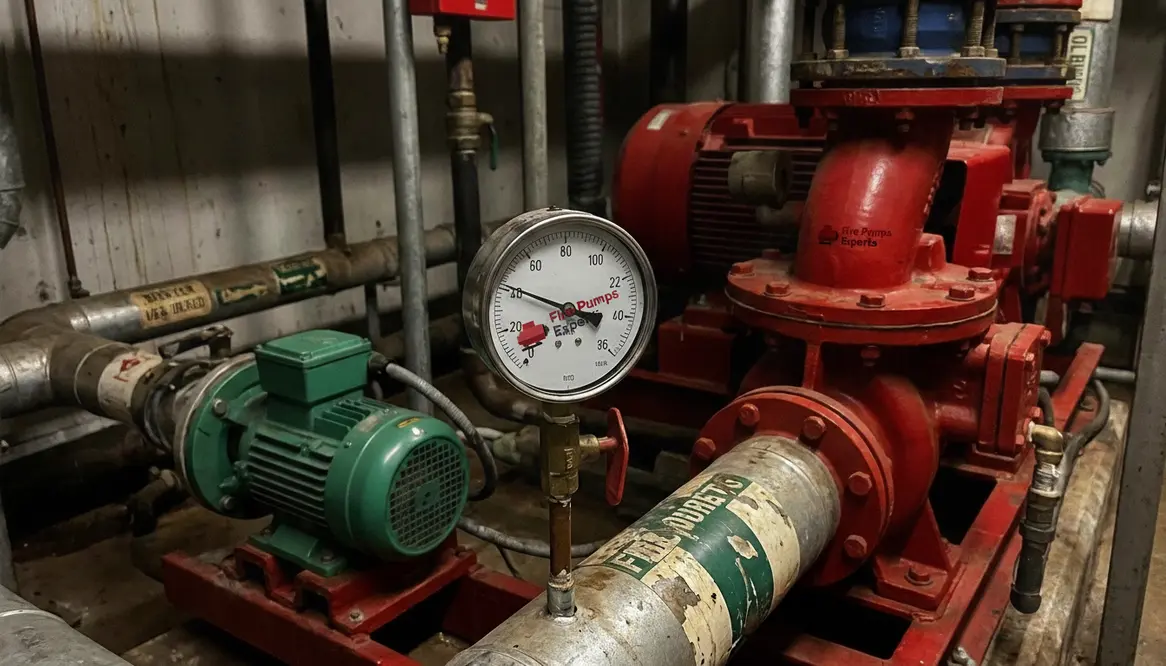
Jockey Pump Run Frequency as Early Leak Indicator
Using Jockey Pump Run Frequency as an Early Leak Indicator
A quiet fire pump system can still tell a loud story.
When the jockey pump starts running more often than usual, treat it like an early warning light.
Spot trouble early, protect the property, and keep the fire pump system ready when it matters most.
I have learned that a quiet fire pump system can still tell a loud story. When a jockey pump starts running more often than usual, I do not shrug it off. Instead, I treat it like an early warning light on a dashboard. In commercial and industrial buildings, that extra run time can point to a fire sprinkler leak, a pressure drop, or a system issue that needs attention before it grows teeth. And yes, the building may look calm, but the plumbing sometimes has other plans. The goal here is simple: spot trouble early, protect the property, and keep the fire pump system ready when it matters most.
What Jockey Pump Run Frequency Tells Me
I watch jockey pump run frequency because it shows how often the system loses pressure. A healthy system should hold pressure for long periods. However, when the jockey pump keeps kicking on, I start asking why. A small leak, a faulty valve, a worn seal, or even a tiny hidden drip can cause repeated starts. Over time, that pattern can reveal a fire sprinkler leak long before water shows up where people can see it.
Here is the simple truth. The jockey pump does not fix the problem. It only makes up for pressure loss. So if it runs often, something is draining the system. That something may be small today, but it can grow into a bigger mess later. And in large commercial or industrial sites, a small issue can spread faster than office gossip on a Monday morning.
How I Spot the Early Leak Pattern
I do not wait for a dramatic failure. I look for patterns. First, I check how many times the jockey pump starts in a shift, a day, or a week. Then I compare that count with normal operation. If the run frequency rises without a clear reason, I dig deeper. Temperature swings, recent maintenance, and system changes matter too, so I never guess from one number alone.
Next, I review pressure trends. If pressure drops at the same pace each time, that often points to a steady leak. If the pump cycles in short bursts, I look for valve issues or small losses in the fire pump system. In both cases, the evidence usually builds slowly. That is why I like records. They help me catch the story before it becomes a headline.
Why Commercial Buildings Need Close Monitoring
Large properties do not forgive sloppy monitoring. Warehouses, campuses, high rise buildings, and industrial plants depend on stable fire protection. Even a minor pressure loss can affect readiness across a wide area. Because of that, I treat the jockey pump as a watchman, not a hero. It keeps watch, while the real job is finding the cause of the pressure drop.
For that reason, I also make sure the wider system gets regular attention. When I compare pump behavior with inspections and tests, I get a much clearer picture. If a building already has aging piping, mixed use areas, or long pipe runs, the chance of a hidden leak rises. That is where consistent checks matter. They do not just protect equipment. They protect the building, the people in it, and the business that depends on smooth operation.
Quick comparison of what repeated jockey pump starts may mean
Frequent short cycles can point to a small leak, a weak check valve, or pressure bleed off.
Longer repeated runs can suggest a larger pressure loss or a failing component.
Sudden changes after maintenance often point to a setting issue, valve position problem, or trapped air.
What I Check Before I Call It a Leak
I always check the basics first. I look at gauge readings, valve positions, and recent service notes. Then I ask whether the system changed after testing or repair work. Sometimes the answer is simple. A valve was not fully set. A control was adjusted. A small drip at a fitting caused more trouble than anyone expected. Sure, it sounds almost too easy, but that is how many issues start.
Still, if the jockey pump keeps running and the pressure keeps falling, I do not waste time. I inspect the visible piping, trims, drains, and fittings. I also listen for hiss sounds and check damp spots near problem areas. In many cases, a leak hides in plain sight, almost like a cameo appearance in a movie no one asked for. The sooner I find it, the less damage it can do.
How I Use Service Records and Expert Help
I trust records because they turn guessing into action. Pump logs, inspection dates, and test results show whether the pattern is old or new. They also help separate normal pressure recovery from real trouble. If the numbers keep moving in the wrong direction, I bring in qualified fire protection support for commercial and industrial facilities and major property buildings. That kind of expertise matters when the stakes are high.
For related system support, I also review Australian fire sprinkler services for commercial properties and keep an eye on electrical services for large facilities when controls or power issues may affect pump performance. If I need broader fire pump guidance, I also use Los Angeles fire pump service support as a reference point for keeping the system reliable and ready.
FAQ
My Final Take
I treat jockey pump run frequency like a quiet alarm that speaks before the real alarm does. When I track it well, I can catch a fire sprinkler leak early, protect the fire pump system, and avoid bigger repairs later. So, if your pump starts acting like it has too much caffeine, do not wait around. Review the logs, inspect the system, and bring in expert support for your commercial or industrial property before a small warning turns into a costly problem.