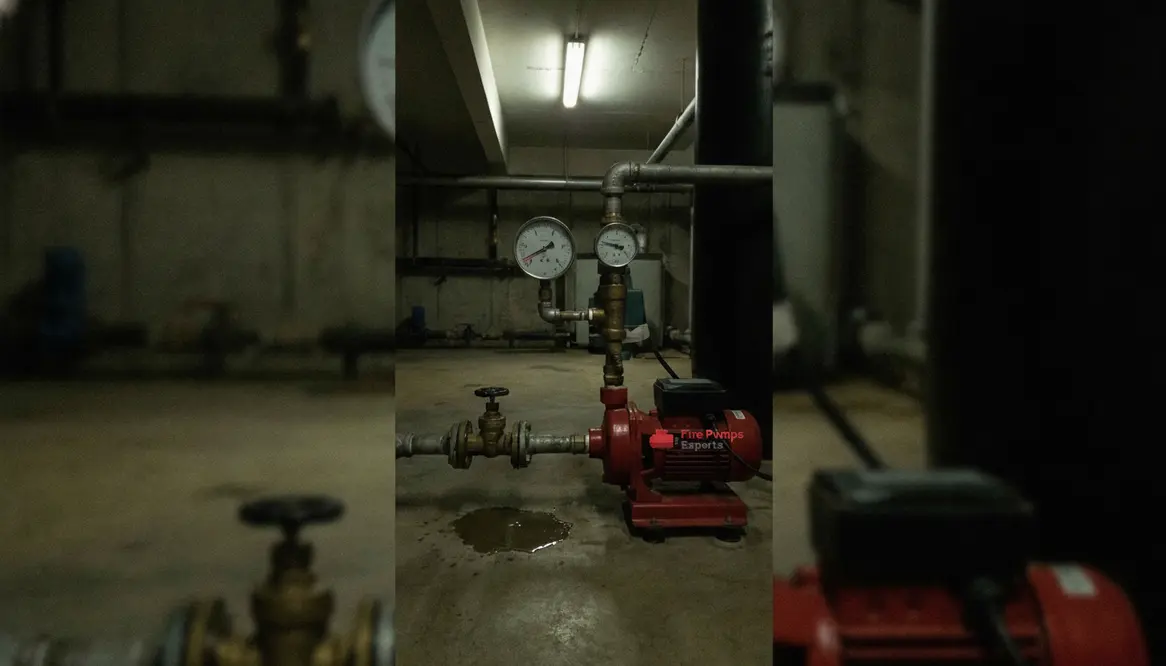
Because pressure loss shows up more clearly when building demand drops, and that makes the controller react to smaller changes in fire pump pressure and system stability.
Can a tiny leak cause cycling?
Yes. Even a small leak can trigger repeated pump starts, turning jockey pump cycling into a nightly habit instead of an occasional event.
Does a bad check valve affect pressure?
Yes. A check valve that does not seal fully can let pressure bleed back, which drives fire pump pressure down until the pump starts again.
Should the jockey pump run often?
No. It should maintain pressure, not start constantly. Frequent starts usually point to jockey pump troubleshooting needs, like pressure loss or control range issues.
When should I call for help?
If cycling keeps happening after basic checks and you cannot find the cause, a fire pump specialist can inspect control accuracy, pump sizing, and the pressure relief path to stop the repeat cycle.
Conclusion
When I see jockey pump cycling get worse overnight, I do not treat it like a random nuisance. I treat it like a warning sign. The system is telling me pressure is slipping somewhere, and the cause may be a leak, a valve issue, a control problem, or poor sizing. So I recommend acting early, checking the system carefully, and getting expert help for commercial or industrial properties before a small cycle becomes a larger failure. Reliable pressure starts with attention, not wishful thinking.
A well designed fire pump setup should hold pressure without constant correction. That is especially true in large facilities where fire protection must stay reliable around the clock. A stable system depends on proper sizing, correct settings, and quality parts that do their job without drama. No one wants a pump that acts like a side character in a suspense movie every night.
For facilities that need stronger support, I often point people toward professional fire pump service and system review. A good example is this los angeles fire pump service resource for commercial and industrial properties. I also find value in related electrical support from commercial electrical services when control issues involve wiring, panels, or power supply. And for broader protection planning, the fire sprinkler services guide can help explain how system parts work together.
FAQ
Conclusion
When I see jockey pump cycling get worse overnight, I do not treat it like a random nuisance. I treat it like a warning sign. The system is telling me pressure is slipping somewhere, and the cause may be a leak, a valve issue, a control problem, or poor sizing. So I recommend acting early, checking the system carefully, and getting expert help for commercial or industrial properties before a small cycle becomes a larger failure. Reliable pressure starts with attention, not wishful thinking.
Why system design matters more than luck
A well designed fire pump setup should hold pressure without constant correction. That is especially true in large facilities where fire protection must stay reliable around the clock. A stable system depends on proper sizing, correct settings, and quality parts that do their job without drama. No one wants a pump that acts like a side character in a suspense movie every night.
For facilities that need stronger support, I often point people toward professional fire pump service and system review. A good example is this los angeles fire pump service resource for commercial and industrial properties. I also find value in related electrical support from commercial electrical services when control issues involve wiring, panels, or power supply. And for broader protection planning, the fire sprinkler services guide can help explain how system parts work together.
FAQ
Conclusion
When I see jockey pump cycling get worse overnight, I do not treat it like a random nuisance. I treat it like a warning sign. The system is telling me pressure is slipping somewhere, and the cause may be a leak, a valve issue, a control problem, or poor sizing. So I recommend acting early, checking the system carefully, and getting expert help for commercial or industrial properties before a small cycle becomes a larger failure. Reliable pressure starts with attention, not wishful thinking.
Next, I compare what the gauge says with what the controller thinks it sees. If those numbers do not line up, I know the system needs a deeper look. I also check whether the building has recent changes, such as new pipe runs or altered equipment loads. For major commercial and industrial properties, even one change can shift the balance enough to cause cycling.
Why system design matters more than luck
A well designed fire pump setup should hold pressure without constant correction. That is especially true in large facilities where fire protection must stay reliable around the clock. A stable system depends on proper sizing, correct settings, and quality parts that do their job without drama. No one wants a pump that acts like a side character in a suspense movie every night.
For facilities that need stronger support, I often point people toward professional fire pump service and system review. A good example is this los angeles fire pump service resource for commercial and industrial properties. I also find value in related electrical support from commercial electrical services when control issues involve wiring, panels, or power supply. And for broader protection planning, the fire sprinkler services guide can help explain how system parts work together.
FAQ
Conclusion
When I see jockey pump cycling get worse overnight, I do not treat it like a random nuisance. I treat it like a warning sign. The system is telling me pressure is slipping somewhere, and the cause may be a leak, a valve issue, a control problem, or poor sizing. So I recommend acting early, checking the system carefully, and getting expert help for commercial or industrial properties before a small cycle becomes a larger failure. Reliable pressure starts with attention, not wishful thinking.
Cause
What I see
Small leak
Pressure falls slowly, pump starts often overnight
Bad check valve
Pressure bleeds back into the line
Switch issue
Pump starts at the wrong pressure point
Pump size problem
Fast starts and stops with little pressure stability
Next, I compare what the gauge says with what the controller thinks it sees. If those numbers do not line up, I know the system needs a deeper look. I also check whether the building has recent changes, such as new pipe runs or altered equipment loads. For major commercial and industrial properties, even one change can shift the balance enough to cause cycling.
Why system design matters more than luck
A well designed fire pump setup should hold pressure without constant correction. That is especially true in large facilities where fire protection must stay reliable around the clock. A stable system depends on proper sizing, correct settings, and quality parts that do their job without drama. No one wants a pump that acts like a side character in a suspense movie every night.
For facilities that need stronger support, I often point people toward professional fire pump service and system review. A good example is this los angeles fire pump service resource for commercial and industrial properties. I also find value in related electrical support from commercial electrical services when control issues involve wiring, panels, or power supply. And for broader protection planning, the fire sprinkler services guide can help explain how system parts work together.
FAQ
Conclusion
When I see jockey pump cycling get worse overnight, I do not treat it like a random nuisance. I treat it like a warning sign. The system is telling me pressure is slipping somewhere, and the cause may be a leak, a valve issue, a control problem, or poor sizing. So I recommend acting early, checking the system carefully, and getting expert help for commercial or industrial properties before a small cycle becomes a larger failure. Reliable pressure starts with attention, not wishful thinking.
Here is a simple view of how the problem often breaks down:
Cause
What I see
Small leak
Pressure falls slowly, pump starts often overnight
Bad check valve
Pressure bleeds back into the line
Switch issue
Pump starts at the wrong pressure point
Pump size problem
Fast starts and stops with little pressure stability
Next, I compare what the gauge says with what the controller thinks it sees. If those numbers do not line up, I know the system needs a deeper look. I also check whether the building has recent changes, such as new pipe runs or altered equipment loads. For major commercial and industrial properties, even one change can shift the balance enough to cause cycling.
Why system design matters more than luck
A well designed fire pump setup should hold pressure without constant correction. That is especially true in large facilities where fire protection must stay reliable around the clock. A stable system depends on proper sizing, correct settings, and quality parts that do their job without drama. No one wants a pump that acts like a side character in a suspense movie every night.
For facilities that need stronger support, I often point people toward professional fire pump service and system review. A good example is this los angeles fire pump service resource for commercial and industrial properties. I also find value in related electrical support from commercial electrical services when control issues involve wiring, panels, or power supply. And for broader protection planning, the fire sprinkler services guide can help explain how system parts work together.
FAQ
Conclusion
When I see jockey pump cycling get worse overnight, I do not treat it like a random nuisance. I treat it like a warning sign. The system is telling me pressure is slipping somewhere, and the cause may be a leak, a valve issue, a control problem, or poor sizing. So I recommend acting early, checking the system carefully, and getting expert help for commercial or industrial properties before a small cycle becomes a larger failure. Reliable pressure starts with attention, not wishful thinking.
When I dig into jockey pump troubleshooting, I focus on three things: pressure loss, control accuracy, and pump sizing. These three usually explain most cycling complaints.
Here is a simple view of how the problem often breaks down:
Cause
What I see
Small leak
Pressure falls slowly, pump starts often overnight
Bad check valve
Pressure bleeds back into the line
Switch issue
Pump starts at the wrong pressure point
Pump size problem
Fast starts and stops with little pressure stability
Next, I compare what the gauge says with what the controller thinks it sees. If those numbers do not line up, I know the system needs a deeper look. I also check whether the building has recent changes, such as new pipe runs or altered equipment loads. For major commercial and industrial properties, even one change can shift the balance enough to cause cycling.
Why system design matters more than luck
A well designed fire pump setup should hold pressure without constant correction. That is especially true in large facilities where fire protection must stay reliable around the clock. A stable system depends on proper sizing, correct settings, and quality parts that do their job without drama. No one wants a pump that acts like a side character in a suspense movie every night.
For facilities that need stronger support, I often point people toward professional fire pump service and system review. A good example is this los angeles fire pump service resource for commercial and industrial properties. I also find value in related electrical support from commercial electrical services when control issues involve wiring, panels, or power supply. And for broader protection planning, the fire sprinkler services guide can help explain how system parts work together.
FAQ
Conclusion
When I see jockey pump cycling get worse overnight, I do not treat it like a random nuisance. I treat it like a warning sign. The system is telling me pressure is slipping somewhere, and the cause may be a leak, a valve issue, a control problem, or poor sizing. So I recommend acting early, checking the system carefully, and getting expert help for commercial or industrial properties before a small cycle becomes a larger failure. Reliable pressure starts with attention, not wishful thinking.
What I look for during jockey pump troubleshooting
When I dig into jockey pump troubleshooting, I focus on three things: pressure loss, control accuracy, and pump sizing. These three usually explain most cycling complaints.
Here is a simple view of how the problem often breaks down:
Cause
What I see
Small leak
Pressure falls slowly, pump starts often overnight
Bad check valve
Pressure bleeds back into the line
Switch issue
Pump starts at the wrong pressure point
Pump size problem
Fast starts and stops with little pressure stability
Next, I compare what the gauge says with what the controller thinks it sees. If those numbers do not line up, I know the system needs a deeper look. I also check whether the building has recent changes, such as new pipe runs or altered equipment loads. For major commercial and industrial properties, even one change can shift the balance enough to cause cycling.
Why system design matters more than luck
A well designed fire pump setup should hold pressure without constant correction. That is especially true in large facilities where fire protection must stay reliable around the clock. A stable system depends on proper sizing, correct settings, and quality parts that do their job without drama. No one wants a pump that acts like a side character in a suspense movie every night.
For facilities that need stronger support, I often point people toward professional fire pump service and system review. A good example is this los angeles fire pump service resource for commercial and industrial properties. I also find value in related electrical support from commercial electrical services when control issues involve wiring, panels, or power supply. And for broader protection planning, the fire sprinkler services guide can help explain how system parts work together.
FAQ
Conclusion
When I see jockey pump cycling get worse overnight, I do not treat it like a random nuisance. I treat it like a warning sign. The system is telling me pressure is slipping somewhere, and the cause may be a leak, a valve issue, a control problem, or poor sizing. So I recommend acting early, checking the system carefully, and getting expert help for commercial or industrial properties before a small cycle becomes a larger failure. Reliable pressure starts with attention, not wishful thinking.
I also pay attention to the check valve, pressure relief path, and the condition of the jockey pump itself. If the pump is undersized, it may not recover pressure well. If it is oversized, it may overshoot and then bounce the system into another start cycle. Neither option helps. In both cases, the system behaves like it has had one too many energy drinks.
What I look for during jockey pump troubleshooting
When I dig into jockey pump troubleshooting, I focus on three things: pressure loss, control accuracy, and pump sizing. These three usually explain most cycling complaints.
Here is a simple view of how the problem often breaks down:
Cause
What I see
Small leak
Pressure falls slowly, pump starts often overnight
Bad check valve
Pressure bleeds back into the line
Switch issue
Pump starts at the wrong pressure point
Pump size problem
Fast starts and stops with little pressure stability
Next, I compare what the gauge says with what the controller thinks it sees. If those numbers do not line up, I know the system needs a deeper look. I also check whether the building has recent changes, such as new pipe runs or altered equipment loads. For major commercial and industrial properties, even one change can shift the balance enough to cause cycling.
Why system design matters more than luck
A well designed fire pump setup should hold pressure without constant correction. That is especially true in large facilities where fire protection must stay reliable around the clock. A stable system depends on proper sizing, correct settings, and quality parts that do their job without drama. No one wants a pump that acts like a side character in a suspense movie every night.
For facilities that need stronger support, I often point people toward professional fire pump service and system review. A good example is this los angeles fire pump service resource for commercial and industrial properties. I also find value in related electrical support from commercial electrical services when control issues involve wiring, panels, or power supply. And for broader protection planning, the fire sprinkler services guide can help explain how system parts work together.
FAQ
Conclusion
When I see jockey pump cycling get worse overnight, I do not treat it like a random nuisance. I treat it like a warning sign. The system is telling me pressure is slipping somewhere, and the cause may be a leak, a valve issue, a control problem, or poor sizing. So I recommend acting early, checking the system carefully, and getting expert help for commercial or industrial properties before a small cycle becomes a larger failure. Reliable pressure starts with attention, not wishful thinking.
I always begin with the basics. First, I inspect for visible leaks, dripping valves, and loose fittings. Then I check the pressure setting, the switch range, and the controller logic. After that, I look at the pump run time and the start count. If the pump starts often but restores pressure fast, the system may be losing water somewhere small but steady.
I also pay attention to the check valve, pressure relief path, and the condition of the jockey pump itself. If the pump is undersized, it may not recover pressure well. If it is oversized, it may overshoot and then bounce the system into another start cycle. Neither option helps. In both cases, the system behaves like it has had one too many energy drinks.
What I look for during jockey pump troubleshooting
When I dig into jockey pump troubleshooting, I focus on three things: pressure loss, control accuracy, and pump sizing. These three usually explain most cycling complaints.
Here is a simple view of how the problem often breaks down:
Cause
What I see
Small leak
Pressure falls slowly, pump starts often overnight
Bad check valve
Pressure bleeds back into the line
Switch issue
Pump starts at the wrong pressure point
Pump size problem
Fast starts and stops with little pressure stability
Next, I compare what the gauge says with what the controller thinks it sees. If those numbers do not line up, I know the system needs a deeper look. I also check whether the building has recent changes, such as new pipe runs or altered equipment loads. For major commercial and industrial properties, even one change can shift the balance enough to cause cycling.
Why system design matters more than luck
A well designed fire pump setup should hold pressure without constant correction. That is especially true in large facilities where fire protection must stay reliable around the clock. A stable system depends on proper sizing, correct settings, and quality parts that do their job without drama. No one wants a pump that acts like a side character in a suspense movie every night.
For facilities that need stronger support, I often point people toward professional fire pump service and system review. A good example is this los angeles fire pump service resource for commercial and industrial properties. I also find value in related electrical support from commercial electrical services when control issues involve wiring, panels, or power supply. And for broader protection planning, the fire sprinkler services guide can help explain how system parts work together.
FAQ
Conclusion
When I see jockey pump cycling get worse overnight, I do not treat it like a random nuisance. I treat it like a warning sign. The system is telling me pressure is slipping somewhere, and the cause may be a leak, a valve issue, a control problem, or poor sizing. So I recommend acting early, checking the system carefully, and getting expert help for commercial or industrial properties before a small cycle becomes a larger failure. Reliable pressure starts with attention, not wishful thinking.
How I check the most likely causes
I always begin with the basics. First, I inspect for visible leaks, dripping valves, and loose fittings. Then I check the pressure setting, the switch range, and the controller logic. After that, I look at the pump run time and the start count. If the pump starts often but restores pressure fast, the system may be losing water somewhere small but steady.
I also pay attention to the check valve, pressure relief path, and the condition of the jockey pump itself. If the pump is undersized, it may not recover pressure well. If it is oversized, it may overshoot and then bounce the system into another start cycle. Neither option helps. In both cases, the system behaves like it has had one too many energy drinks.
What I look for during jockey pump troubleshooting
When I dig into jockey pump troubleshooting, I focus on three things: pressure loss, control accuracy, and pump sizing. These three usually explain most cycling complaints.
Here is a simple view of how the problem often breaks down:
Cause
What I see
Small leak
Pressure falls slowly, pump starts often overnight
Bad check valve
Pressure bleeds back into the line
Switch issue
Pump starts at the wrong pressure point
Pump size problem
Fast starts and stops with little pressure stability
Next, I compare what the gauge says with what the controller thinks it sees. If those numbers do not line up, I know the system needs a deeper look. I also check whether the building has recent changes, such as new pipe runs or altered equipment loads. For major commercial and industrial properties, even one change can shift the balance enough to cause cycling.
Why system design matters more than luck
A well designed fire pump setup should hold pressure without constant correction. That is especially true in large facilities where fire protection must stay reliable around the clock. A stable system depends on proper sizing, correct settings, and quality parts that do their job without drama. No one wants a pump that acts like a side character in a suspense movie every night.
For facilities that need stronger support, I often point people toward professional fire pump service and system review. A good example is this los angeles fire pump service resource for commercial and industrial properties. I also find value in related electrical support from commercial electrical services when control issues involve wiring, panels, or power supply. And for broader protection planning, the fire sprinkler services guide can help explain how system parts work together.
FAQ
Conclusion
When I see jockey pump cycling get worse overnight, I do not treat it like a random nuisance. I treat it like a warning sign. The system is telling me pressure is slipping somewhere, and the cause may be a leak, a valve issue, a control problem, or poor sizing. So I recommend acting early, checking the system carefully, and getting expert help for commercial or industrial properties before a small cycle becomes a larger failure. Reliable pressure starts with attention, not wishful thinking.
Here is the simple truth: the pump does not care what time it is. It only reacts to pressure. So if the pressure switch, sensor, or controller reads even a slight drop, the pump may start when it should not. Then it shuts off, the pressure slips again, and the whole scene repeats. It is the mechanical version of someone tapping your shoulder every five minutes because they think you left the stove on.
How I check the most likely causes
I always begin with the basics. First, I inspect for visible leaks, dripping valves, and loose fittings. Then I check the pressure setting, the switch range, and the controller logic. After that, I look at the pump run time and the start count. If the pump starts often but restores pressure fast, the system may be losing water somewhere small but steady.
I also pay attention to the check valve, pressure relief path, and the condition of the jockey pump itself. If the pump is undersized, it may not recover pressure well. If it is oversized, it may overshoot and then bounce the system into another start cycle. Neither option helps. In both cases, the system behaves like it has had one too many energy drinks.
What I look for during jockey pump troubleshooting
When I dig into jockey pump troubleshooting, I focus on three things: pressure loss, control accuracy, and pump sizing. These three usually explain most cycling complaints.
Here is a simple view of how the problem often breaks down:
Cause
What I see
Small leak
Pressure falls slowly, pump starts often overnight
Bad check valve
Pressure bleeds back into the line
Switch issue
Pump starts at the wrong pressure point
Pump size problem
Fast starts and stops with little pressure stability
Next, I compare what the gauge says with what the controller thinks it sees. If those numbers do not line up, I know the system needs a deeper look. I also check whether the building has recent changes, such as new pipe runs or altered equipment loads. For major commercial and industrial properties, even one change can shift the balance enough to cause cycling.
Why system design matters more than luck
A well designed fire pump setup should hold pressure without constant correction. That is especially true in large facilities where fire protection must stay reliable around the clock. A stable system depends on proper sizing, correct settings, and quality parts that do their job without drama. No one wants a pump that acts like a side character in a suspense movie every night.
For facilities that need stronger support, I often point people toward professional fire pump service and system review. A good example is this los angeles fire pump service resource for commercial and industrial properties. I also find value in related electrical support from commercial electrical services when control issues involve wiring, panels, or power supply. And for broader protection planning, the fire sprinkler services guide can help explain how system parts work together.
FAQ
Conclusion
When I see jockey pump cycling get worse overnight, I do not treat it like a random nuisance. I treat it like a warning sign. The system is telling me pressure is slipping somewhere, and the cause may be a leak, a valve issue, a control problem, or poor sizing. So I recommend acting early, checking the system carefully, and getting expert help for commercial or industrial properties before a small cycle becomes a larger failure. Reliable pressure starts with attention, not wishful thinking.
During the day, pressure can stay steadier because normal system activity masks trouble. Overnight, however, the system becomes quiet enough for the weakest point to show itself. Air trapped in lines may shift. Heat from equipment may fade. Building demand may also drop so low that tiny pressure changes trigger the pump switch. That is why cycling often feels worse after dark.
Here is the simple truth: the pump does not care what time it is. It only reacts to pressure. So if the pressure switch, sensor, or controller reads even a slight drop, the pump may start when it should not. Then it shuts off, the pressure slips again, and the whole scene repeats. It is the mechanical version of someone tapping your shoulder every five minutes because they think you left the stove on.
How I check the most likely causes
I always begin with the basics. First, I inspect for visible leaks, dripping valves, and loose fittings. Then I check the pressure setting, the switch range, and the controller logic. After that, I look at the pump run time and the start count. If the pump starts often but restores pressure fast, the system may be losing water somewhere small but steady.
I also pay attention to the check valve, pressure relief path, and the condition of the jockey pump itself. If the pump is undersized, it may not recover pressure well. If it is oversized, it may overshoot and then bounce the system into another start cycle. Neither option helps. In both cases, the system behaves like it has had one too many energy drinks.
What I look for during jockey pump troubleshooting
When I dig into jockey pump troubleshooting, I focus on three things: pressure loss, control accuracy, and pump sizing. These three usually explain most cycling complaints.
Here is a simple view of how the problem often breaks down:
Cause
What I see
Small leak
Pressure falls slowly, pump starts often overnight
Bad check valve
Pressure bleeds back into the line
Switch issue
Pump starts at the wrong pressure point
Pump size problem
Fast starts and stops with little pressure stability
Next, I compare what the gauge says with what the controller thinks it sees. If those numbers do not line up, I know the system needs a deeper look. I also check whether the building has recent changes, such as new pipe runs or altered equipment loads. For major commercial and industrial properties, even one change can shift the balance enough to cause cycling.
Why system design matters more than luck
A well designed fire pump setup should hold pressure without constant correction. That is especially true in large facilities where fire protection must stay reliable around the clock. A stable system depends on proper sizing, correct settings, and quality parts that do their job without drama. No one wants a pump that acts like a side character in a suspense movie every night.
For facilities that need stronger support, I often point people toward professional fire pump service and system review. A good example is this los angeles fire pump service resource for commercial and industrial properties. I also find value in related electrical support from commercial electrical services when control issues involve wiring, panels, or power supply. And for broader protection planning, the fire sprinkler services guide can help explain how system parts work together.
FAQ
Conclusion
When I see jockey pump cycling get worse overnight, I do not treat it like a random nuisance. I treat it like a warning sign. The system is telling me pressure is slipping somewhere, and the cause may be a leak, a valve issue, a control problem, or poor sizing. So I recommend acting early, checking the system carefully, and getting expert help for commercial or industrial properties before a small cycle becomes a larger failure. Reliable pressure starts with attention, not wishful thinking.
What changes after business hours
During the day, pressure can stay steadier because normal system activity masks trouble. Overnight, however, the system becomes quiet enough for the weakest point to show itself. Air trapped in lines may shift. Heat from equipment may fade. Building demand may also drop so low that tiny pressure changes trigger the pump switch. That is why cycling often feels worse after dark.
Here is the simple truth: the pump does not care what time it is. It only reacts to pressure. So if the pressure switch, sensor, or controller reads even a slight drop, the pump may start when it should not. Then it shuts off, the pressure slips again, and the whole scene repeats. It is the mechanical version of someone tapping your shoulder every five minutes because they think you left the stove on.
How I check the most likely causes
I always begin with the basics. First, I inspect for visible leaks, dripping valves, and loose fittings. Then I check the pressure setting, the switch range, and the controller logic. After that, I look at the pump run time and the start count. If the pump starts often but restores pressure fast, the system may be losing water somewhere small but steady.
I also pay attention to the check valve, pressure relief path, and the condition of the jockey pump itself. If the pump is undersized, it may not recover pressure well. If it is oversized, it may overshoot and then bounce the system into another start cycle. Neither option helps. In both cases, the system behaves like it has had one too many energy drinks.
What I look for during jockey pump troubleshooting
When I dig into jockey pump troubleshooting, I focus on three things: pressure loss, control accuracy, and pump sizing. These three usually explain most cycling complaints.
Here is a simple view of how the problem often breaks down:
Cause
What I see
Small leak
Pressure falls slowly, pump starts often overnight
Bad check valve
Pressure bleeds back into the line
Switch issue
Pump starts at the wrong pressure point
Pump size problem
Fast starts and stops with little pressure stability
Next, I compare what the gauge says with what the controller thinks it sees. If those numbers do not line up, I know the system needs a deeper look. I also check whether the building has recent changes, such as new pipe runs or altered equipment loads. For major commercial and industrial properties, even one change can shift the balance enough to cause cycling.
Why system design matters more than luck
A well designed fire pump setup should hold pressure without constant correction. That is especially true in large facilities where fire protection must stay reliable around the clock. A stable system depends on proper sizing, correct settings, and quality parts that do their job without drama. No one wants a pump that acts like a side character in a suspense movie every night.
For facilities that need stronger support, I often point people toward professional fire pump service and system review. A good example is this los angeles fire pump service resource for commercial and industrial properties. I also find value in related electrical support from commercial electrical services when control issues involve wiring, panels, or power supply. And for broader protection planning, the fire sprinkler services guide can help explain how system parts work together.
FAQ
Conclusion
When I see jockey pump cycling get worse overnight, I do not treat it like a random nuisance. I treat it like a warning sign. The system is telling me pressure is slipping somewhere, and the cause may be a leak, a valve issue, a control problem, or poor sizing. So I recommend acting early, checking the system carefully, and getting expert help for commercial or industrial properties before a small cycle becomes a larger failure. Reliable pressure starts with attention, not wishful thinking.
One common cause is a small leak in the piping network. Another is a check valve that does not seal fully. Even a slow drip can trigger repeated starts once the building rests overnight. In a commercial or industrial property, that matters because a small loss can become a pattern. And like an alarm clock that never learns, the pump keeps trying to fix the same issue again and again.
What changes after business hours
During the day, pressure can stay steadier because normal system activity masks trouble. Overnight, however, the system becomes quiet enough for the weakest point to show itself. Air trapped in lines may shift. Heat from equipment may fade. Building demand may also drop so low that tiny pressure changes trigger the pump switch. That is why cycling often feels worse after dark.
Here is the simple truth: the pump does not care what time it is. It only reacts to pressure. So if the pressure switch, sensor, or controller reads even a slight drop, the pump may start when it should not. Then it shuts off, the pressure slips again, and the whole scene repeats. It is the mechanical version of someone tapping your shoulder every five minutes because they think you left the stove on.
How I check the most likely causes
I always begin with the basics. First, I inspect for visible leaks, dripping valves, and loose fittings. Then I check the pressure setting, the switch range, and the controller logic. After that, I look at the pump run time and the start count. If the pump starts often but restores pressure fast, the system may be losing water somewhere small but steady.
I also pay attention to the check valve, pressure relief path, and the condition of the jockey pump itself. If the pump is undersized, it may not recover pressure well. If it is oversized, it may overshoot and then bounce the system into another start cycle. Neither option helps. In both cases, the system behaves like it has had one too many energy drinks.
What I look for during jockey pump troubleshooting
When I dig into jockey pump troubleshooting, I focus on three things: pressure loss, control accuracy, and pump sizing. These three usually explain most cycling complaints.
Here is a simple view of how the problem often breaks down:
Cause
What I see
Small leak
Pressure falls slowly, pump starts often overnight
Bad check valve
Pressure bleeds back into the line
Switch issue
Pump starts at the wrong pressure point
Pump size problem
Fast starts and stops with little pressure stability
Next, I compare what the gauge says with what the controller thinks it sees. If those numbers do not line up, I know the system needs a deeper look. I also check whether the building has recent changes, such as new pipe runs or altered equipment loads. For major commercial and industrial properties, even one change can shift the balance enough to cause cycling.
Why system design matters more than luck
A well designed fire pump setup should hold pressure without constant correction. That is especially true in large facilities where fire protection must stay reliable around the clock. A stable system depends on proper sizing, correct settings, and quality parts that do their job without drama. No one wants a pump that acts like a side character in a suspense movie every night.
For facilities that need stronger support, I often point people toward professional fire pump service and system review. A good example is this los angeles fire pump service resource for commercial and industrial properties. I also find value in related electrical support from commercial electrical services when control issues involve wiring, panels, or power supply. And for broader protection planning, the fire sprinkler services guide can help explain how system parts work together.
FAQ
Conclusion
When I see jockey pump cycling get worse overnight, I do not treat it like a random nuisance. I treat it like a warning sign. The system is telling me pressure is slipping somewhere, and the cause may be a leak, a valve issue, a control problem, or poor sizing. So I recommend acting early, checking the system carefully, and getting expert help for commercial or industrial properties before a small cycle becomes a larger failure. Reliable pressure starts with attention, not wishful thinking.
At night, the building often uses less water. That sounds helpful, but it can reveal leaks, worn valves, and tiny pressure losses that daytime use hides. Also, cooler temperatures can slightly change pipe and fitting behavior. As a result, fire pump pressure can drift lower while the system sits quiet. Then the jockey pump has to wake up and recover that loss. If it runs too often, I start looking for the reason instead of blaming the clock.
One common cause is a small leak in the piping network. Another is a check valve that does not seal fully. Even a slow drip can trigger repeated starts once the building rests overnight. In a commercial or industrial property, that matters because a small loss can become a pattern. And like an alarm clock that never learns, the pump keeps trying to fix the same issue again and again.
What changes after business hours
During the day, pressure can stay steadier because normal system activity masks trouble. Overnight, however, the system becomes quiet enough for the weakest point to show itself. Air trapped in lines may shift. Heat from equipment may fade. Building demand may also drop so low that tiny pressure changes trigger the pump switch. That is why cycling often feels worse after dark.
Here is the simple truth: the pump does not care what time it is. It only reacts to pressure. So if the pressure switch, sensor, or controller reads even a slight drop, the pump may start when it should not. Then it shuts off, the pressure slips again, and the whole scene repeats. It is the mechanical version of someone tapping your shoulder every five minutes because they think you left the stove on.
How I check the most likely causes
I always begin with the basics. First, I inspect for visible leaks, dripping valves, and loose fittings. Then I check the pressure setting, the switch range, and the controller logic. After that, I look at the pump run time and the start count. If the pump starts often but restores pressure fast, the system may be losing water somewhere small but steady.
I also pay attention to the check valve, pressure relief path, and the condition of the jockey pump itself. If the pump is undersized, it may not recover pressure well. If it is oversized, it may overshoot and then bounce the system into another start cycle. Neither option helps. In both cases, the system behaves like it has had one too many energy drinks.
What I look for during jockey pump troubleshooting
When I dig into jockey pump troubleshooting, I focus on three things: pressure loss, control accuracy, and pump sizing. These three usually explain most cycling complaints.
Here is a simple view of how the problem often breaks down:
Cause
What I see
Small leak
Pressure falls slowly, pump starts often overnight
Bad check valve
Pressure bleeds back into the line
Switch issue
Pump starts at the wrong pressure point
Pump size problem
Fast starts and stops with little pressure stability
Next, I compare what the gauge says with what the controller thinks it sees. If those numbers do not line up, I know the system needs a deeper look. I also check whether the building has recent changes, such as new pipe runs or altered equipment loads. For major commercial and industrial properties, even one change can shift the balance enough to cause cycling.
Why system design matters more than luck
A well designed fire pump setup should hold pressure without constant correction. That is especially true in large facilities where fire protection must stay reliable around the clock. A stable system depends on proper sizing, correct settings, and quality parts that do their job without drama. No one wants a pump that acts like a side character in a suspense movie every night.
For facilities that need stronger support, I often point people toward professional fire pump service and system review. A good example is this los angeles fire pump service resource for commercial and industrial properties. I also find value in related electrical support from commercial electrical services when control issues involve wiring, panels, or power supply. And for broader protection planning, the fire sprinkler services guide can help explain how system parts work together.
FAQ
Conclusion
When I see jockey pump cycling get worse overnight, I do not treat it like a random nuisance. I treat it like a warning sign. The system is telling me pressure is slipping somewhere, and the cause may be a leak, a valve issue, a control problem, or poor sizing. So I recommend acting early, checking the system carefully, and getting expert help for commercial or industrial properties before a small cycle becomes a larger failure. Reliable pressure starts with attention, not wishful thinking.
Why overnight pressure drops show up first
At night, the building often uses less water. That sounds helpful, but it can reveal leaks, worn valves, and tiny pressure losses that daytime use hides. Also, cooler temperatures can slightly change pipe and fitting behavior. As a result, fire pump pressure can drift lower while the system sits quiet. Then the jockey pump has to wake up and recover that loss. If it runs too often, I start looking for the reason instead of blaming the clock.
One common cause is a small leak in the piping network. Another is a check valve that does not seal fully. Even a slow drip can trigger repeated starts once the building rests overnight. In a commercial or industrial property, that matters because a small loss can become a pattern. And like an alarm clock that never learns, the pump keeps trying to fix the same issue again and again.
What changes after business hours
During the day, pressure can stay steadier because normal system activity masks trouble. Overnight, however, the system becomes quiet enough for the weakest point to show itself. Air trapped in lines may shift. Heat from equipment may fade. Building demand may also drop so low that tiny pressure changes trigger the pump switch. That is why cycling often feels worse after dark.
Here is the simple truth: the pump does not care what time it is. It only reacts to pressure. So if the pressure switch, sensor, or controller reads even a slight drop, the pump may start when it should not. Then it shuts off, the pressure slips again, and the whole scene repeats. It is the mechanical version of someone tapping your shoulder every five minutes because they think you left the stove on.
How I check the most likely causes
I always begin with the basics. First, I inspect for visible leaks, dripping valves, and loose fittings. Then I check the pressure setting, the switch range, and the controller logic. After that, I look at the pump run time and the start count. If the pump starts often but restores pressure fast, the system may be losing water somewhere small but steady.
I also pay attention to the check valve, pressure relief path, and the condition of the jockey pump itself. If the pump is undersized, it may not recover pressure well. If it is oversized, it may overshoot and then bounce the system into another start cycle. Neither option helps. In both cases, the system behaves like it has had one too many energy drinks.
What I look for during jockey pump troubleshooting
When I dig into jockey pump troubleshooting, I focus on three things: pressure loss, control accuracy, and pump sizing. These three usually explain most cycling complaints.
Here is a simple view of how the problem often breaks down:
Cause
What I see
Small leak
Pressure falls slowly, pump starts often overnight
Bad check valve
Pressure bleeds back into the line
Switch issue
Pump starts at the wrong pressure point
Pump size problem
Fast starts and stops with little pressure stability
Next, I compare what the gauge says with what the controller thinks it sees. If those numbers do not line up, I know the system needs a deeper look. I also check whether the building has recent changes, such as new pipe runs or altered equipment loads. For major commercial and industrial properties, even one change can shift the balance enough to cause cycling.
Why system design matters more than luck
A well designed fire pump setup should hold pressure without constant correction. That is especially true in large facilities where fire protection must stay reliable around the clock. A stable system depends on proper sizing, correct settings, and quality parts that do their job without drama. No one wants a pump that acts like a side character in a suspense movie every night.
For facilities that need stronger support, I often point people toward professional fire pump service and system review. A good example is this los angeles fire pump service resource for commercial and industrial properties. I also find value in related electrical support from commercial electrical services when control issues involve wiring, panels, or power supply. And for broader protection planning, the fire sprinkler services guide can help explain how system parts work together.
FAQ
Conclusion
When I see jockey pump cycling get worse overnight, I do not treat it like a random nuisance. I treat it like a warning sign. The system is telling me pressure is slipping somewhere, and the cause may be a leak, a valve issue, a control problem, or poor sizing. So I recommend acting early, checking the system carefully, and getting expert help for commercial or industrial properties before a small cycle becomes a larger failure. Reliable pressure starts with attention, not wishful thinking.
I have seen plenty of fire protection systems act calm all day, then start their little midnight drama. That is where jockey pump cycling turns from a small annoyance into a bigger issue. In many cases, it ties straight into jockey pump troubleshooting and the health of fire pump pressure control. When the sun goes down, temperatures drop, demand changes, and weak spots in the system begin to show. The pump starts, stops, starts again, and suddenly it sounds like a bad remix. I have learned that overnight cycling usually points to a real problem, not just bad luck.
Why overnight pressure drops show up first
At night, the building often uses less water. That sounds helpful, but it can reveal leaks, worn valves, and tiny pressure losses that daytime use hides. Also, cooler temperatures can slightly change pipe and fitting behavior. As a result, fire pump pressure can drift lower while the system sits quiet. Then the jockey pump has to wake up and recover that loss. If it runs too often, I start looking for the reason instead of blaming the clock.
One common cause is a small leak in the piping network. Another is a check valve that does not seal fully. Even a slow drip can trigger repeated starts once the building rests overnight. In a commercial or industrial property, that matters because a small loss can become a pattern. And like an alarm clock that never learns, the pump keeps trying to fix the same issue again and again.
What changes after business hours
During the day, pressure can stay steadier because normal system activity masks trouble. Overnight, however, the system becomes quiet enough for the weakest point to show itself. Air trapped in lines may shift. Heat from equipment may fade. Building demand may also drop so low that tiny pressure changes trigger the pump switch. That is why cycling often feels worse after dark.
Here is the simple truth: the pump does not care what time it is. It only reacts to pressure. So if the pressure switch, sensor, or controller reads even a slight drop, the pump may start when it should not. Then it shuts off, the pressure slips again, and the whole scene repeats. It is the mechanical version of someone tapping your shoulder every five minutes because they think you left the stove on.
How I check the most likely causes
I always begin with the basics. First, I inspect for visible leaks, dripping valves, and loose fittings. Then I check the pressure setting, the switch range, and the controller logic. After that, I look at the pump run time and the start count. If the pump starts often but restores pressure fast, the system may be losing water somewhere small but steady.
I also pay attention to the check valve, pressure relief path, and the condition of the jockey pump itself. If the pump is undersized, it may not recover pressure well. If it is oversized, it may overshoot and then bounce the system into another start cycle. Neither option helps. In both cases, the system behaves like it has had one too many energy drinks.
What I look for during jockey pump troubleshooting
When I dig into jockey pump troubleshooting, I focus on three things: pressure loss, control accuracy, and pump sizing. These three usually explain most cycling complaints.
Here is a simple view of how the problem often breaks down:
Cause
What I see
Small leak
Pressure falls slowly, pump starts often overnight
Bad check valve
Pressure bleeds back into the line
Switch issue
Pump starts at the wrong pressure point
Pump size problem
Fast starts and stops with little pressure stability
Next, I compare what the gauge says with what the controller thinks it sees. If those numbers do not line up, I know the system needs a deeper look. I also check whether the building has recent changes, such as new pipe runs or altered equipment loads. For major commercial and industrial properties, even one change can shift the balance enough to cause cycling.
Why system design matters more than luck
A well designed fire pump setup should hold pressure without constant correction. That is especially true in large facilities where fire protection must stay reliable around the clock. A stable system depends on proper sizing, correct settings, and quality parts that do their job without drama. No one wants a pump that acts like a side character in a suspense movie every night.
For facilities that need stronger support, I often point people toward professional fire pump service and system review. A good example is this los angeles fire pump service resource for commercial and industrial properties. I also find value in related electrical support from commercial electrical services when control issues involve wiring, panels, or power supply. And for broader protection planning, the fire sprinkler services guide can help explain how system parts work together.
FAQ
Conclusion
When I see jockey pump cycling get worse overnight, I do not treat it like a random nuisance. I treat it like a warning sign. The system is telling me pressure is slipping somewhere, and the cause may be a leak, a valve issue, a control problem, or poor sizing. So I recommend acting early, checking the system carefully, and getting expert help for commercial or industrial properties before a small cycle becomes a larger failure. Reliable pressure starts with attention, not wishful thinking.
From calm to midnight chaos: what the cycle is really saying
I have seen plenty of fire protection systems act calm all day, then start their little midnight drama. That is where jockey pump cycling turns from a small annoyance into a bigger issue. In many cases, it ties straight into jockey pump troubleshooting and the health of fire pump pressure control. When the sun goes down, temperatures drop, demand changes, and weak spots in the system begin to show. The pump starts, stops, starts again, and suddenly it sounds like a bad remix. I have learned that overnight cycling usually points to a real problem, not just bad luck.
Why overnight pressure drops show up first
At night, the building often uses less water. That sounds helpful, but it can reveal leaks, worn valves, and tiny pressure losses that daytime use hides. Also, cooler temperatures can slightly change pipe and fitting behavior. As a result, fire pump pressure can drift lower while the system sits quiet. Then the jockey pump has to wake up and recover that loss. If it runs too often, I start looking for the reason instead of blaming the clock.
One common cause is a small leak in the piping network. Another is a check valve that does not seal fully. Even a slow drip can trigger repeated starts once the building rests overnight. In a commercial or industrial property, that matters because a small loss can become a pattern. And like an alarm clock that never learns, the pump keeps trying to fix the same issue again and again.
What changes after business hours
During the day, pressure can stay steadier because normal system activity masks trouble. Overnight, however, the system becomes quiet enough for the weakest point to show itself. Air trapped in lines may shift. Heat from equipment may fade. Building demand may also drop so low that tiny pressure changes trigger the pump switch. That is why cycling often feels worse after dark.
Here is the simple truth: the pump does not care what time it is. It only reacts to pressure. So if the pressure switch, sensor, or controller reads even a slight drop, the pump may start when it should not. Then it shuts off, the pressure slips again, and the whole scene repeats. It is the mechanical version of someone tapping your shoulder every five minutes because they think you left the stove on.
How I check the most likely causes
I always begin with the basics. First, I inspect for visible leaks, dripping valves, and loose fittings. Then I check the pressure setting, the switch range, and the controller logic. After that, I look at the pump run time and the start count. If the pump starts often but restores pressure fast, the system may be losing water somewhere small but steady.
I also pay attention to the check valve, pressure relief path, and the condition of the jockey pump itself. If the pump is undersized, it may not recover pressure well. If it is oversized, it may overshoot and then bounce the system into another start cycle. Neither option helps. In both cases, the system behaves like it has had one too many energy drinks.
What I look for during jockey pump troubleshooting
When I dig into jockey pump troubleshooting, I focus on three things: pressure loss, control accuracy, and pump sizing. These three usually explain most cycling complaints.
Here is a simple view of how the problem often breaks down:
Cause
What I see
Small leak
Pressure falls slowly, pump starts often overnight
Bad check valve
Pressure bleeds back into the line
Switch issue
Pump starts at the wrong pressure point
Pump size problem
Fast starts and stops with little pressure stability
Next, I compare what the gauge says with what the controller thinks it sees. If those numbers do not line up, I know the system needs a deeper look. I also check whether the building has recent changes, such as new pipe runs or altered equipment loads. For major commercial and industrial properties, even one change can shift the balance enough to cause cycling.
Why system design matters more than luck
A well designed fire pump setup should hold pressure without constant correction. That is especially true in large facilities where fire protection must stay reliable around the clock. A stable system depends on proper sizing, correct settings, and quality parts that do their job without drama. No one wants a pump that acts like a side character in a suspense movie every night.
For facilities that need stronger support, I often point people toward professional fire pump service and system review. A good example is this los angeles fire pump service resource for commercial and industrial properties. I also find value in related electrical support from commercial electrical services when control issues involve wiring, panels, or power supply. And for broader protection planning, the fire sprinkler services guide can help explain how system parts work together.
FAQ
Conclusion
When I see jockey pump cycling get worse overnight, I do not treat it like a random nuisance. I treat it like a warning sign. The system is telling me pressure is slipping somewhere, and the cause may be a leak, a valve issue, a control problem, or poor sizing. So I recommend acting early, checking the system carefully, and getting expert help for commercial or industrial properties before a small cycle becomes a larger failure. Reliable pressure starts with attention, not wishful thinking.
Why Jockey Pump Cycling Gets Worse Overnight
From calm to midnight chaos: what the cycle is really saying
I have seen plenty of fire protection systems act calm all day, then start their little midnight drama. That is where jockey pump cycling turns from a small annoyance into a bigger issue. In many cases, it ties straight into jockey pump troubleshooting and the health of fire pump pressure control. When the sun goes down, temperatures drop, demand changes, and weak spots in the system begin to show. The pump starts, stops, starts again, and suddenly it sounds like a bad remix. I have learned that overnight cycling usually points to a real problem, not just bad luck.
Why overnight pressure drops show up first
At night, the building often uses less water. That sounds helpful, but it can reveal leaks, worn valves, and tiny pressure losses that daytime use hides. Also, cooler temperatures can slightly change pipe and fitting behavior. As a result, fire pump pressure can drift lower while the system sits quiet. Then the jockey pump has to wake up and recover that loss. If it runs too often, I start looking for the reason instead of blaming the clock.
One common cause is a small leak in the piping network. Another is a check valve that does not seal fully. Even a slow drip can trigger repeated starts once the building rests overnight. In a commercial or industrial property, that matters because a small loss can become a pattern. And like an alarm clock that never learns, the pump keeps trying to fix the same issue again and again.
What changes after business hours
During the day, pressure can stay steadier because normal system activity masks trouble. Overnight, however, the system becomes quiet enough for the weakest point to show itself. Air trapped in lines may shift. Heat from equipment may fade. Building demand may also drop so low that tiny pressure changes trigger the pump switch. That is why cycling often feels worse after dark.
Here is the simple truth: the pump does not care what time it is. It only reacts to pressure. So if the pressure switch, sensor, or controller reads even a slight drop, the pump may start when it should not. Then it shuts off, the pressure slips again, and the whole scene repeats. It is the mechanical version of someone tapping your shoulder every five minutes because they think you left the stove on.
How I check the most likely causes
I always begin with the basics. First, I inspect for visible leaks, dripping valves, and loose fittings. Then I check the pressure setting, the switch range, and the controller logic. After that, I look at the pump run time and the start count. If the pump starts often but restores pressure fast, the system may be losing water somewhere small but steady.
I also pay attention to the check valve, pressure relief path, and the condition of the jockey pump itself. If the pump is undersized, it may not recover pressure well. If it is oversized, it may overshoot and then bounce the system into another start cycle. Neither option helps. In both cases, the system behaves like it has had one too many energy drinks.
What I look for during jockey pump troubleshooting
When I dig into jockey pump troubleshooting, I focus on three things: pressure loss, control accuracy, and pump sizing. These three usually explain most cycling complaints.
Here is a simple view of how the problem often breaks down:
Cause
What I see
Small leak
Pressure falls slowly, pump starts often overnight
Bad check valve
Pressure bleeds back into the line
Switch issue
Pump starts at the wrong pressure point
Pump size problem
Fast starts and stops with little pressure stability
Next, I compare what the gauge says with what the controller thinks it sees. If those numbers do not line up, I know the system needs a deeper look. I also check whether the building has recent changes, such as new pipe runs or altered equipment loads. For major commercial and industrial properties, even one change can shift the balance enough to cause cycling.
Why system design matters more than luck
A well designed fire pump setup should hold pressure without constant correction. That is especially true in large facilities where fire protection must stay reliable around the clock. A stable system depends on proper sizing, correct settings, and quality parts that do their job without drama. No one wants a pump that acts like a side character in a suspense movie every night.
For facilities that need stronger support, I often point people toward professional fire pump service and system review. A good example is this los angeles fire pump service resource for commercial and industrial properties. I also find value in related electrical support from commercial electrical services when control issues involve wiring, panels, or power supply. And for broader protection planning, the fire sprinkler services guide can help explain how system parts work together.
FAQ
Conclusion
When I see jockey pump cycling get worse overnight, I do not treat it like a random nuisance. I treat it like a warning sign. The system is telling me pressure is slipping somewhere, and the cause may be a leak, a valve issue, a control problem, or poor sizing. So I recommend acting early, checking the system carefully, and getting expert help for commercial or industrial properties before a small cycle becomes a larger failure. Reliable pressure starts with attention, not wishful thinking.