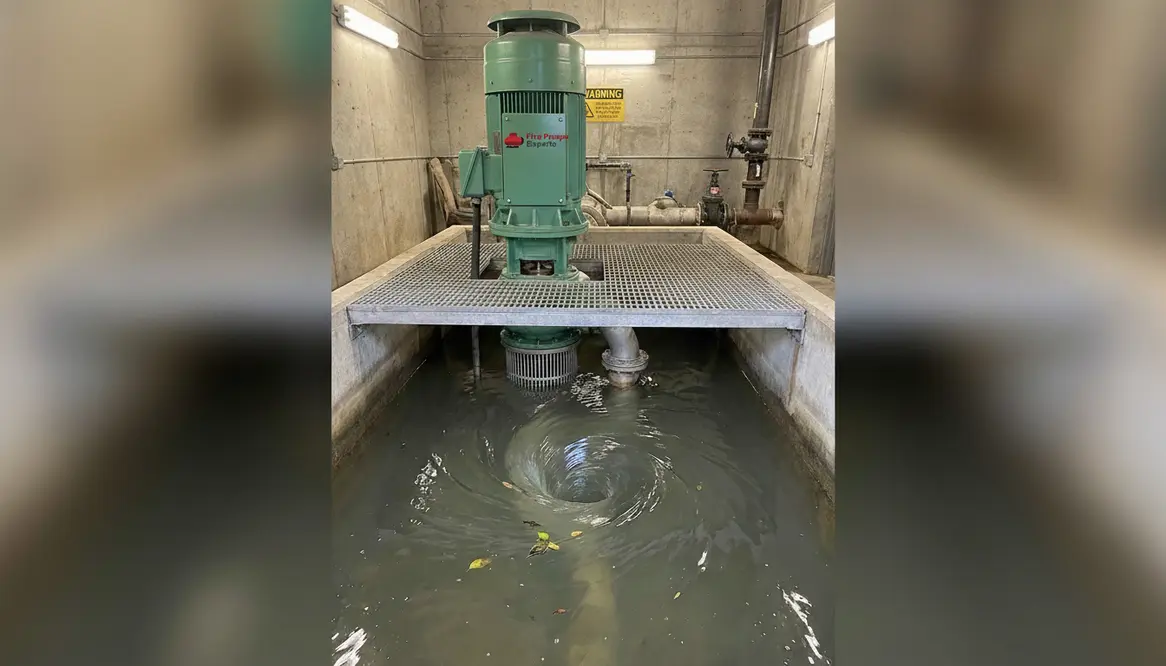
Vertical Turbine Fire Pump Intake Vortices: What I Watch For in Commercial and Industrial Systems
When I look at a vertical turbine fire pump, I never start with the motor or the shiny parts. I start at the water. That is where trouble likes to hide. A small pump vortex can form near the intake, pull in air, and weaken the system right when a fire needs full pressure. In a fire pump suction setup for commercial buildings, warehouses, plants, and other major properties, that is not a small detail. That is the kind of problem that can turn a serious system into a very expensive paperweight. Nobody wants that kind of plot twist.
In this article, I walk through how intake vortices form, why they matter, and how I check for them before they become a real headache. I will keep it clear, practical, and focused on the kind of facilities that actually depend on these systems every day.
Why vortices form at the intake
I usually find intake vortices when water conditions, basin shape, or pump placement do not work together. If the water level drops too low, air can spin into the intake. If the basin is too shallow or too tight, the water moves in a rough way and starts to swirl. Also, poor approach flow can send water toward the pump in a crooked path, which makes the problem worse.
In plain terms, water should move toward the pump like a calm river, not like a crowded subway at rush hour. When it spins, it can drag air with it. As a result, the pump may lose efficiency, make noise, vibrate, or even lose prime. For a fire protection system, that is more than annoying. It is a risk.
How I spot a pump vortex before it hurts performance
I look for the signs early. First, I check for surface swirling over the intake. Next, I listen for air noise, rattling, or a sudden change in pump sound. Then I watch for vibration in the piping and support points. If the flow looks uneven or the pressure jumps around, I take that seriously.
Sometimes the signs are subtle. Other times, the water tells on itself right away. A visible whirlpool is the obvious villain in the scene, like the bad guy in a late 90s action movie who walks in slow motion and somehow still thinks no one sees him. But the smaller, hidden vortices can do just as much damage. That is why I inspect the intake zone carefully and do not rely on guesswork.
What I check in a vertical turbine fire pump intake
When I review a system, I focus on the parts that shape flow and protect reliability. I check basin depth, submergence, inlet spacing, and the distance between the intake and nearby walls or obstructions. I also look at screens, elbows, and any item that may disturb smooth water movement.
Here is the short list I use:
- Water level stays high enough for safe submergence
- Intake opening has proper clearance
- Approach flow stays even and direct
- No debris collects near the suction area
- Piping layout avoids sharp flow disruption
These checks sound simple, yet they matter a great deal. A well designed vertical turbine fire pump can perform well for years, but only if the intake side gives it a clean feed. After all, the pump can only move what it receives. That is not philosophy. That is just water doing water things.
How I reduce fire pump suction problems
To reduce fire pump suction issues, I start with the basin and work outward. If the intake needs better submergence, I address that first. If the flow enters too fast or too close to a wall, I look at inlet changes and layout fixes. In some cases, I recommend anti vortex devices or intake modifications. In other cases, simple housekeeping and debris control make a real difference.
Vertical turbine fire pump intake checks for major properties
I always keep the building type in mind. Commercial towers, industrial plants, data centers, and large warehouses need stable fire water performance. These sites do not get second chances when the alarm sounds. That is why I treat intake design as part of the full fire protection strategy, not as a side note.
What I want to see
- Steady water level
- Clean approach flow
- Good intake depth
- Low turbulence
What I do not want to see
- Surface whirlpools
- Air entrainment
- Debris buildup
- Vibration and noise
For facilities that need broader fire protection support, I often point people to the los angeles fire pump solutions resource for a closer look at system planning and service support. I also use the commercial electrical support overview when power and controls need review. In addition, the fire sprinkler service information page helps connect pump performance with the rest of the protection system. That full picture matters, because one weak link can spoil the whole chain.
FAQ: quick answers on intake vortices
Conclusion
When I inspect a fire pump intake, I treat every swirl as a warning sign worth checking. A calm water path protects pressure, stability, and response when the system must perform. So if your facility depends on a vertical turbine fire pump, do not wait for a problem to show up in the middle of an emergency. Review the intake, confirm the suction conditions, and fix weak points early. If you want a stronger system, start with the water and build from there.