Fire Pump Testing Challenges in Manufacturing Plants
In industrial fire protection, I have learned one thing the hard way: the fire pump never picks a quiet moment to demand attention. In a plant that runs all day and all night, fire pump testing can feel like trying to tune a drum set during a symphony. It is loud, timed, and absolutely not optional. For manufacturing fire protection, the job is simple in theory and messy in practice. The system must work, the plant must keep moving, and everyone must act like the machine room is not the star of the show.
That is where the challenge begins. A test must confirm real performance, but it also must avoid slowing production, upsetting process flow, or creating new risks. So, I will walk through the pain points, the planning moves, and the fixes that help commercial and industrial facilities keep their systems ready without turning the whole site into a fire drill from a sitcom.
Why testing gets hard in a nonstop plant
A 24/7 plant does not stop just because the fire pump needs a checkup. In fact, the plant often runs at the exact moment you need the test. That means I have to work around shift changes, busy washdowns, sensitive equipment, and product movement. Meanwhile, the pump may sit in a tight room with heat, dust, vibration, and limited access. So, the test plan has to protect safety while staying out of the way of operations.
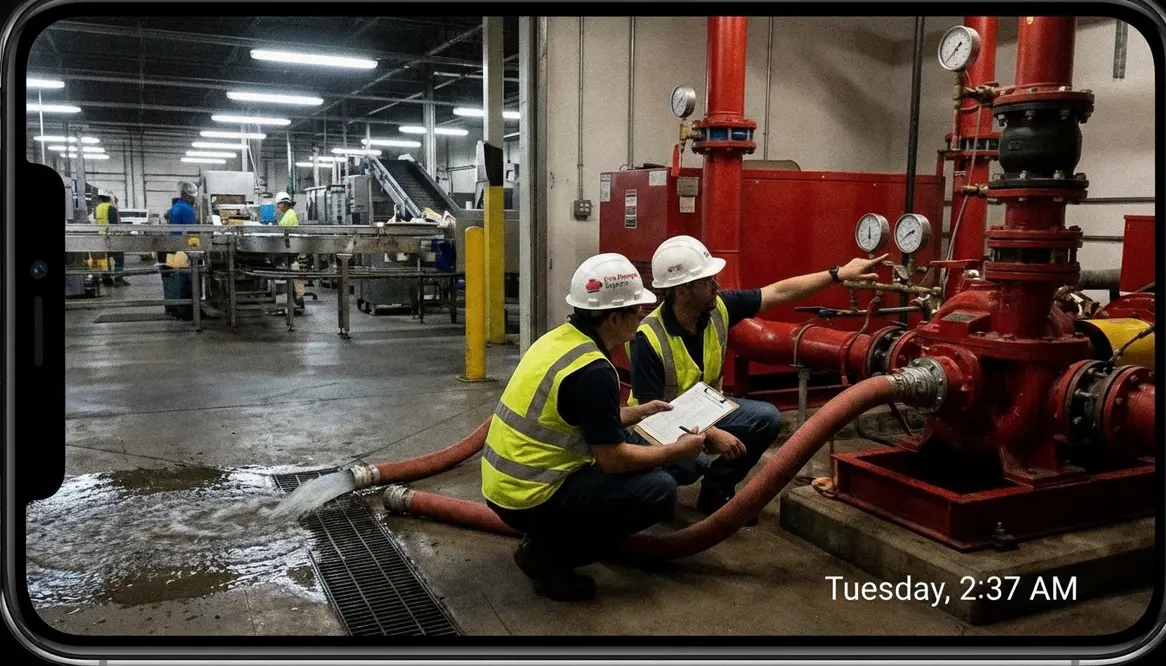
Flow testing can also uncover problems that no one wants to hear at 2 a.m. Maybe the pump meets pressure but not flow. Maybe suction drops because the water supply cannot keep up. Or maybe the controller shows signs of wear and suddenly looks like it wants a retirement plan. Either way, the test tells the truth, and the truth does not care about your production quota.
What I watch during fire pump testing
System checks
- Start and stop response
- Pressure at rated flow
- Suction stability
- Controller alarms
- Jockey pump support
Plant impacts
- Noise in work zones
- Water discharge control
- Access to the pump room
- Coordination with shifts
- Temporary risk controls
When I review these items, I am not just checking boxes. I am looking for the small signs that point to a bigger failure later. A loose valve today can become a major outage tomorrow. And in a plant that never sleeps, “later” can arrive before lunch.
How I reduce disruption during testing
First, I plan the test around the plant schedule, not the other way around. That sounds obvious, yet it saves a lot of pain. Next, I coordinate with operations, maintenance, and safety teams so everyone knows when the pump will run and where water will go. Then I set clear roles. One person watches the gauges, one manages communication, and one keeps an eye on the site. It is a little like directing a live action scene, except nobody gets a close up and the stakes are much higher.
Also, I always look at test water handling. If the discharge point is not planned, the floor can turn into a slip zone fast. So, I make sure the water drains safely and does not flood aisles, electrical gear, or storage areas. That step sounds basic, but basic steps are the ones people skip right before trouble shows up wearing steel toes.
Common risks I see in manufacturing fire protection
One of the biggest risks is hidden wear. Pumps, couplings, bearings, belts, and controllers age in silence. Since the system may sit idle for long stretches, people assume it is fine. However, the first real test often tells a different story.
Another issue is false confidence. If the fire pump starts during a quick weekly run, people may relax. Yet that short run does not always show how the pump behaves under real demand. Therefore, I prefer a test plan that includes full performance checks at the right intervals. That gives a clearer picture of how the system will act when the building actually needs it.
Finally, there is the human factor. In a busy plant, people change shifts, tasks pile up, and small details slip. That is why I keep records sharp and simple. Good notes help me spot trends before they become failures. They also help the next person understand what happened, which is always nice because no one enjoys solving a mystery left behind by “the previous guy.”
Why local expertise matters for major properties
For commercial and industrial facilities, fire protection work must fit the site, the water supply, and the way the building actually operates. That is why I value teams that understand both the fire system and the facility rhythm. If you want a deeper look at system support, I recommend reviewing this Los Angeles fire pump service resource. It offers useful insight for site teams that need reliable pump support without the drama.
I also keep an eye on related building systems. Electrical coordination matters, especially when controllers, backup power, and alarms all need to work together. For that, a helpful reference is commercial electrical support for industrial facilities. In some projects, sprinkler service also plays a role, so I like this industrial sprinkler service overview for broader planning.
FAQ
Conclusion
If your site runs around the clock, I suggest treating fire pump testing as a critical part of plant health, not a nuisance on the calendar. Good planning protects people, limits downtime, and keeps your system ready when it matters most. If you need support for a commercial or industrial facility, now is the time to review your testing plan, close the gaps, and make sure your fire pump is ready before the real alarm ever sounds.