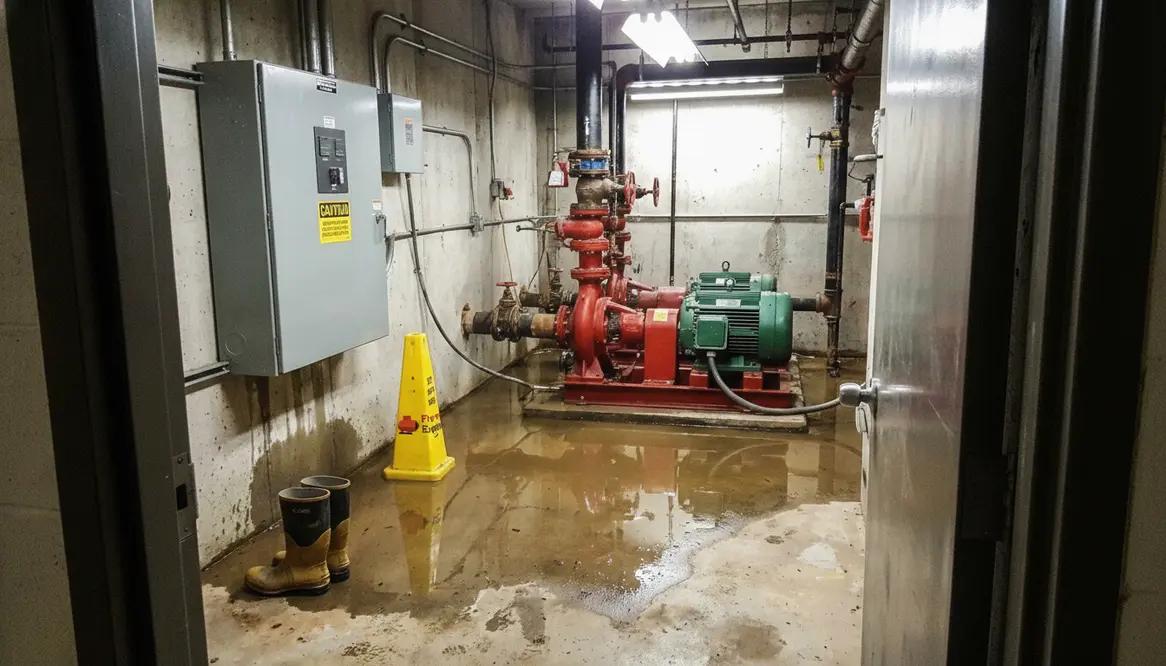
Fire Pump Room Flood Inspection and Maintenance Guide
When I walk into a flooded pump room, I do not rush. Water can look calm, almost polite, but it often leaves behind a mess that keeps working long after the floor dries. That is why a careful fire pump inspection matters right away, along with solid fire pump maintenance after the incident. For commercial and industrial facilities, every minute counts. One bad soak can turn a reliable fire protection setup into a very expensive paperweight, and nobody wants that kind of plot twist.
In this guide, I will cover what I check first, what gets tested next, and when I treat the whole room like a scene from a disaster movie that needs a full reset. Let us get into it.
Start with safety before anything else
First, I confirm the area is safe to enter. I look for standing water, exposed wiring, weak flooring, and any sharp debris. Then I make sure power is isolated before I touch equipment. If the room has a strong smell, I also watch for fuel, oil, or chemical leaks. Water and electricity do not negotiate. They never have, and they never will.
Next, I check whether the flood came from inside the room or from outside. That matters because a broken pipe, failed drain, or sump issue points to one fix, while storm water points to another. I also document the water line, the depth, and the time frame if I know it. That helps me later when I decide what needs repair, what needs replacement, and what can still earn its keep.
Inspect the pump, driver, and control panels
Now I move to the heart of the system. I inspect the fire pump casing for visible rust, cracks, and signs of contamination. Then I check the motor or engine driver. If water reached the driver, I treat that as serious until I prove otherwise. Bearings, couplings, seals, and shafts can all take damage even when the outside looks fine.
I also examine the control panel closely. Moisture inside a panel can cause delayed failure, which is the sneaky kind of failure that shows up later, usually at the worst time. I look for condensation, corrosion, burnt marks, loose wiring, and any alarm trouble. If the panel got wet, I do not assume it will recover just because it still lights up. Machines can smile through pain too.
What electrical parts need attention first?
Here, I focus on anything that carries power or gives a signal. I check:
- Motors and starters
- Terminal blocks and wiring
- Float switches and pressure switches
- Batteries and chargers
- Alarm circuits and remote signals
After that, I test insulation resistance and look for moisture inside electrical housings. If needed, I bring in a qualified technician to dry, clean, and retest the system. This step matters because hidden moisture can sit quietly and then fail later, like a villain in the third act.
Check valves, piping, and the room itself
Once I know the main equipment is stable, I inspect the connected piping. I look for leaks, loose joints, corrosion, and water hammer damage. I also test valves to make sure they still open and close smoothly. A flood can shift supports or damage valve stems, and that can affect the whole system.
Then I inspect the room. I check anchors, drains, vents, lighting, and wall surfaces. If the flood damaged the slab or caused mold, I treat that as a facility issue, not just a pump issue. A dry pump room still needs good drainage, proper ventilation, and room around the equipment. Think of it as the stage where the hero has to stand. If the stage collapses, the hero has a bad day.
Review the tests and records after cleanup
After cleanup, I run a full performance review. I verify suction and discharge readings, confirm controller function, and test automatic start features where safe and allowed. I also compare the results with past readings. That gives me a simple truth: did the flood change the system, or did the system survive with only minor damage?
At this point, records matter more than people think. I note what I found, what I repaired, what I replaced, and what I still recommend. For large commercial and industrial properties, that paper trail helps with insurance, code compliance, and future fire pump maintenance. It also keeps the next inspection from feeling like a treasure hunt with worse prizes.
Use trusted fire protection support for complex facilities
For major buildings, I always suggest working with specialists who know fire protection systems inside and out. A good place to start is los angeles fire pump inspection services for system support in commercial settings. You can also review commercial fire pump service for more insight into pump care. If your facility also needs related electrical support, industrial electrical services can help with the power side of the job. And for broader sprinkler system needs, fire sprinkler services for major properties offers a useful reference.
FAQ
Conclusion
If your facility has a flooded pump room, I recommend acting fast and checking every critical part with care. Do not guess, and do not wait for a hidden fault to make the first move. A proper inspection protects your building, your people, and your fire system when it matters most. If you manage a commercial or industrial property, schedule a professional review now and keep your protection ready for the next emergency.