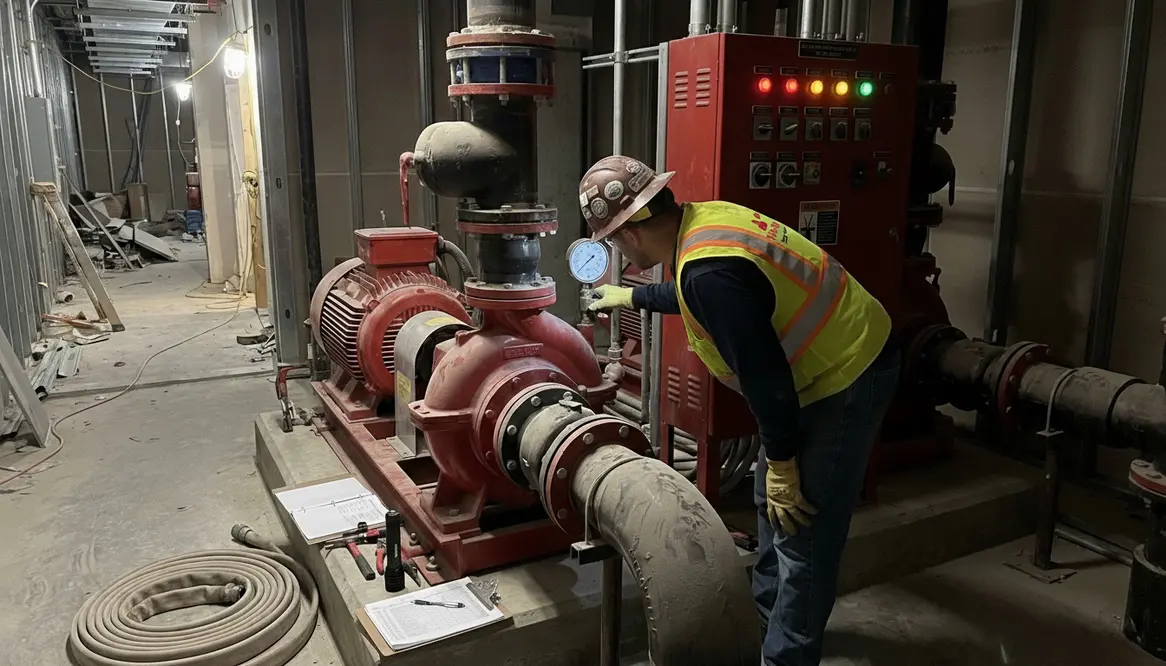
Fire Pump Startup After Long Construction Commissioning
When I walk onto a site after a long build, I can usually feel the tension before I see the pump. The crew wants the fire pump startup to go smooth, the owner wants the place turned over, and the clock is acting like a very rude supervisor. In that moment, fire pump commissioning and fire pump troubleshooting stop being paperwork words and become real work. I have seen solid systems act strange after months of dust, delays, and more “almost done” promises than I can count. That is why I treat startup like a careful checkup, not a victory lap.
For commercial and industrial facilities, and for major property buildings, the first start matters. A lot. If the system fails here, it usually means someone skipped a step, stored a part poorly, or left the pump to sit long enough to age like forgotten leftovers in the back of a fridge.
Why fire pumps fail after long construction delays
Long projects create the perfect storm. First, dust and debris settle into piping, strainers, and valves. Then seals dry out, batteries weaken, and wiring sits exposed to heat, moisture, or a curious tradesman who “just wanted to help.” As a result, the pump may look ready but still refuse to perform.
I often find problems in the same few places. The suction line may hold trapped air. The controller may lose settings. The relief valve may stick. Also, the pump casing can sit dry too long and lose prime. That is why I never trust a clean room or a shiny coat of paint. Good looks do not move water. This is not a Marvel movie.
What I check before the first start
Before I hit the start switch, I move through a simple field routine. I inspect the pump, the driver, the controller, the valves, and the water supply. Then I confirm that the room is clear, the labels match the drawings, and the system matches the final design.
Here is the order I prefer:
- Check the suction and discharge valves for full open position
- Confirm the pump casing has water where required
- Inspect couplings, packing, seals, and bearings
- Verify controller power, alarms, and phase conditions
- Review water source level, pressure, and flow path
- Look for debris, corrosion, or signs of freeze damage
Moreover, I never rush this step. A few extra minutes here can save hours of shutdown later. And in this business, time saved is money saved, which is why facility teams tend to smile after the smoke clears and the pump actually runs.
How I handle startup noise, vibration, and weak pressure
When the pump starts but sounds angry, I listen for the story it is telling me. A rattling sound may point to cavitation. Excess vibration may mean misalignment, loose supports, or bearing wear. Weak pressure may come from air in the line, a clogged strainer, or a valve not fully open.
At this stage, I use fire pump troubleshooting like a detective with a flashlight and a very good memory. First, I isolate the symptom. Next, I check the water path. Then I compare actual pressure to expected performance. If the pump cannot build pressure, I look upstream before I blame the pump itself. That habit saves me from false alarms and from the classic “the pump is bad” verdict that turns out to be just a closed valve in disguise.
Commissioning steps that keep the system honest
Good fire pump commissioning does more than prove the pump turns on. It proves the whole system works under real conditions. Therefore, I test automatic start, manual start, alarm signals, power transfer, and pressure response. I also confirm the pump starts within the required time and that it reaches the right pressure curve.
At this point, I like to think in two columns.
Mechanical side
Inspect pump rotation, seal condition, bearing heat, alignment, and valve position.
Electrical side
Check voltage, phase balance, controller logic, alarm contacts, and backup power behavior.
Since both sides must work together, I never treat them like separate movies. The system only passes when the full cast shows up on cue.
Where reference documents and service support help
On large projects, I also compare field results with trusted service guidance. For a useful reference, I review los angeles fire pump service reference for system support and startup planning. In addition, I keep the team aligned with electrical coordination through commercial electrical service support when controller or power issues show up. For projects tied to sprinkler integration, I also use fire sprinkler service coordination as a planning guide.
Moreover, these references help me stay focused on what matters most: reliable operation for commercial and industrial sites, not guesswork, and not last minute heroics with a wrench and a prayer.
FAQ
Conclusion
I treat every fire pump startup after a long construction project as a serious final exam. If you manage a commercial, industrial, or major property building, do not leave this step to chance. Inspect early, test with care, and fix small issues before they grow teeth. If you want a smoother handoff and fewer surprises, bring in a team that knows fire pump commissioning and fire pump troubleshooting from the inside out. Your system should be ready when it counts, not just ready on paper.