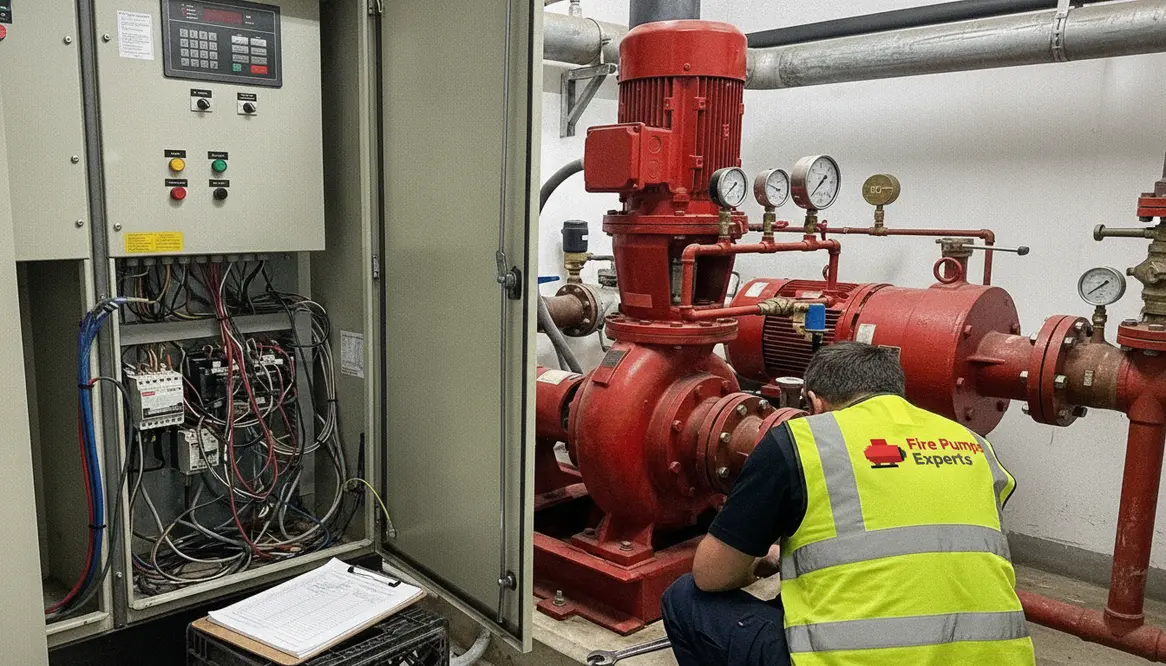
Common Problems Found During New Fire Pump Commissioning
When I walk into a new site for fire pump commissioning, I keep one thing in mind: this is not the moment for surprises. The fire pump installation may look clean, and the fire pump testing may seem straightforward, but the real story often starts when the system wakes up under pressure. In commercial and industrial facilities, and in major property buildings, small issues can turn into big ones fast. That is why I treat commissioning like the final scene in a good thriller. Everyone thinks the mystery is solved, then the pump clears its throat and says, “Not so fast.”
In this article, I will walk through the common problems I see, why they happen, and how I move past them without wasting time, money, or patience. And yes, I will keep it practical, because nobody wants a fire pump lesson that feels like a three hour director’s cut.
What I check first during fire pump commissioning
Before I chase down faults, I start with the basics. I verify the pump room layout, suction and discharge piping, controller setup, power supply, and water source. I also confirm that the system matches the approved design and the site conditions. During fire pump commissioning, the smallest mismatch can create a chain reaction. For example, a valve that is partly closed can make the pump look weak, when the real problem is far less dramatic and far more annoying.
I also look for signs of poor coordination between trades. If the electrical team, mechanical team, and fire protection team did not stay in sync, I often find missing labels, loose wiring, or a controller that was installed in a rush. That is the commissioning version of showing up to a formal event in running shoes. Functional? Maybe. Polished? Not even close.
Fire pump installation errors that cause trouble
Bad setup remains one of the most common reasons commissioning fails. A pump may sit level, but if the suction piping does not support it well, vibration can shake the system over time. Likewise, if the piping places stress on the casing, I may see leaks, alignment issues, or strange noises during operation. In large commercial and industrial sites, those issues rarely stay small.
Another issue comes from missed clearances. I need enough room around the unit for service, inspection, and safe access. If a crew wedges the pump into a tight corner, future work becomes slow and risky. Also, the controller must sit where I can inspect it easily and where heat, moisture, or dust will not bully it around like a bad sitcom character.
Quick view of common trouble spots
Here is a simple view of the problems I find most often during new system start up:
Fire pump side
and what goes wrong
Pump and piping
with stress, misalignment, air pockets, or weak support
Controller and power
with wrong settings, loose terminations, or voltage issues
Water supply
with low pressure, blocked flow, or valve position errors
Testing results
with poor performance, unstable readings, or false alarms
Why fire pump testing fails during startup
During fire pump testing, I often uncover electrical problems first. A wrong phase rotation can make the motor run in the wrong direction, which is a neat trick if the goal is disappointment. I also see voltage drop, poor connections, and control settings that were never tuned for the actual site load. In some cases, the pump starts, but it does not perform as expected because the supply cannot support full demand.
Hydraulic issues show up too. If the suction pressure is too low, or if the water source does not deliver what the design requires, the pump cannot hit target numbers. Sometimes the problem starts with the water supply itself. Other times, it is a hidden blockage, a closed valve, or debris left behind after construction. The system then behaves like a grand piano with one missing key. It still makes sound, but nobody calls it music.
How I solve hidden control and alarm issues
Controller problems can be sneaky. One alarm may look like a wiring fault, yet the real issue may be a bad sensor, a loose terminal, or a wrong setpoint. I always check the controller logic against the job requirements and the manufacturer instructions. If the alarm signals do not match the actual condition, I keep digging until I find the source.
Sometimes, the trouble begins with monitoring connections. For major properties and industrial buildings, the fire pump must communicate clearly with the rest of the life safety system. If the signal path fails, the building team may not know the pump state when they need it most. That is why I treat every output and input point with care. A missed signal can cause confusion, and confusion is expensive.
What good coordination looks like
When I reference strong service support, I like to point teams to the los angeles fire pump service overview for a clear example of how pump work should stay tied to proper system care. I also use related resources such as commercial electrical support for life safety systems and fire sprinkler service guidance when teams need a wider view of the full system. That kind of coordination matters because a fire pump never works alone. It plays on a team, and the whole team needs to show up.
If the handoff between trades is rushed, commissioning becomes guesswork, and guesswork is the enemy of reliable fire pump commissioning, reliable fire pump installation outcomes, and stable fire pump testing results.
FAQ for quick answers
Conclusion
If you want a reliable result, I recommend treating fire pump commissioning as a full system check, not a box to tick. The best outcomes come from careful fire pump installation, clean fire pump testing, and a sharp eye for small faults before they grow teeth. If you manage a commercial building, industrial site, or major property, now is the time to review your system with a qualified team. I would rather catch a problem on day one than meet it during an emergency.