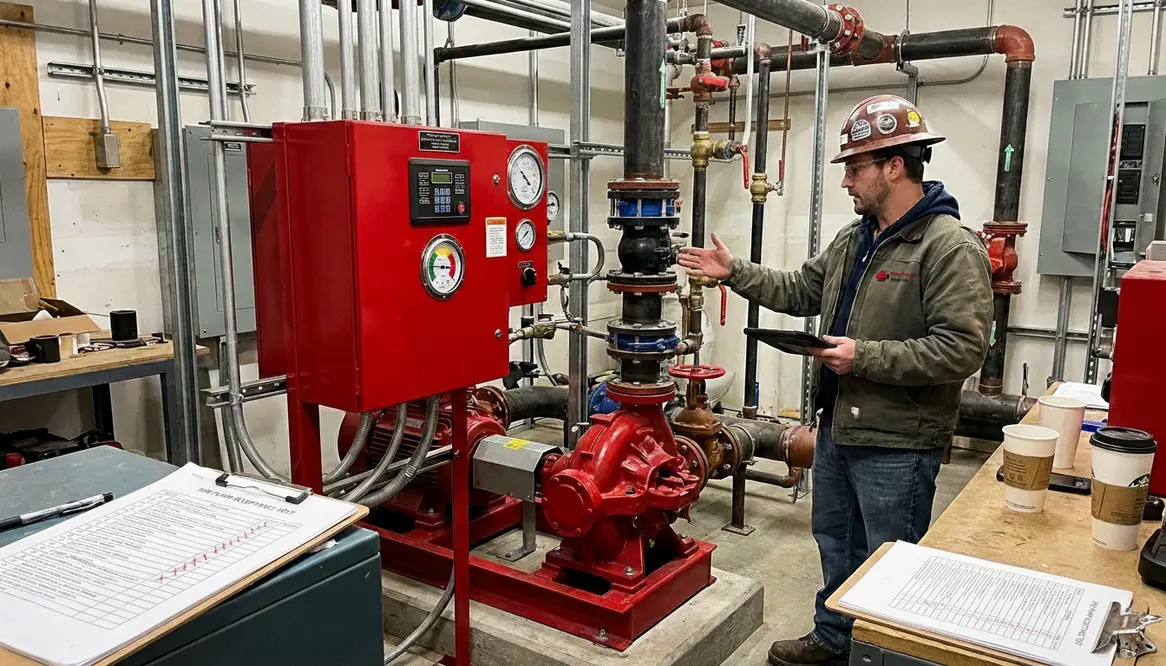
Why New Fire Pumps Fail Acceptance Testing
When I walk into a job after fire pump installation, I expect the unit to behave like a seasoned pro. But the truth is simple: a brand new pump can still stumble during the fire pump acceptance test. That is not rare, and it is not magic gone wrong. It usually comes down to the details people rush past. In commercial and industrial buildings, those details matter because one small miss can turn clean fire pump testing into a long afternoon of head scratching, coffee refills, and quiet panic.
Why a new fire pump can still fail
I see failures happen for a few clear reasons. First, the pump may never get the water it needs. If the suction line is undersized, blocked, or poorly aligned, the pump starves. Next, the driver may not match the load. A motor can look perfect on paper, yet still struggle under real demand. Also, the controller might not be set right, which is the kind of mistake that feels small until the test starts and the system acts like it missed the memo.
On top of that, bad field work can hide in plain sight. A valve may be half closed. A check valve may stick. A gauge may read wrong. And yes, I have seen more than one “finished” install where the piping looked like it was designed by a sleep deprived robot from a sci fi rerun.
What I check first during fire pump testing
I start with the basics because the basics usually tell the truth. I confirm the suction source, inspect the piping, and review the pump nameplate against the design specs. Then I check power quality, starter settings, and pump rotation. After that, I verify that the test header, relief line, and drain paths work as they should.
Here is the thing: acceptance work is not just about the pump running. It is about the pump proving it can deliver the right flow and pressure under the right conditions. That means I look at the full system, not just the shiny piece of equipment that everyone wants to point at for the photo op.
Common install problems that hide in plain sight
Even a clean fire pump installation can carry quiet problems into the test room. Misaligned couplings can cause vibration. Poor base support can lead to movement. Air pockets can weaken performance. And if the pump room layout crowds the equipment, maintenance becomes harder later, which is never a fun surprise for the facility team.
I also watch for issues in the supply side. If the water source cannot keep up, the pump may pass a quick spin check and fail when demand rises. That is why the acceptance process must match the real building use case. A warehouse, hospital, data center, or high rise does not get to fail politely. It fails on schedule, and usually at the worst time. Buildings do enjoy drama.
How I look at the system as a whole
Think of it this way:
Equipment must match the design and code needs.
Water supply must support the pump at the required flow.
Controls must start and monitor the unit without delay.
Piping must move water with little loss and no weird surprises.
When I review those four pieces together, I usually find the weak link fast. Sometimes the pump is fine, but the system around it is not. That is the real lesson. A fire pump does not live alone. It works inside a chain, and the chain only works when every link pulls its weight.
How I avoid failed results on the second try
I do not like repeat tests, and neither does the budget. So I verify the install before the official date. I compare submittals, check field conditions, and run a pre test review with the contractor and facility team. Then I look at the expected curve, the power source, and the alarm functions. If I spot a mismatch early, I can fix it before the formal test turns into a very expensive rehearsal.
I also recommend that commercial and industrial owners keep good records. That includes startup notes, controller settings, test results, and any change made after install. In many cases, a simple paper trail saves hours later. If you want a deeper look at system support, I suggest reviewing this los angeles fire pump resource for related infrastructure planning. For broader protection planning, the fire sprinkler services overview is also useful.
FAQ
Conclusion
If I want a new pump to pass the first time, I treat the test like a system check, not a formality. That mindset saves time, money, and a great deal of sighing. So if your facility is preparing for acceptance, review the install now, confirm the water source, and verify the controls before the official test. I can help you spot the hidden issues, tighten the process, and get the system ready with confidence.