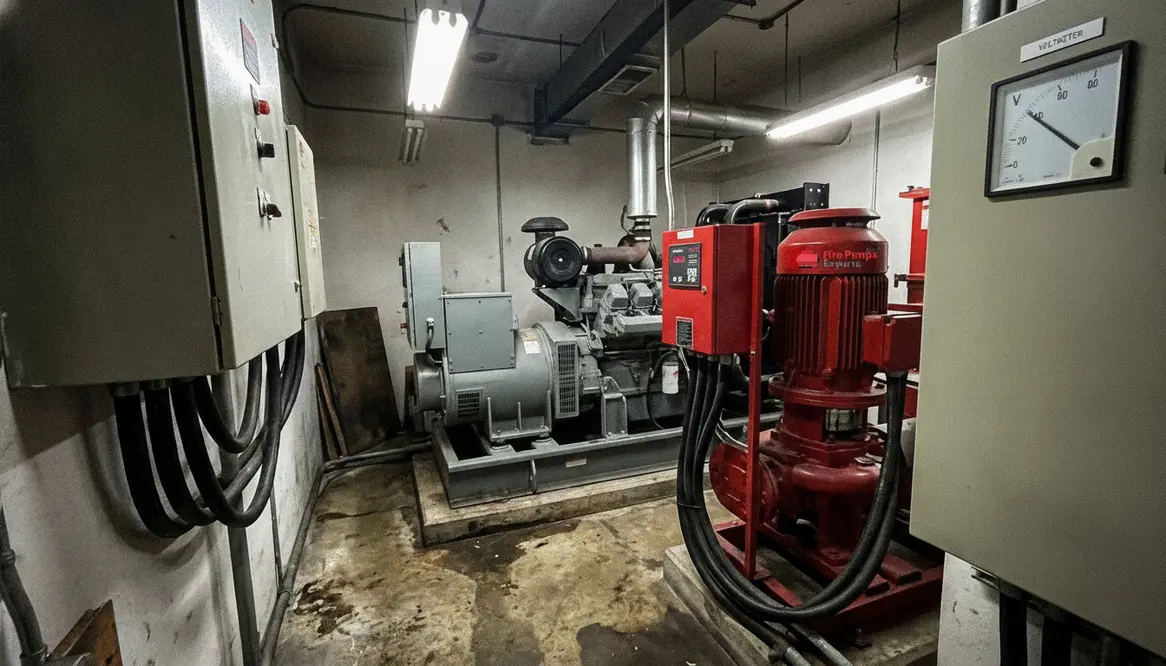
Fire Pump Generator Voltage Drop and Motor Starting
When I look at our fire pump generator, voltage drop, fire pump motor starting, I see the same story play out again and again. The lights dip, the meter sags, and the room gets a little tense. That moment is not magic, and it is not a bad sign every time. It is usually the natural result of a big motor asking for a huge burst of power all at once. In a commercial or industrial building, that surge can hit hard enough to make the generator voltage fall before it recovers.
So, if you manage a high rise, warehouse, plant, or other major property, this matters. A fire pump has one job: start fast and protect lives and assets. And yes, the generator has to keep up like a sidekick in an action movie who forgot to warm up first.
Why the voltage falls in the first place
When a fire pump motor starts, it pulls a very large inrush current. That rush can be several times higher than normal running current. As a result, the generator suddenly faces a heavy load, and the voltage can dip. In simple terms, the motor says, “I need everything right now,” and the generator answers, “Hold on, I am trying here.”
This happens because generator voltage depends on balance. If the load jumps faster than the generator can respond, voltage drops. Also, if the generator is close to its size limit, the dip gets worse. In commercial settings, I watch for this during design because even a short dip can affect controls, alarms, and other connected systems.
Here are the main causes:
- High motor inrush current at startup
- Generator undersizing for the starting load
- Long cable runs that add resistance
- Weak voltage regulation under sudden demand
- Other loads starting at the same time
How fire pump motor starting stresses the system
Fire pump motor starting creates one of the hardest load events a generator can face. Unlike smooth loads, a motor start is abrupt. Therefore, the generator must supply a fast surge of current before the motor reaches speed. During that brief window, voltage can sag more than people expect.
In my experience, the problem is not only the size of the motor. It is also how the whole system reacts. The generator governor must respond, the automatic voltage regulator must correct, and the fuel system must keep pace. If one piece lags, the whole system feels it. That is why a fire pump generator needs careful planning, not just a nameplate match and a hopeful shrug.
In large facilities, I also look at what else is running. If chilled water pumps, elevators, or large fans are active, they can add more strain. So, the voltage drop may not come from the fire pump alone. It often comes from the party that starts when nobody invited the generator.
What I check first on commercial and industrial sites
When I evaluate a site, I start with the basics, because the basics usually tell the truth. First, I check generator size against the locked rotor or starting requirements of the fire pump motor. Next, I review cable length, conductor size, and system voltage. Then I look at the regulator settings and the overall load mix.
Two key checks I never skip
Generator side
I verify the generator rating, transient response, and voltage recovery. If the unit cannot hold within an acceptable range during startup, the system needs a better fit.
Load side
I review the fire pump motor details, starting method, and any connected control gear. If the motor draws too much too fast, the voltage dip can become more severe than the design allows.
Also, I pay attention to installation quality. Loose connections, poor terminations, and undersized conductors can make a good system act tired. It is a little like expecting a sprinter to race in flip flops.
How I reduce voltage drop without overcomplicating the fix
There is no single fix for every site, but there are smart moves that help. First, I size the generator with real starting data, not guesses. Then I make sure the voltage regulator can react quickly enough. After that, I review wire sizing and routing so the system does not waste energy before it reaches the pump.
I also look at starting method. Some fire pumps use across the line starting, while others use reduced voltage methods where allowed. However, fire protection rules can limit what you can do, so I always verify compliance before changing anything. The goal is not to be clever. The goal is to be reliable when the building needs water now.
For deeper guidance on system design and service support, I recommend reviewing this fire pump service resource and these electrical and sprinkler service details. If you want a local reference, see los angeles fire pump support at https://kordfire.com/fire-pump/. You can also use commercial electrical services and fire sprinkler service information as related reference points.
Why fast recovery matters after startup
Voltage drop is only part of the story. Recovery matters just as much. Once the motor reaches speed, the generator must bring voltage back to normal quickly. If recovery is slow, other equipment may trip or behave badly. That can create more trouble than the initial dip.
For major properties, I care about this because fire pump systems rarely live alone. They sit inside a larger power and safety network. So, stable recovery protects the pump, the controls, and everything nearby. In short, a generator that recovers well acts like a calm professional under pressure. That is the kind of energy every building wants in a crisis.
FAQ
What I want you to do next
If you manage a commercial or industrial property, do not wait for a weak start to turn into a real problem. I recommend a full review of generator sizing, motor starting data, and voltage recovery performance before an emergency puts everything to the test. If you want the system to work when it counts, get the right team involved now. I can help you look at the details, tighten the design, and make the fire pump system ready for the moment that matters most.