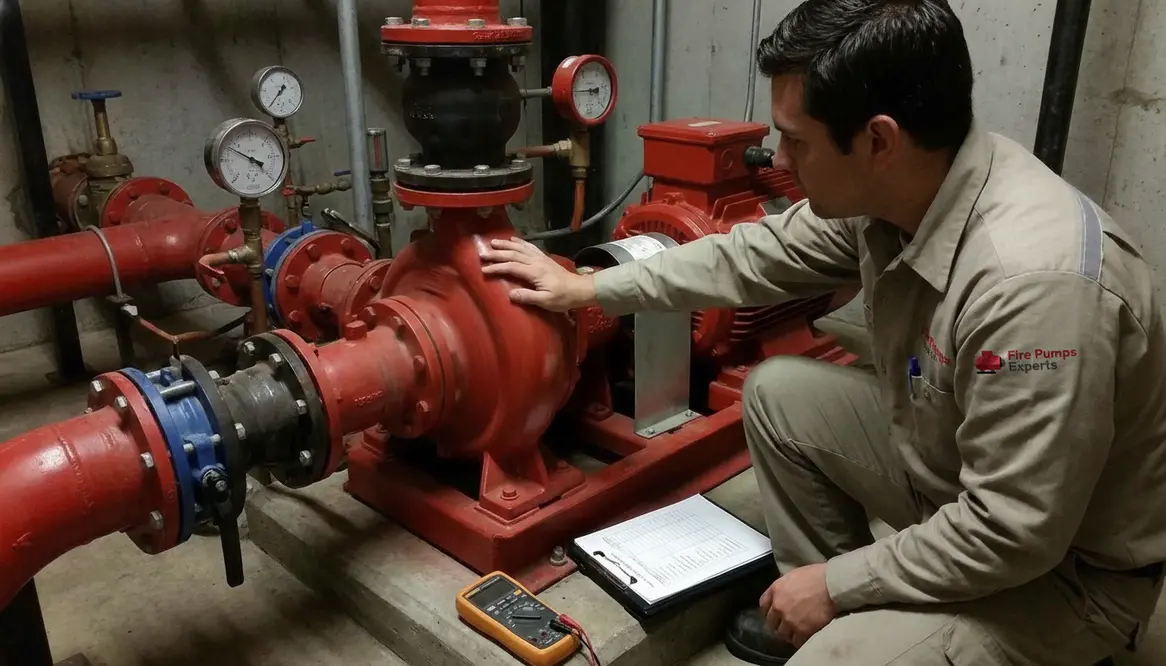
Fire Pump Vibration During Churn Test Checks
What Technicians Check When a Fire Pump Shakes at Churn
When I hear a fire pump shake at churn, I do not shrug and move on. I take it as a clear sign that something needs attention. A steady pump should run with a calm, even hum. However, when I spot fire pump vibration during churn test, I start checking the basics fast, because small issues can turn into expensive ones. In commercial and industrial facilities, and in major property buildings, that kind of shake can point to trouble in the pump, the base, the pipe support, or even the water supply itself. And yes, the pump should not sound like it is auditioning for a drum solo.
Why fire pump vibration during churn test matters
At churn, the pump runs with little or no flow, so I can hear and feel problems that high flow may hide. That makes this stage useful. First, I check if the vibration comes from loose mounting bolts, bad alignment, or a worn coupling. Then I look at the motor and driver, because they often tell the story before anyone else does. If the pump shakes at no flow, I know I need to slow down and trace the cause step by step. Otherwise, I am just chasing shadows, and nobody wants a fire pump with main character energy.
What technicians inspect first
I begin with the machine itself. I check the pump frame, base plate, and anchor bolts for looseness. Next, I inspect the coupling guard, the shaft, and the bearings for wear or heat marks. If a bearing runs rough, the pump may shake even when the system looks fine on paper. I also listen for a change in sound. A clean churn run has a steady tone, while a problem often sounds uneven or harsh. In many cases, the fix starts right here, before I touch anything more complex.
Fire pump vibration during churn test: the main causes I look for
I never assume one cause. Instead, I work through the most likely ones in order. Here is how I usually break it down.
- Loose parts: I check bolts, supports, and couplings first because they can create a fast shake.
- Poor alignment: I look for shaft misalignment since it adds strain and motion.
- Worn bearings: I feel for noise, heat, and play that point to bearing trouble.
- Pipe strain: I check if the piping pushes or pulls on the pump casing.
- Cavitation signs: I watch for air, noise, or unstable flow that can cause harsh vibration.
After that, I move to the water side. If suction pressure drops, air gets in, or the strainer clogs, the pump can begin to shake. That is why I never treat the pump as a lone machine. It lives inside a system, and every piece has a role. Think of it like a band: if the bass is off, the whole song sounds weird, even if the lead singer tries to act confident.
How I check the pump room setup
I also study the room around the pump. A weak floor, poor support, or tight piping can turn a small issue into a bigger one. So, I look for pipe hangers that failed, valves that shifted, and signs that the base does not sit flat. Then I check whether nearby equipment sends vibration into the pump. In large facilities, that matters a lot. One machine can pass its trouble to another, like a bad rumor in a soap opera.
Fire pump vibration during churn test in a 2 column view
What I check
Base bolts, coupling, bearings, alignment, suction conditions, and pipe support.
Why it matters
Each one can create shake, reduce pump life, or hide a bigger fault in the system.
How I confirm the problem is fixed
Once I find the cause, I do not guess. I repair the fault, then I run the pump again at churn and watch the result. If the shake drops, I know I am close. If it stays, I keep checking the next likely source. I also compare the sound, feel, and reading from the test. A good repair should give me a stable run, not a temporary truce. For teams that want a broader service view, I often point them to our commercial fire protection support and, for related pump details, los angeles fire pump service information. In large buildings, that kind of follow up helps keep the whole protection system ready, not just the pump.
FAQ
Conclusion
If I find a fire pump shaking at churn, I treat it like a warning, not a quirk. I check the pump, the motor, the alignment, the piping, and the water supply until the cause shows itself. That careful work protects people, property, and uptime in major facilities where failure is not an option. If your fire pump feels rough or sounds off, schedule a proper inspection now. A calm pump is a good pump, and a good pump keeps the building ready.