Recognizing Fire Pump Impeller Wear Without Opening
How Technicians Recognize Fire Pump Impeller Wear Without Opening the Pump
I have seen a fire pump look calm on the outside and still carry trouble inside like a storm cloud in a steel shell. That is why signs of fire pump impeller wear matter so much for commercial and industrial facilities, along with major property buildings. The good news is this: technicians do not always need to crack the pump open to spot a problem. With the right checks, they can read the clues from pressure, flow, vibration, sound, and heat. In other words, the pump often tells on itself. It is not subtle. It is just trying to act innocent.
In this article, I will walk through the signs I watch for, how I test them, and why fast action protects both the building and the system. If you manage a high value property, this is the kind of quiet detective work that keeps a loud emergency from getting worse.
Read the system first, not the casing
I start with the pump’s behavior, because wear leaves a pattern. An impeller that has worn down, eroded, or lost shape cannot move water the way it should. As a result, discharge pressure drops, flow becomes less stable, and the whole curve starts to drift. A technician who knows the baseline can catch these changes early.
Here is what I look at first:
Pressure tests and flow checks
I compare the current discharge pressure to the pump’s normal performance. If the pump needs more effort to reach the same result, I take that seriously.
Motor load and running current
When an impeller wears, the motor may draw less or sometimes uneven current. That shift can signal that the pump no longer moves water with the same force.
These checks give me a fast picture without touching the internals. And yes, that beats tearing the pump apart like I am looking for a lost TV remote.
Listen for the signs of fire pump impeller wear
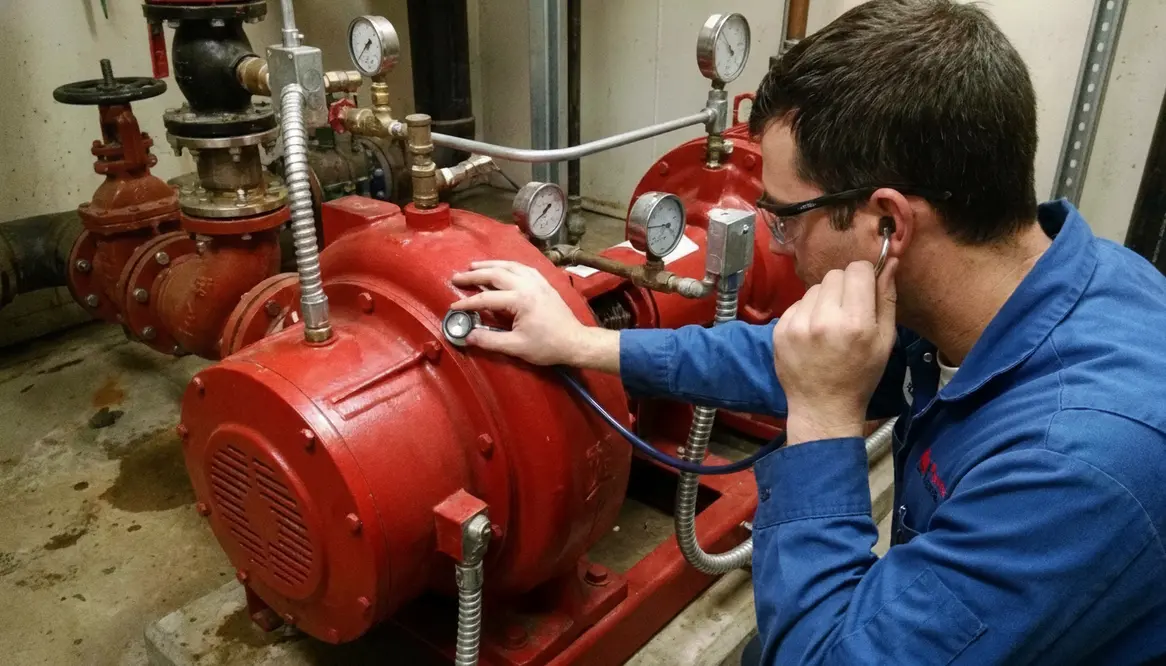
Sound tells a story. A healthy fire pump runs with a steady, even note. However, wear often changes that tone. I listen for rattling, a rough hum, or a sharp hiss that should not be there. Cavitation can sound like gravel or marbles moving through the pump, and that noise often points to a deeper hydraulic problem that can damage the impeller over time.
Vibration matters too. If the pump shakes more than usual, I do not wave that off as “normal industrial charm.” Excess vibration can come from imbalance, erosion, or flow issues that affect the impeller. Even small changes can grow into bigger wear if the system keeps running under strain.
Temperature also helps. A pump that runs hotter than expected may be fighting internal stress. While heat alone does not prove impeller wear, it adds another clue to the case.
How I confirm wear with outside measurements
I use several tools to build a clear picture. First, I check suction and discharge pressure at the test points. Then I compare those numbers to the pump curve and past service records. If the pump no longer meets the expected pressure at a given flow, I start looking at wear as a likely cause.
I also pay close attention to prime and response time. If the pump takes longer to stabilize, or if pressure surges and settles too slowly, the impeller may not be moving water efficiently. In addition, I inspect the system strain that shows up around the pump, such as unusual pipe vibration, seal trouble, or recurring controller alarms.
That is why service records matter so much. A single test may show a small shift, but a record across months can reveal a pattern. And patterns, as any good detective knows, are where the truth likes to hide.
Compare normal performance with warning patterns
When I review a fire pump, I compare what I see now with what the pump used to do. The table below keeps that simple.
Normal condition Possible impeller wear
Steady discharge pressure Pressure loss or unstable output
Even pump sound Rattle, hiss, or rough noise
Low vibration Extra shake or pulse
Stable motor load Current changes or imbalance
Quick response Slow pressure build or weak flow
This kind of comparison helps me separate true wear from a one time issue. For example, a clogged strainer can mimic impeller trouble. So can air in the line. That is why I never jump to one answer too fast. I look for several warning signs at once.
Why early detection protects commercial facilities
In commercial and industrial properties, a weak fire pump can put an entire protection plan at risk. If the impeller loses efficiency, the system may fail to deliver the water pressure needed during an emergency. That can lead to bigger repair costs, system downtime, and avoidable risk for the building.
Early detection also helps with planning. Instead of waiting for a breakdown, I can recommend service during a scheduled window. That keeps the property protected and avoids the kind of surprise nobody wants at 2 a.m. on a holiday weekend. Fire pumps should not wait until drama shows up. When technicians catch signs of fire pump impeller wear early, the whole system stays calmer too.
For facilities that need broader system support, I also recommend reviewing los angeles fire pump service for local support and fire sprinkler service solutions when the whole protection system needs attention. If electrical issues are part of the picture, commercial electrical service support can help keep the system stable and ready. And yes, those extra checks often reveal additional signs of fire pump impeller wear that a single test might miss.
FAQ: quick answers technicians and managers ask
What are the first signs of fire pump impeller wear?
Lower pressure, strange pump noise, and extra vibration are common first signs.
Can technicians detect impeller wear without opening the pump?
Yes. They can use pressure tests, flow checks, vibration checks, and sound readings.
Does cavitation always mean impeller wear?
No. However, cavitation can cause wear and often points to a larger system issue.
Why does discharge pressure matter so much?
It shows whether the pump still moves water with the force it should deliver.
How often should commercial fire pumps be checked?
They should be checked on a regular schedule based on code, site use, and service history.
Conclusion and next step
I never treat fire pump wear like a mystery that can wait for a rainy day. The pump gives warning signs long before failure, and those signs deserve attention. If your commercial or industrial facility needs a deeper review, I recommend scheduling a professional inspection now. Catch the issue early, protect the system, and keep your building ready when it matters most. Quiet maintenance today can prevent loud problems tomorrow. When you track signs of fire pump impeller wear and act while everything still looks “fine,” you avoid the kind of emergency that no one schedules.