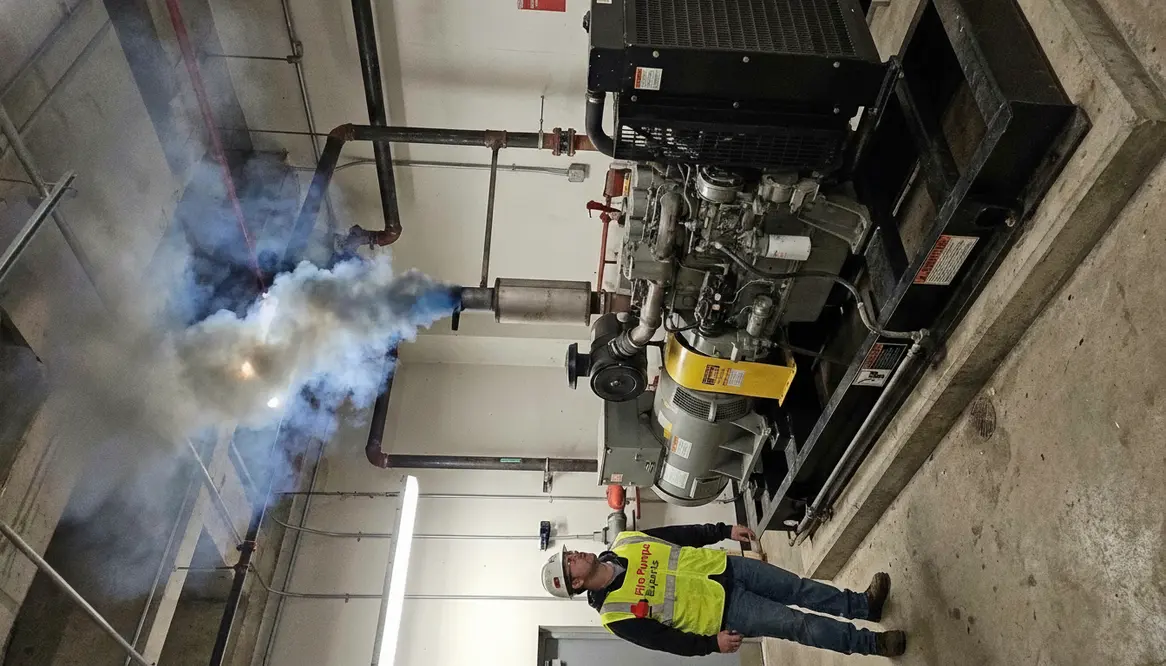
Diesel Fire Pump Exhaust Smoke Color Meaning
When I walk up to a diesel fire pump and see the exhaust shift from clean to gray, black, blue, or white, I do not guess. I read it like a warning label from the engine itself. That smoke tells a story, and in the world of commercial and industrial fire protection, the diesel fire pump exhaust smoke color meaning can point to fuel issues, oil burning, cooling trouble, or plain old wear. In other words, the pump may still run, but it may already be whispering for help. And yes, the engine always seems to choose the worst possible moment, like a movie villain with great timing.
For major properties and busy facilities, I treat exhaust color changes as early clues, not drama. The sooner I notice the pattern, the faster I can protect uptime, avoid damage, and keep the fire pump ready when it matters most.
What I check first when the exhaust color shifts
I start with the simplest question: what changed, and when did it change? That sounds basic, but it saves time. A diesel fire pump can run fine for months, then one load test or one weather swing makes the exhaust look different. So I look at the color, the thickness, the smell, the startup behavior, and the load condition all at once.
Here is the quick read I make on site:
- Black smoke often points to too much fuel or not enough air
- Blue smoke usually means the engine may be burning oil
- White smoke can mean unburned fuel, cold starts, or coolant trouble
- Gray smoke often sits in the middle and needs a closer look at load and combustion
Also, I never stop at the smoke itself. I check the air intake, fuel system, injectors, oil level, coolant level, and exhaust path. Because a smoke puff may look small, yet it can hint at a larger problem hiding behind the curtain like a bad sequel nobody asked for.
diesel fire pump exhaust smoke color meaning in plain terms
The diesel fire pump exhaust smoke color meaning becomes easier to understand when I link each color to what the engine is doing inside. Black smoke means the engine is likely getting more fuel than it can burn cleanly. That can happen during heavy load, poor air flow, or injector trouble. If I see black smoke during a test, I want to know whether the pump is working too hard or if it is not breathing well.
Blue smoke makes me think of oil. If oil gets into the combustion area, the engine burns it and sends out that blue haze. That may point to worn seals, ring wear, or overfilled oil. White smoke tells a different story. On a cold start, some white smoke can be normal for a short time. However, thick white smoke that stays around may suggest fuel is not burning fully or coolant may be entering the cylinder area. Gray smoke can be trickier, so I compare it with engine sound, vibration, and response under load.
In short, I do not treat smoke like a random mood ring. I treat it like a built in status report.
Why commercial facilities should care fast
For commercial and industrial buildings, a diesel fire pump is not a side character. It is the muscle in the background. If exhaust color changes and nobody pays attention, the pump may lose efficiency, need costly repairs, or fail under stress. That risk matters most in large properties where fire protection must stay dependable.
I also see smoke changes as a chance to catch small issues before they grow teeth. A clogged air filter, weak injector, bad fuel quality, or cooling fault can all start small. Then, if the pump faces a real demand, the engine may respond with poor output or rough running. That is why I always advise quick checks after any unusual smoke event, especially after routine testing.
In practice, this means I focus on three things:
- Protecting pump readiness for emergency use
- Reducing wear that can lead to downtime
- Keeping inspection records clear for facility teams
What I inspect during service calls
When I inspect a diesel fire pump with changed exhaust color, I follow the trail step by step. First, I review the startup and running behavior. Then I check the engine oil, coolant, filters, and fuel system. After that, I look at airflow and exhaust restrictions. If needed, I review load test results, because a pump can act one way at idle and another way under demand. Engines, like actors, love to change the performance once the spotlight hits.
I also look at maintenance history. If the same color shows up again and again, that pattern tells me more than a one time event. For example, repeated black smoke may point to ongoing air or fuel imbalance. Repeated white smoke may point to cooling or fuel delivery issues. And repeated blue smoke almost always deserves a deeper oil related check.
For teams that manage major facilities, I recommend pairing pump service with broader electrical and fire protection checks. If your site needs a full systems view, I often suggest reviewing commercial electrical support for major properties alongside fire pump care. Likewise, for sites that need a broader fire system perspective, fire sprinkler service insights for facilities can help keep the whole protection plan aligned.
If your site needs a broader support perspective, I often suggest reviewing commercial electrical support for major properties alongside fire pump care.
Likewise, for sites that need a broader fire system perspective, fire sprinkler service insights for facilities can help keep the whole protection plan aligned.
Quick comparison for technicians
Black smoke: fuel rich, air poor, or heavy load
Blue smoke: oil burning, seals, rings, or oil level issue
White smoke: cold start, unburned fuel, or coolant concern
Gray smoke: mixed issue, needs full system review
What to do next when the exhaust does not look right
When the exhaust changes color, I do not wait and hope it clears itself. Hope is nice for fishing trips, not for fire pump reliability. I document the color, note when it appears, and compare it with recent service work or test runs. Then I arrange a proper inspection before the issue grows.
If your diesel fire pump serves a commercial or industrial facility, or a major property building, timely service matters. For local support, I recommend los angeles diesel fire pump service as a strong place to start. You get a better shot at keeping the pump ready, the smoke under control, and the system dependable when it counts. And yes, that diesel fire pump exhaust smoke color meaning you observed? It should turn into a clear next step, not a mystery you live with.
FAQ
If you manage a commercial or industrial site, do not ignore a change in exhaust color. I can help you turn that smoke signal into a clear action plan, a safer system, and a pump that stands ready when the pressure rises. Reach out, schedule a check, and let’s keep the engine calm, the records clean, and the fire protection strong where it matters most. When you connect what you see to diesel fire pump exhaust smoke color meaning, you stop guessing and start preventing.