For facilities that want help across fire protection and electrical support, I also look at how the pump ties into the wider system. A useful reference is this fire sprinkler services overview, since pump performance and sprinkler readiness often work hand in hand. For more about pump support in a regional context, I also recommend los angeles diesel fire pump services.
FAQ
What does black smoke from a diesel fire pump mean?
It usually means too much fuel, not enough air, or poor combustion.
Can a dirty air filter cause black smoke?
Yes. A clogged filter can block air and make the engine smoke.
Is black smoke always a major failure?
No, but it always deserves a fast inspection.
Should I keep running the pump if it smokes?
Only if needed for life safety. Otherwise, stop and inspect it right away.
Can fuel quality cause smoke?
Yes. Dirty, old, or watered fuel can create black smoke.
Do injectors play a role?
Yes. Faulty injectors can overfeed fuel and cause heavy smoke.
Final Word
If your diesel fire pump is smoking black, I would not wait and hope it clears on its own. I would inspect the air system, fuel system, and mechanical condition right away, then confirm the load and service history. In a commercial or industrial property, that pump protects more than equipment. It protects the whole building plan. If you need a careful review, now is the time to schedule it and keep your fire system ready for the moment that matters most.
Once I narrow the likely cause, I test it. I do not stop at a visual check. I may run the pump under controlled conditions, inspect exhaust color changes, and watch engine behavior as the load shifts. If the smoke gets worse when fuel demand rises, I suspect overfueling or weak air flow. If it clears after filter replacement, the answer becomes clear very fast.
I also compare the result with service history. Repeated black smoke can point to poor upkeep, skipped filter changes, bad fuel storage, or parts that have aged out. In commercial and industrial facilities, that kind of pattern matters because a fire pump must stay ready, not merely look ready. The goal is dependable performance, not a nice paint job on the outside.
For facilities that want help across fire protection and electrical support, I also look at how the pump ties into the wider system. A useful reference is this fire sprinkler services overview, since pump performance and sprinkler readiness often work hand in hand. For more about pump support in a regional context, I also recommend los angeles diesel fire pump services.
FAQ
Final Word
If your diesel fire pump is smoking black, I would not wait and hope it clears on its own. I would inspect the air system, fuel system, and mechanical condition right away, then confirm the load and service history. In a commercial or industrial property, that pump protects more than equipment. It protects the whole building plan. If you need a careful review, now is the time to schedule it and keep your fire system ready for the moment that matters most.
How I Confirm The Real Cause
Once I narrow the likely cause, I test it. I do not stop at a visual check. I may run the pump under controlled conditions, inspect exhaust color changes, and watch engine behavior as the load shifts. If the smoke gets worse when fuel demand rises, I suspect overfueling or weak air flow. If it clears after filter replacement, the answer becomes clear very fast.
I also compare the result with service history. Repeated black smoke can point to poor upkeep, skipped filter changes, bad fuel storage, or parts that have aged out. In commercial and industrial facilities, that kind of pattern matters because a fire pump must stay ready, not merely look ready. The goal is dependable performance, not a nice paint job on the outside.
For facilities that want help across fire protection and electrical support, I also look at how the pump ties into the wider system. A useful reference is this fire sprinkler services overview, since pump performance and sprinkler readiness often work hand in hand. For more about pump support in a regional context, I also recommend los angeles diesel fire pump services.
FAQ
Final Word
If your diesel fire pump is smoking black, I would not wait and hope it clears on its own. I would inspect the air system, fuel system, and mechanical condition right away, then confirm the load and service history. In a commercial or industrial property, that pump protects more than equipment. It protects the whole building plan. If you need a careful review, now is the time to schedule it and keep your fire system ready for the moment that matters most.
For fire protection systems, I also compare the pump setup to the site needs. A strong fire pump setup should work with the rest of the building protection plan, which is why I often review related equipment and controls with the same care I use for the pump itself. I also keep a close eye on maintenance records because trends matter more than one noisy test day.
How I Confirm The Real Cause
Once I narrow the likely cause, I test it. I do not stop at a visual check. I may run the pump under controlled conditions, inspect exhaust color changes, and watch engine behavior as the load shifts. If the smoke gets worse when fuel demand rises, I suspect overfueling or weak air flow. If it clears after filter replacement, the answer becomes clear very fast.
I also compare the result with service history. Repeated black smoke can point to poor upkeep, skipped filter changes, bad fuel storage, or parts that have aged out. In commercial and industrial facilities, that kind of pattern matters because a fire pump must stay ready, not merely look ready. The goal is dependable performance, not a nice paint job on the outside.
For facilities that want help across fire protection and electrical support, I also look at how the pump ties into the wider system. A useful reference is this fire sprinkler services overview, since pump performance and sprinkler readiness often work hand in hand. For more about pump support in a regional context, I also recommend los angeles diesel fire pump services.
FAQ
Final Word
If your diesel fire pump is smoking black, I would not wait and hope it clears on its own. I would inspect the air system, fuel system, and mechanical condition right away, then confirm the load and service history. In a commercial or industrial property, that pump protects more than equipment. It protects the whole building plan. If you need a careful review, now is the time to schedule it and keep your fire system ready for the moment that matters most.
I also check the load the pump sees during operation. A diesel fire pump serving a large commercial building or industrial site may run under strict test conditions, and the engine must match that demand. If the pump curve and engine output do not line up, the engine may strain and smoke. That is why I review the system as a whole, not just the engine alone.
For fire protection systems, I also compare the pump setup to the site needs. A strong fire pump setup should work with the rest of the building protection plan, which is why I often review related equipment and controls with the same care I use for the pump itself. I also keep a close eye on maintenance records because trends matter more than one noisy test day.
How I Confirm The Real Cause
Once I narrow the likely cause, I test it. I do not stop at a visual check. I may run the pump under controlled conditions, inspect exhaust color changes, and watch engine behavior as the load shifts. If the smoke gets worse when fuel demand rises, I suspect overfueling or weak air flow. If it clears after filter replacement, the answer becomes clear very fast.
I also compare the result with service history. Repeated black smoke can point to poor upkeep, skipped filter changes, bad fuel storage, or parts that have aged out. In commercial and industrial facilities, that kind of pattern matters because a fire pump must stay ready, not merely look ready. The goal is dependable performance, not a nice paint job on the outside.
For facilities that want help across fire protection and electrical support, I also look at how the pump ties into the wider system. A useful reference is this fire sprinkler services overview, since pump performance and sprinkler readiness often work hand in hand. For more about pump support in a regional context, I also recommend los angeles diesel fire pump services.
FAQ
Final Word
If your diesel fire pump is smoking black, I would not wait and hope it clears on its own. I would inspect the air system, fuel system, and mechanical condition right away, then confirm the load and service history. In a commercial or industrial property, that pump protects more than equipment. It protects the whole building plan. If you need a careful review, now is the time to schedule it and keep your fire system ready for the moment that matters most.
After fuel and air, I look at the engine’s mechanical health. Poor compression can cause bad combustion and, in turn, black smoke. So I check cylinder condition, valve timing, and signs of wear. If one cylinder runs weak, the burn gets messy. That is the kind of mess that shows up in the exhaust before it shows up in a shutdown report.
I also check the load the pump sees during operation. A diesel fire pump serving a large commercial building or industrial site may run under strict test conditions, and the engine must match that demand. If the pump curve and engine output do not line up, the engine may strain and smoke. That is why I review the system as a whole, not just the engine alone.
For fire protection systems, I also compare the pump setup to the site needs. A strong fire pump setup should work with the rest of the building protection plan, which is why I often review related equipment and controls with the same care I use for the pump itself. I also keep a close eye on maintenance records because trends matter more than one noisy test day.
How I Confirm The Real Cause
Once I narrow the likely cause, I test it. I do not stop at a visual check. I may run the pump under controlled conditions, inspect exhaust color changes, and watch engine behavior as the load shifts. If the smoke gets worse when fuel demand rises, I suspect overfueling or weak air flow. If it clears after filter replacement, the answer becomes clear very fast.
I also compare the result with service history. Repeated black smoke can point to poor upkeep, skipped filter changes, bad fuel storage, or parts that have aged out. In commercial and industrial facilities, that kind of pattern matters because a fire pump must stay ready, not merely look ready. The goal is dependable performance, not a nice paint job on the outside.
For facilities that want help across fire protection and electrical support, I also look at how the pump ties into the wider system. A useful reference is this fire sprinkler services overview, since pump performance and sprinkler readiness often work hand in hand. For more about pump support in a regional context, I also recommend los angeles diesel fire pump services.
FAQ
Final Word
If your diesel fire pump is smoking black, I would not wait and hope it clears on its own. I would inspect the air system, fuel system, and mechanical condition right away, then confirm the load and service history. In a commercial or industrial property, that pump protects more than equipment. It protects the whole building plan. If you need a careful review, now is the time to schedule it and keep your fire system ready for the moment that matters most.
Mechanical And Load Issues I Never Skip
After fuel and air, I look at the engine’s mechanical health. Poor compression can cause bad combustion and, in turn, black smoke. So I check cylinder condition, valve timing, and signs of wear. If one cylinder runs weak, the burn gets messy. That is the kind of mess that shows up in the exhaust before it shows up in a shutdown report.
I also check the load the pump sees during operation. A diesel fire pump serving a large commercial building or industrial site may run under strict test conditions, and the engine must match that demand. If the pump curve and engine output do not line up, the engine may strain and smoke. That is why I review the system as a whole, not just the engine alone.
For fire protection systems, I also compare the pump setup to the site needs. A strong fire pump setup should work with the rest of the building protection plan, which is why I often review related equipment and controls with the same care I use for the pump itself. I also keep a close eye on maintenance records because trends matter more than one noisy test day.
How I Confirm The Real Cause
Once I narrow the likely cause, I test it. I do not stop at a visual check. I may run the pump under controlled conditions, inspect exhaust color changes, and watch engine behavior as the load shifts. If the smoke gets worse when fuel demand rises, I suspect overfueling or weak air flow. If it clears after filter replacement, the answer becomes clear very fast.
I also compare the result with service history. Repeated black smoke can point to poor upkeep, skipped filter changes, bad fuel storage, or parts that have aged out. In commercial and industrial facilities, that kind of pattern matters because a fire pump must stay ready, not merely look ready. The goal is dependable performance, not a nice paint job on the outside.
For facilities that want help across fire protection and electrical support, I also look at how the pump ties into the wider system. A useful reference is this fire sprinkler services overview, since pump performance and sprinkler readiness often work hand in hand. For more about pump support in a regional context, I also recommend los angeles diesel fire pump services.
FAQ
Final Word
If your diesel fire pump is smoking black, I would not wait and hope it clears on its own. I would inspect the air system, fuel system, and mechanical condition right away, then confirm the load and service history. In a commercial or industrial property, that pump protects more than equipment. It protects the whole building plan. If you need a careful review, now is the time to schedule it and keep your fire system ready for the moment that matters most.
Mechanical And Load Issues I Never Skip
After fuel and air, I look at the engine’s mechanical health. Poor compression can cause bad combustion and, in turn, black smoke. So I check cylinder condition, valve timing, and signs of wear. If one cylinder runs weak, the burn gets messy. That is the kind of mess that shows up in the exhaust before it shows up in a shutdown report.
I also check the load the pump sees during operation. A diesel fire pump serving a large commercial building or industrial site may run under strict test conditions, and the engine must match that demand. If the pump curve and engine output do not line up, the engine may strain and smoke. That is why I review the system as a whole, not just the engine alone.
For fire protection systems, I also compare the pump setup to the site needs. A strong fire pump setup should work with the rest of the building protection plan, which is why I often review related equipment and controls with the same care I use for the pump itself. I also keep a close eye on maintenance records because trends matter more than one noisy test day.
How I Confirm The Real Cause
Once I narrow the likely cause, I test it. I do not stop at a visual check. I may run the pump under controlled conditions, inspect exhaust color changes, and watch engine behavior as the load shifts. If the smoke gets worse when fuel demand rises, I suspect overfueling or weak air flow. If it clears after filter replacement, the answer becomes clear very fast.
I also compare the result with service history. Repeated black smoke can point to poor upkeep, skipped filter changes, bad fuel storage, or parts that have aged out. In commercial and industrial facilities, that kind of pattern matters because a fire pump must stay ready, not merely look ready. The goal is dependable performance, not a nice paint job on the outside.
For facilities that want help across fire protection and electrical support, I also look at how the pump ties into the wider system. A useful reference is this fire sprinkler services overview, since pump performance and sprinkler readiness often work hand in hand. For more about pump support in a regional context, I also recommend los angeles diesel fire pump services.
FAQ
Final Word
If your diesel fire pump is smoking black, I would not wait and hope it clears on its own. I would inspect the air system, fuel system, and mechanical condition right away, then confirm the load and service history. In a commercial or industrial property, that pump protects more than equipment. It protects the whole building plan. If you need a careful review, now is the time to schedule it and keep your fire system ready for the moment that matters most.
Fuel side Fuel quality Fuel filters Injector condition Leak checks
Air side Air filter condition Intake blockage Turbo performance Air leaks
Mechanical And Load Issues I Never Skip
After fuel and air, I look at the engine’s mechanical health. Poor compression can cause bad combustion and, in turn, black smoke. So I check cylinder condition, valve timing, and signs of wear. If one cylinder runs weak, the burn gets messy. That is the kind of mess that shows up in the exhaust before it shows up in a shutdown report.
I also check the load the pump sees during operation. A diesel fire pump serving a large commercial building or industrial site may run under strict test conditions, and the engine must match that demand. If the pump curve and engine output do not line up, the engine may strain and smoke. That is why I review the system as a whole, not just the engine alone.
For fire protection systems, I also compare the pump setup to the site needs. A strong fire pump setup should work with the rest of the building protection plan, which is why I often review related equipment and controls with the same care I use for the pump itself. I also keep a close eye on maintenance records because trends matter more than one noisy test day.
How I Confirm The Real Cause
Once I narrow the likely cause, I test it. I do not stop at a visual check. I may run the pump under controlled conditions, inspect exhaust color changes, and watch engine behavior as the load shifts. If the smoke gets worse when fuel demand rises, I suspect overfueling or weak air flow. If it clears after filter replacement, the answer becomes clear very fast.
I also compare the result with service history. Repeated black smoke can point to poor upkeep, skipped filter changes, bad fuel storage, or parts that have aged out. In commercial and industrial facilities, that kind of pattern matters because a fire pump must stay ready, not merely look ready. The goal is dependable performance, not a nice paint job on the outside.
For facilities that want help across fire protection and electrical support, I also look at how the pump ties into the wider system. A useful reference is this fire sprinkler services overview, since pump performance and sprinkler readiness often work hand in hand. For more about pump support in a regional context, I also recommend los angeles diesel fire pump services.
FAQ
Final Word
If your diesel fire pump is smoking black, I would not wait and hope it clears on its own. I would inspect the air system, fuel system, and mechanical condition right away, then confirm the load and service history. In a commercial or industrial property, that pump protects more than equipment. It protects the whole building plan. If you need a careful review, now is the time to schedule it and keep your fire system ready for the moment that matters most.
Here is how I usually break the checks down:
Fuel side Fuel quality Fuel filters Injector condition Leak checks
Air side Air filter condition Intake blockage Turbo performance Air leaks
Mechanical And Load Issues I Never Skip
After fuel and air, I look at the engine’s mechanical health. Poor compression can cause bad combustion and, in turn, black smoke. So I check cylinder condition, valve timing, and signs of wear. If one cylinder runs weak, the burn gets messy. That is the kind of mess that shows up in the exhaust before it shows up in a shutdown report.
I also check the load the pump sees during operation. A diesel fire pump serving a large commercial building or industrial site may run under strict test conditions, and the engine must match that demand. If the pump curve and engine output do not line up, the engine may strain and smoke. That is why I review the system as a whole, not just the engine alone.
For fire protection systems, I also compare the pump setup to the site needs. A strong fire pump setup should work with the rest of the building protection plan, which is why I often review related equipment and controls with the same care I use for the pump itself. I also keep a close eye on maintenance records because trends matter more than one noisy test day.
How I Confirm The Real Cause
Once I narrow the likely cause, I test it. I do not stop at a visual check. I may run the pump under controlled conditions, inspect exhaust color changes, and watch engine behavior as the load shifts. If the smoke gets worse when fuel demand rises, I suspect overfueling or weak air flow. If it clears after filter replacement, the answer becomes clear very fast.
I also compare the result with service history. Repeated black smoke can point to poor upkeep, skipped filter changes, bad fuel storage, or parts that have aged out. In commercial and industrial facilities, that kind of pattern matters because a fire pump must stay ready, not merely look ready. The goal is dependable performance, not a nice paint job on the outside.
For facilities that want help across fire protection and electrical support, I also look at how the pump ties into the wider system. A useful reference is this fire sprinkler services overview, since pump performance and sprinkler readiness often work hand in hand. For more about pump support in a regional context, I also recommend los angeles diesel fire pump services.
FAQ
Final Word
If your diesel fire pump is smoking black, I would not wait and hope it clears on its own. I would inspect the air system, fuel system, and mechanical condition right away, then confirm the load and service history. In a commercial or industrial property, that pump protects more than equipment. It protects the whole building plan. If you need a careful review, now is the time to schedule it and keep your fire system ready for the moment that matters most.
I also test the air side with care. A dirty air filter can choke the engine, while a damaged intake can pull in hot or dirty air. Both hurt the burn. In some cases, I find a stuck governor or a bad fuel setting that feeds too much diesel at once. That is when the engine acts like it thinks it is in a Fast and Furious scene, even though it is just sitting in a fire pump room.
Here is how I usually break the checks down:
Fuel side Fuel quality Fuel filters Injector condition Leak checks
Air side Air filter condition Intake blockage Turbo performance Air leaks
Mechanical And Load Issues I Never Skip
After fuel and air, I look at the engine’s mechanical health. Poor compression can cause bad combustion and, in turn, black smoke. So I check cylinder condition, valve timing, and signs of wear. If one cylinder runs weak, the burn gets messy. That is the kind of mess that shows up in the exhaust before it shows up in a shutdown report.
I also check the load the pump sees during operation. A diesel fire pump serving a large commercial building or industrial site may run under strict test conditions, and the engine must match that demand. If the pump curve and engine output do not line up, the engine may strain and smoke. That is why I review the system as a whole, not just the engine alone.
For fire protection systems, I also compare the pump setup to the site needs. A strong fire pump setup should work with the rest of the building protection plan, which is why I often review related equipment and controls with the same care I use for the pump itself. I also keep a close eye on maintenance records because trends matter more than one noisy test day.
How I Confirm The Real Cause
Once I narrow the likely cause, I test it. I do not stop at a visual check. I may run the pump under controlled conditions, inspect exhaust color changes, and watch engine behavior as the load shifts. If the smoke gets worse when fuel demand rises, I suspect overfueling or weak air flow. If it clears after filter replacement, the answer becomes clear very fast.
I also compare the result with service history. Repeated black smoke can point to poor upkeep, skipped filter changes, bad fuel storage, or parts that have aged out. In commercial and industrial facilities, that kind of pattern matters because a fire pump must stay ready, not merely look ready. The goal is dependable performance, not a nice paint job on the outside.
For facilities that want help across fire protection and electrical support, I also look at how the pump ties into the wider system. A useful reference is this fire sprinkler services overview, since pump performance and sprinkler readiness often work hand in hand. For more about pump support in a regional context, I also recommend los angeles diesel fire pump services.
FAQ
Final Word
If your diesel fire pump is smoking black, I would not wait and hope it clears on its own. I would inspect the air system, fuel system, and mechanical condition right away, then confirm the load and service history. In a commercial or industrial property, that pump protects more than equipment. It protects the whole building plan. If you need a careful review, now is the time to schedule it and keep your fire system ready for the moment that matters most.
I move next to the fuel side, because black smoke often points there. First, I inspect fuel quality. Water, dirt, or old diesel can upset combustion. Then I check fuel filters, lines, pumps, and injectors. A leaky injector can dump too much fuel into the cylinder, and the engine answers with soot and smoke. Not exactly subtle.
I also test the air side with care. A dirty air filter can choke the engine, while a damaged intake can pull in hot or dirty air. Both hurt the burn. In some cases, I find a stuck governor or a bad fuel setting that feeds too much diesel at once. That is when the engine acts like it thinks it is in a Fast and Furious scene, even though it is just sitting in a fire pump room.
Here is how I usually break the checks down:
Fuel side Fuel quality Fuel filters Injector condition Leak checks
Air side Air filter condition Intake blockage Turbo performance Air leaks
Mechanical And Load Issues I Never Skip
After fuel and air, I look at the engine’s mechanical health. Poor compression can cause bad combustion and, in turn, black smoke. So I check cylinder condition, valve timing, and signs of wear. If one cylinder runs weak, the burn gets messy. That is the kind of mess that shows up in the exhaust before it shows up in a shutdown report.
I also check the load the pump sees during operation. A diesel fire pump serving a large commercial building or industrial site may run under strict test conditions, and the engine must match that demand. If the pump curve and engine output do not line up, the engine may strain and smoke. That is why I review the system as a whole, not just the engine alone.
For fire protection systems, I also compare the pump setup to the site needs. A strong fire pump setup should work with the rest of the building protection plan, which is why I often review related equipment and controls with the same care I use for the pump itself. I also keep a close eye on maintenance records because trends matter more than one noisy test day.
How I Confirm The Real Cause
Once I narrow the likely cause, I test it. I do not stop at a visual check. I may run the pump under controlled conditions, inspect exhaust color changes, and watch engine behavior as the load shifts. If the smoke gets worse when fuel demand rises, I suspect overfueling or weak air flow. If it clears after filter replacement, the answer becomes clear very fast.
I also compare the result with service history. Repeated black smoke can point to poor upkeep, skipped filter changes, bad fuel storage, or parts that have aged out. In commercial and industrial facilities, that kind of pattern matters because a fire pump must stay ready, not merely look ready. The goal is dependable performance, not a nice paint job on the outside.
For facilities that want help across fire protection and electrical support, I also look at how the pump ties into the wider system. A useful reference is this fire sprinkler services overview, since pump performance and sprinkler readiness often work hand in hand. For more about pump support in a regional context, I also recommend los angeles diesel fire pump services.
FAQ
Final Word
If your diesel fire pump is smoking black, I would not wait and hope it clears on its own. I would inspect the air system, fuel system, and mechanical condition right away, then confirm the load and service history. In a commercial or industrial property, that pump protects more than equipment. It protects the whole building plan. If you need a careful review, now is the time to schedule it and keep your fire system ready for the moment that matters most.
What I Check In The Fuel And Air System
I move next to the fuel side, because black smoke often points there. First, I inspect fuel quality. Water, dirt, or old diesel can upset combustion. Then I check fuel filters, lines, pumps, and injectors. A leaky injector can dump too much fuel into the cylinder, and the engine answers with soot and smoke. Not exactly subtle.
I also test the air side with care. A dirty air filter can choke the engine, while a damaged intake can pull in hot or dirty air. Both hurt the burn. In some cases, I find a stuck governor or a bad fuel setting that feeds too much diesel at once. That is when the engine acts like it thinks it is in a Fast and Furious scene, even though it is just sitting in a fire pump room.
Here is how I usually break the checks down:
Fuel side Fuel quality Fuel filters Injector condition Leak checks
Air side Air filter condition Intake blockage Turbo performance Air leaks
Mechanical And Load Issues I Never Skip
After fuel and air, I look at the engine’s mechanical health. Poor compression can cause bad combustion and, in turn, black smoke. So I check cylinder condition, valve timing, and signs of wear. If one cylinder runs weak, the burn gets messy. That is the kind of mess that shows up in the exhaust before it shows up in a shutdown report.
I also check the load the pump sees during operation. A diesel fire pump serving a large commercial building or industrial site may run under strict test conditions, and the engine must match that demand. If the pump curve and engine output do not line up, the engine may strain and smoke. That is why I review the system as a whole, not just the engine alone.
For fire protection systems, I also compare the pump setup to the site needs. A strong fire pump setup should work with the rest of the building protection plan, which is why I often review related equipment and controls with the same care I use for the pump itself. I also keep a close eye on maintenance records because trends matter more than one noisy test day.
How I Confirm The Real Cause
Once I narrow the likely cause, I test it. I do not stop at a visual check. I may run the pump under controlled conditions, inspect exhaust color changes, and watch engine behavior as the load shifts. If the smoke gets worse when fuel demand rises, I suspect overfueling or weak air flow. If it clears after filter replacement, the answer becomes clear very fast.
I also compare the result with service history. Repeated black smoke can point to poor upkeep, skipped filter changes, bad fuel storage, or parts that have aged out. In commercial and industrial facilities, that kind of pattern matters because a fire pump must stay ready, not merely look ready. The goal is dependable performance, not a nice paint job on the outside.
For facilities that want help across fire protection and electrical support, I also look at how the pump ties into the wider system. A useful reference is this fire sprinkler services overview, since pump performance and sprinkler readiness often work hand in hand. For more about pump support in a regional context, I also recommend los angeles diesel fire pump services.
FAQ
Final Word
If your diesel fire pump is smoking black, I would not wait and hope it clears on its own. I would inspect the air system, fuel system, and mechanical condition right away, then confirm the load and service history. In a commercial or industrial property, that pump protects more than equipment. It protects the whole building plan. If you need a careful review, now is the time to schedule it and keep your fire system ready for the moment that matters most.
I then review the operating conditions. If the pump runs under a heavy demand test or during a real fire event, smoke may show up because the engine works harder than usual. However, if the smoke stays heavy, I keep digging.
What I Check In The Fuel And Air System
I move next to the fuel side, because black smoke often points there. First, I inspect fuel quality. Water, dirt, or old diesel can upset combustion. Then I check fuel filters, lines, pumps, and injectors. A leaky injector can dump too much fuel into the cylinder, and the engine answers with soot and smoke. Not exactly subtle.
I also test the air side with care. A dirty air filter can choke the engine, while a damaged intake can pull in hot or dirty air. Both hurt the burn. In some cases, I find a stuck governor or a bad fuel setting that feeds too much diesel at once. That is when the engine acts like it thinks it is in a Fast and Furious scene, even though it is just sitting in a fire pump room.
Here is how I usually break the checks down:
Fuel side Fuel quality Fuel filters Injector condition Leak checks
Air side Air filter condition Intake blockage Turbo performance Air leaks
Mechanical And Load Issues I Never Skip
After fuel and air, I look at the engine’s mechanical health. Poor compression can cause bad combustion and, in turn, black smoke. So I check cylinder condition, valve timing, and signs of wear. If one cylinder runs weak, the burn gets messy. That is the kind of mess that shows up in the exhaust before it shows up in a shutdown report.
I also check the load the pump sees during operation. A diesel fire pump serving a large commercial building or industrial site may run under strict test conditions, and the engine must match that demand. If the pump curve and engine output do not line up, the engine may strain and smoke. That is why I review the system as a whole, not just the engine alone.
For fire protection systems, I also compare the pump setup to the site needs. A strong fire pump setup should work with the rest of the building protection plan, which is why I often review related equipment and controls with the same care I use for the pump itself. I also keep a close eye on maintenance records because trends matter more than one noisy test day.
How I Confirm The Real Cause
Once I narrow the likely cause, I test it. I do not stop at a visual check. I may run the pump under controlled conditions, inspect exhaust color changes, and watch engine behavior as the load shifts. If the smoke gets worse when fuel demand rises, I suspect overfueling or weak air flow. If it clears after filter replacement, the answer becomes clear very fast.
I also compare the result with service history. Repeated black smoke can point to poor upkeep, skipped filter changes, bad fuel storage, or parts that have aged out. In commercial and industrial facilities, that kind of pattern matters because a fire pump must stay ready, not merely look ready. The goal is dependable performance, not a nice paint job on the outside.
For facilities that want help across fire protection and electrical support, I also look at how the pump ties into the wider system. A useful reference is this fire sprinkler services overview, since pump performance and sprinkler readiness often work hand in hand. For more about pump support in a regional context, I also recommend los angeles diesel fire pump services.
FAQ
Final Word
If your diesel fire pump is smoking black, I would not wait and hope it clears on its own. I would inspect the air system, fuel system, and mechanical condition right away, then confirm the load and service history. In a commercial or industrial property, that pump protects more than equipment. It protects the whole building plan. If you need a careful review, now is the time to schedule it and keep your fire system ready for the moment that matters most.
I also check the exhaust. Thick black smoke usually means the engine is burning too much fuel for the air it gets. So I look for signs of a clogged air filter, blocked intake, loose ducting, or a weak turbo system if the unit has one. In many cases, the problem starts with air supply, not fuel. Engines, like people, need to breathe. Shocking, I know.
I then review the operating conditions. If the pump runs under a heavy demand test or during a real fire event, smoke may show up because the engine works harder than usual. However, if the smoke stays heavy, I keep digging.
What I Check In The Fuel And Air System
I move next to the fuel side, because black smoke often points there. First, I inspect fuel quality. Water, dirt, or old diesel can upset combustion. Then I check fuel filters, lines, pumps, and injectors. A leaky injector can dump too much fuel into the cylinder, and the engine answers with soot and smoke. Not exactly subtle.
I also test the air side with care. A dirty air filter can choke the engine, while a damaged intake can pull in hot or dirty air. Both hurt the burn. In some cases, I find a stuck governor or a bad fuel setting that feeds too much diesel at once. That is when the engine acts like it thinks it is in a Fast and Furious scene, even though it is just sitting in a fire pump room.
Here is how I usually break the checks down:
Fuel side Fuel quality Fuel filters Injector condition Leak checks
Air side Air filter condition Intake blockage Turbo performance Air leaks
Mechanical And Load Issues I Never Skip
After fuel and air, I look at the engine’s mechanical health. Poor compression can cause bad combustion and, in turn, black smoke. So I check cylinder condition, valve timing, and signs of wear. If one cylinder runs weak, the burn gets messy. That is the kind of mess that shows up in the exhaust before it shows up in a shutdown report.
I also check the load the pump sees during operation. A diesel fire pump serving a large commercial building or industrial site may run under strict test conditions, and the engine must match that demand. If the pump curve and engine output do not line up, the engine may strain and smoke. That is why I review the system as a whole, not just the engine alone.
For fire protection systems, I also compare the pump setup to the site needs. A strong fire pump setup should work with the rest of the building protection plan, which is why I often review related equipment and controls with the same care I use for the pump itself. I also keep a close eye on maintenance records because trends matter more than one noisy test day.
How I Confirm The Real Cause
Once I narrow the likely cause, I test it. I do not stop at a visual check. I may run the pump under controlled conditions, inspect exhaust color changes, and watch engine behavior as the load shifts. If the smoke gets worse when fuel demand rises, I suspect overfueling or weak air flow. If it clears after filter replacement, the answer becomes clear very fast.
I also compare the result with service history. Repeated black smoke can point to poor upkeep, skipped filter changes, bad fuel storage, or parts that have aged out. In commercial and industrial facilities, that kind of pattern matters because a fire pump must stay ready, not merely look ready. The goal is dependable performance, not a nice paint job on the outside.
For facilities that want help across fire protection and electrical support, I also look at how the pump ties into the wider system. A useful reference is this fire sprinkler services overview, since pump performance and sprinkler readiness often work hand in hand. For more about pump support in a regional context, I also recommend los angeles diesel fire pump services.
FAQ
Final Word
If your diesel fire pump is smoking black, I would not wait and hope it clears on its own. I would inspect the air system, fuel system, and mechanical condition right away, then confirm the load and service history. In a commercial or industrial property, that pump protects more than equipment. It protects the whole building plan. If you need a careful review, now is the time to schedule it and keep your fire system ready for the moment that matters most.
My first move is simple: I listen, look, and smell. If the diesel fire pump blowing black smoke happens during start up or load, I note the exact moment. That timing matters. It helps me tell if the issue comes from a cold engine, heavy load, dirty air flow, or bad fuel burn.
I also check the exhaust. Thick black smoke usually means the engine is burning too much fuel for the air it gets. So I look for signs of a clogged air filter, blocked intake, loose ducting, or a weak turbo system if the unit has one. In many cases, the problem starts with air supply, not fuel. Engines, like people, need to breathe. Shocking, I know.
I then review the operating conditions. If the pump runs under a heavy demand test or during a real fire event, smoke may show up because the engine works harder than usual. However, if the smoke stays heavy, I keep digging.
What I Check In The Fuel And Air System
I move next to the fuel side, because black smoke often points there. First, I inspect fuel quality. Water, dirt, or old diesel can upset combustion. Then I check fuel filters, lines, pumps, and injectors. A leaky injector can dump too much fuel into the cylinder, and the engine answers with soot and smoke. Not exactly subtle.
I also test the air side with care. A dirty air filter can choke the engine, while a damaged intake can pull in hot or dirty air. Both hurt the burn. In some cases, I find a stuck governor or a bad fuel setting that feeds too much diesel at once. That is when the engine acts like it thinks it is in a Fast and Furious scene, even though it is just sitting in a fire pump room.
Here is how I usually break the checks down:
Fuel side Fuel quality Fuel filters Injector condition Leak checks
Air side Air filter condition Intake blockage Turbo performance Air leaks
Mechanical And Load Issues I Never Skip
After fuel and air, I look at the engine’s mechanical health. Poor compression can cause bad combustion and, in turn, black smoke. So I check cylinder condition, valve timing, and signs of wear. If one cylinder runs weak, the burn gets messy. That is the kind of mess that shows up in the exhaust before it shows up in a shutdown report.
I also check the load the pump sees during operation. A diesel fire pump serving a large commercial building or industrial site may run under strict test conditions, and the engine must match that demand. If the pump curve and engine output do not line up, the engine may strain and smoke. That is why I review the system as a whole, not just the engine alone.
For fire protection systems, I also compare the pump setup to the site needs. A strong fire pump setup should work with the rest of the building protection plan, which is why I often review related equipment and controls with the same care I use for the pump itself. I also keep a close eye on maintenance records because trends matter more than one noisy test day.
How I Confirm The Real Cause
Once I narrow the likely cause, I test it. I do not stop at a visual check. I may run the pump under controlled conditions, inspect exhaust color changes, and watch engine behavior as the load shifts. If the smoke gets worse when fuel demand rises, I suspect overfueling or weak air flow. If it clears after filter replacement, the answer becomes clear very fast.
I also compare the result with service history. Repeated black smoke can point to poor upkeep, skipped filter changes, bad fuel storage, or parts that have aged out. In commercial and industrial facilities, that kind of pattern matters because a fire pump must stay ready, not merely look ready. The goal is dependable performance, not a nice paint job on the outside.
For facilities that want help across fire protection and electrical support, I also look at how the pump ties into the wider system. A useful reference is this fire sprinkler services overview, since pump performance and sprinkler readiness often work hand in hand. For more about pump support in a regional context, I also recommend los angeles diesel fire pump services.
FAQ
Final Word
If your diesel fire pump is smoking black, I would not wait and hope it clears on its own. I would inspect the air system, fuel system, and mechanical condition right away, then confirm the load and service history. In a commercial or industrial property, that pump protects more than equipment. It protects the whole building plan. If you need a careful review, now is the time to schedule it and keep your fire system ready for the moment that matters most.
First Checks I Make On A Black Smoke Complaint
My first move is simple: I listen, look, and smell. If the diesel fire pump blowing black smoke happens during start up or load, I note the exact moment. That timing matters. It helps me tell if the issue comes from a cold engine, heavy load, dirty air flow, or bad fuel burn.
I also check the exhaust. Thick black smoke usually means the engine is burning too much fuel for the air it gets. So I look for signs of a clogged air filter, blocked intake, loose ducting, or a weak turbo system if the unit has one. In many cases, the problem starts with air supply, not fuel. Engines, like people, need to breathe. Shocking, I know.
I then review the operating conditions. If the pump runs under a heavy demand test or during a real fire event, smoke may show up because the engine works harder than usual. However, if the smoke stays heavy, I keep digging.
What I Check In The Fuel And Air System
I move next to the fuel side, because black smoke often points there. First, I inspect fuel quality. Water, dirt, or old diesel can upset combustion. Then I check fuel filters, lines, pumps, and injectors. A leaky injector can dump too much fuel into the cylinder, and the engine answers with soot and smoke. Not exactly subtle.
I also test the air side with care. A dirty air filter can choke the engine, while a damaged intake can pull in hot or dirty air. Both hurt the burn. In some cases, I find a stuck governor or a bad fuel setting that feeds too much diesel at once. That is when the engine acts like it thinks it is in a Fast and Furious scene, even though it is just sitting in a fire pump room.
Here is how I usually break the checks down:
Fuel side Fuel quality Fuel filters Injector condition Leak checks
Air side Air filter condition Intake blockage Turbo performance Air leaks
Mechanical And Load Issues I Never Skip
After fuel and air, I look at the engine’s mechanical health. Poor compression can cause bad combustion and, in turn, black smoke. So I check cylinder condition, valve timing, and signs of wear. If one cylinder runs weak, the burn gets messy. That is the kind of mess that shows up in the exhaust before it shows up in a shutdown report.
I also check the load the pump sees during operation. A diesel fire pump serving a large commercial building or industrial site may run under strict test conditions, and the engine must match that demand. If the pump curve and engine output do not line up, the engine may strain and smoke. That is why I review the system as a whole, not just the engine alone.
For fire protection systems, I also compare the pump setup to the site needs. A strong fire pump setup should work with the rest of the building protection plan, which is why I often review related equipment and controls with the same care I use for the pump itself. I also keep a close eye on maintenance records because trends matter more than one noisy test day.
How I Confirm The Real Cause
Once I narrow the likely cause, I test it. I do not stop at a visual check. I may run the pump under controlled conditions, inspect exhaust color changes, and watch engine behavior as the load shifts. If the smoke gets worse when fuel demand rises, I suspect overfueling or weak air flow. If it clears after filter replacement, the answer becomes clear very fast.
I also compare the result with service history. Repeated black smoke can point to poor upkeep, skipped filter changes, bad fuel storage, or parts that have aged out. In commercial and industrial facilities, that kind of pattern matters because a fire pump must stay ready, not merely look ready. The goal is dependable performance, not a nice paint job on the outside.
For facilities that want help across fire protection and electrical support, I also look at how the pump ties into the wider system. A useful reference is this fire sprinkler services overview, since pump performance and sprinkler readiness often work hand in hand. For more about pump support in a regional context, I also recommend los angeles diesel fire pump services.
FAQ
Final Word
If your diesel fire pump is smoking black, I would not wait and hope it clears on its own. I would inspect the air system, fuel system, and mechanical condition right away, then confirm the load and service history. In a commercial or industrial property, that pump protects more than equipment. It protects the whole building plan. If you need a careful review, now is the time to schedule it and keep your fire system ready for the moment that matters most.
When I inspect a unit, I do not guess. I check the system step by step, because one small fault can push the whole engine off balance. And yes, I have learned that diesel engines can act like stubborn coworkers. They rarely fail in just one way.
First Checks I Make On A Black Smoke Complaint
My first move is simple: I listen, look, and smell. If the diesel fire pump blowing black smoke happens during start up or load, I note the exact moment. That timing matters. It helps me tell if the issue comes from a cold engine, heavy load, dirty air flow, or bad fuel burn.
I also check the exhaust. Thick black smoke usually means the engine is burning too much fuel for the air it gets. So I look for signs of a clogged air filter, blocked intake, loose ducting, or a weak turbo system if the unit has one. In many cases, the problem starts with air supply, not fuel. Engines, like people, need to breathe. Shocking, I know.
I then review the operating conditions. If the pump runs under a heavy demand test or during a real fire event, smoke may show up because the engine works harder than usual. However, if the smoke stays heavy, I keep digging.
What I Check In The Fuel And Air System
I move next to the fuel side, because black smoke often points there. First, I inspect fuel quality. Water, dirt, or old diesel can upset combustion. Then I check fuel filters, lines, pumps, and injectors. A leaky injector can dump too much fuel into the cylinder, and the engine answers with soot and smoke. Not exactly subtle.
I also test the air side with care. A dirty air filter can choke the engine, while a damaged intake can pull in hot or dirty air. Both hurt the burn. In some cases, I find a stuck governor or a bad fuel setting that feeds too much diesel at once. That is when the engine acts like it thinks it is in a Fast and Furious scene, even though it is just sitting in a fire pump room.
Here is how I usually break the checks down:
Fuel side Fuel quality Fuel filters Injector condition Leak checks
Air side Air filter condition Intake blockage Turbo performance Air leaks
Mechanical And Load Issues I Never Skip
After fuel and air, I look at the engine’s mechanical health. Poor compression can cause bad combustion and, in turn, black smoke. So I check cylinder condition, valve timing, and signs of wear. If one cylinder runs weak, the burn gets messy. That is the kind of mess that shows up in the exhaust before it shows up in a shutdown report.
I also check the load the pump sees during operation. A diesel fire pump serving a large commercial building or industrial site may run under strict test conditions, and the engine must match that demand. If the pump curve and engine output do not line up, the engine may strain and smoke. That is why I review the system as a whole, not just the engine alone.
For fire protection systems, I also compare the pump setup to the site needs. A strong fire pump setup should work with the rest of the building protection plan, which is why I often review related equipment and controls with the same care I use for the pump itself. I also keep a close eye on maintenance records because trends matter more than one noisy test day.
How I Confirm The Real Cause
Once I narrow the likely cause, I test it. I do not stop at a visual check. I may run the pump under controlled conditions, inspect exhaust color changes, and watch engine behavior as the load shifts. If the smoke gets worse when fuel demand rises, I suspect overfueling or weak air flow. If it clears after filter replacement, the answer becomes clear very fast.
I also compare the result with service history. Repeated black smoke can point to poor upkeep, skipped filter changes, bad fuel storage, or parts that have aged out. In commercial and industrial facilities, that kind of pattern matters because a fire pump must stay ready, not merely look ready. The goal is dependable performance, not a nice paint job on the outside.
For facilities that want help across fire protection and electrical support, I also look at how the pump ties into the wider system. A useful reference is this fire sprinkler services overview, since pump performance and sprinkler readiness often work hand in hand. For more about pump support in a regional context, I also recommend los angeles diesel fire pump services.
FAQ
Final Word
If your diesel fire pump is smoking black, I would not wait and hope it clears on its own. I would inspect the air system, fuel system, and mechanical condition right away, then confirm the load and service history. In a commercial or industrial property, that pump protects more than equipment. It protects the whole building plan. If you need a careful review, now is the time to schedule it and keep your fire system ready for the moment that matters most.
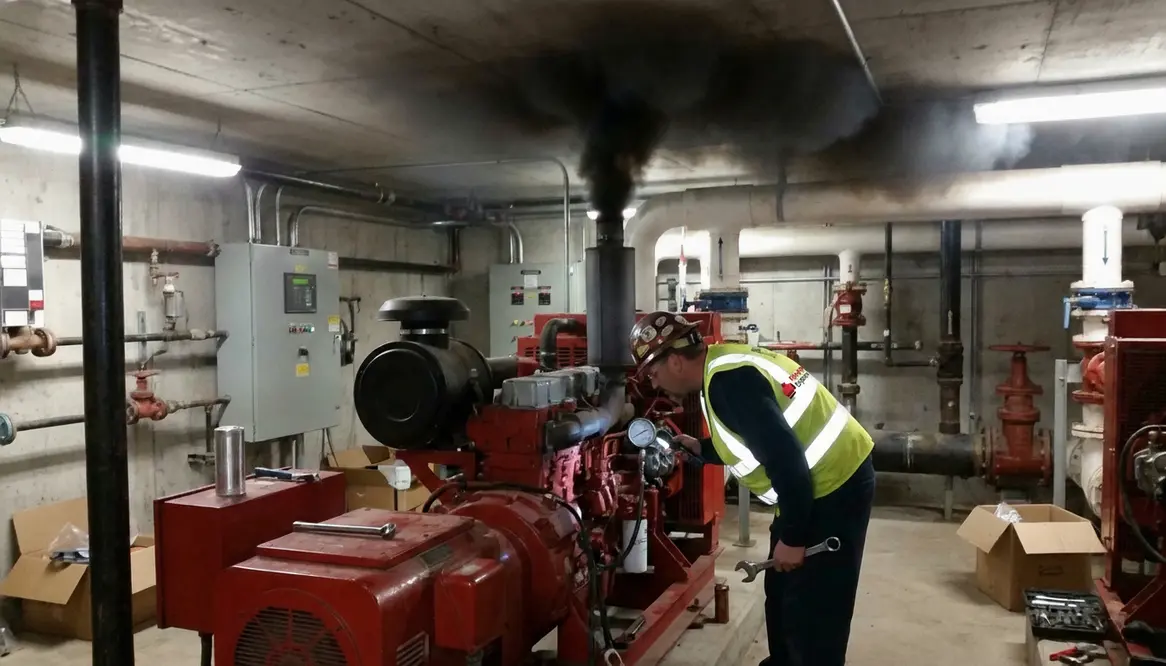
I have seen a diesel fire pump blowing black smoke at the worst possible moment, and trust me, that sight gets attention fast. In a commercial or industrial building, that smoke is not just a little ugly. It is a clue. It tells me the engine is running rich, choking for air, or dealing with a fuel problem that needs fast eyes and steady hands. Because fire pumps protect major properties, I treat that smoke like a warning light on a movie set. It may look dramatic, but it still needs real work, not drama.
When I inspect a unit, I do not guess. I check the system step by step, because one small fault can push the whole engine off balance. And yes, I have learned that diesel engines can act like stubborn coworkers. They rarely fail in just one way.
First Checks I Make On A Black Smoke Complaint
My first move is simple: I listen, look, and smell. If the diesel fire pump blowing black smoke happens during start up or load, I note the exact moment. That timing matters. It helps me tell if the issue comes from a cold engine, heavy load, dirty air flow, or bad fuel burn.
I also check the exhaust. Thick black smoke usually means the engine is burning too much fuel for the air it gets. So I look for signs of a clogged air filter, blocked intake, loose ducting, or a weak turbo system if the unit has one. In many cases, the problem starts with air supply, not fuel. Engines, like people, need to breathe. Shocking, I know.
I then review the operating conditions. If the pump runs under a heavy demand test or during a real fire event, smoke may show up because the engine works harder than usual. However, if the smoke stays heavy, I keep digging.
What I Check In The Fuel And Air System
I move next to the fuel side, because black smoke often points there. First, I inspect fuel quality. Water, dirt, or old diesel can upset combustion. Then I check fuel filters, lines, pumps, and injectors. A leaky injector can dump too much fuel into the cylinder, and the engine answers with soot and smoke. Not exactly subtle.
I also test the air side with care. A dirty air filter can choke the engine, while a damaged intake can pull in hot or dirty air. Both hurt the burn. In some cases, I find a stuck governor or a bad fuel setting that feeds too much diesel at once. That is when the engine acts like it thinks it is in a Fast and Furious scene, even though it is just sitting in a fire pump room.
Here is how I usually break the checks down:
Fuel side Fuel quality Fuel filters Injector condition Leak checks
Air side Air filter condition Intake blockage Turbo performance Air leaks
Mechanical And Load Issues I Never Skip
After fuel and air, I look at the engine’s mechanical health. Poor compression can cause bad combustion and, in turn, black smoke. So I check cylinder condition, valve timing, and signs of wear. If one cylinder runs weak, the burn gets messy. That is the kind of mess that shows up in the exhaust before it shows up in a shutdown report.
I also check the load the pump sees during operation. A diesel fire pump serving a large commercial building or industrial site may run under strict test conditions, and the engine must match that demand. If the pump curve and engine output do not line up, the engine may strain and smoke. That is why I review the system as a whole, not just the engine alone.
For fire protection systems, I also compare the pump setup to the site needs. A strong fire pump setup should work with the rest of the building protection plan, which is why I often review related equipment and controls with the same care I use for the pump itself. I also keep a close eye on maintenance records because trends matter more than one noisy test day.
How I Confirm The Real Cause
Once I narrow the likely cause, I test it. I do not stop at a visual check. I may run the pump under controlled conditions, inspect exhaust color changes, and watch engine behavior as the load shifts. If the smoke gets worse when fuel demand rises, I suspect overfueling or weak air flow. If it clears after filter replacement, the answer becomes clear very fast.
I also compare the result with service history. Repeated black smoke can point to poor upkeep, skipped filter changes, bad fuel storage, or parts that have aged out. In commercial and industrial facilities, that kind of pattern matters because a fire pump must stay ready, not merely look ready. The goal is dependable performance, not a nice paint job on the outside.
For facilities that want help across fire protection and electrical support, I also look at how the pump ties into the wider system. A useful reference is this fire sprinkler services overview, since pump performance and sprinkler readiness often work hand in hand. For more about pump support in a regional context, I also recommend los angeles diesel fire pump services.
FAQ
Final Word
If your diesel fire pump is smoking black, I would not wait and hope it clears on its own. I would inspect the air system, fuel system, and mechanical condition right away, then confirm the load and service history. In a commercial or industrial property, that pump protects more than equipment. It protects the whole building plan. If you need a careful review, now is the time to schedule it and keep your fire system ready for the moment that matters most.
What a Technician Checks When a Diesel Fire Pump Produces Black Smoke
I have seen a diesel fire pump blowing black smoke at the worst possible moment, and trust me, that sight gets attention fast. In a commercial or industrial building, that smoke is not just a little ugly. It is a clue. It tells me the engine is running rich, choking for air, or dealing with a fuel problem that needs fast eyes and steady hands. Because fire pumps protect major properties, I treat that smoke like a warning light on a movie set. It may look dramatic, but it still needs real work, not drama.
When I inspect a unit, I do not guess. I check the system step by step, because one small fault can push the whole engine off balance. And yes, I have learned that diesel engines can act like stubborn coworkers. They rarely fail in just one way.
First Checks I Make On A Black Smoke Complaint
My first move is simple: I listen, look, and smell. If the diesel fire pump blowing black smoke happens during start up or load, I note the exact moment. That timing matters. It helps me tell if the issue comes from a cold engine, heavy load, dirty air flow, or bad fuel burn.
I also check the exhaust. Thick black smoke usually means the engine is burning too much fuel for the air it gets. So I look for signs of a clogged air filter, blocked intake, loose ducting, or a weak turbo system if the unit has one. In many cases, the problem starts with air supply, not fuel. Engines, like people, need to breathe. Shocking, I know.
I then review the operating conditions. If the pump runs under a heavy demand test or during a real fire event, smoke may show up because the engine works harder than usual. However, if the smoke stays heavy, I keep digging.
What I Check In The Fuel And Air System
I move next to the fuel side, because black smoke often points there. First, I inspect fuel quality. Water, dirt, or old diesel can upset combustion. Then I check fuel filters, lines, pumps, and injectors. A leaky injector can dump too much fuel into the cylinder, and the engine answers with soot and smoke. Not exactly subtle.
I also test the air side with care. A dirty air filter can choke the engine, while a damaged intake can pull in hot or dirty air. Both hurt the burn. In some cases, I find a stuck governor or a bad fuel setting that feeds too much diesel at once. That is when the engine acts like it thinks it is in a Fast and Furious scene, even though it is just sitting in a fire pump room.
Here is how I usually break the checks down:
Fuel side Fuel quality Fuel filters Injector condition Leak checks
Air side Air filter condition Intake blockage Turbo performance Air leaks
Mechanical And Load Issues I Never Skip
After fuel and air, I look at the engine’s mechanical health. Poor compression can cause bad combustion and, in turn, black smoke. So I check cylinder condition, valve timing, and signs of wear. If one cylinder runs weak, the burn gets messy. That is the kind of mess that shows up in the exhaust before it shows up in a shutdown report.
I also check the load the pump sees during operation. A diesel fire pump serving a large commercial building or industrial site may run under strict test conditions, and the engine must match that demand. If the pump curve and engine output do not line up, the engine may strain and smoke. That is why I review the system as a whole, not just the engine alone.
For fire protection systems, I also compare the pump setup to the site needs. A strong fire pump setup should work with the rest of the building protection plan, which is why I often review related equipment and controls with the same care I use for the pump itself. I also keep a close eye on maintenance records because trends matter more than one noisy test day.
How I Confirm The Real Cause
Once I narrow the likely cause, I test it. I do not stop at a visual check. I may run the pump under controlled conditions, inspect exhaust color changes, and watch engine behavior as the load shifts. If the smoke gets worse when fuel demand rises, I suspect overfueling or weak air flow. If it clears after filter replacement, the answer becomes clear very fast.
I also compare the result with service history. Repeated black smoke can point to poor upkeep, skipped filter changes, bad fuel storage, or parts that have aged out. In commercial and industrial facilities, that kind of pattern matters because a fire pump must stay ready, not merely look ready. The goal is dependable performance, not a nice paint job on the outside.
For facilities that want help across fire protection and electrical support, I also look at how the pump ties into the wider system. A useful reference is this fire sprinkler services overview, since pump performance and sprinkler readiness often work hand in hand. For more about pump support in a regional context, I also recommend los angeles diesel fire pump services.
FAQ
Final Word
If your diesel fire pump is smoking black, I would not wait and hope it clears on its own. I would inspect the air system, fuel system, and mechanical condition right away, then confirm the load and service history. In a commercial or industrial property, that pump protects more than equipment. It protects the whole building plan. If you need a careful review, now is the time to schedule it and keep your fire system ready for the moment that matters most.
Diesel Fire Pump Black Smoke: What Technicians Check
What a Technician Checks When a Diesel Fire Pump Produces Black Smoke
I have seen a diesel fire pump blowing black smoke at the worst possible moment, and trust me, that sight gets attention fast. In a commercial or industrial building, that smoke is not just a little ugly. It is a clue. It tells me the engine is running rich, choking for air, or dealing with a fuel problem that needs fast eyes and steady hands. Because fire pumps protect major properties, I treat that smoke like a warning light on a movie set. It may look dramatic, but it still needs real work, not drama.
When I inspect a unit, I do not guess. I check the system step by step, because one small fault can push the whole engine off balance. And yes, I have learned that diesel engines can act like stubborn coworkers. They rarely fail in just one way.
First Checks I Make On A Black Smoke Complaint
My first move is simple: I listen, look, and smell. If the diesel fire pump blowing black smoke happens during start up or load, I note the exact moment. That timing matters. It helps me tell if the issue comes from a cold engine, heavy load, dirty air flow, or bad fuel burn.
I also check the exhaust. Thick black smoke usually means the engine is burning too much fuel for the air it gets. So I look for signs of a clogged air filter, blocked intake, loose ducting, or a weak turbo system if the unit has one. In many cases, the problem starts with air supply, not fuel. Engines, like people, need to breathe. Shocking, I know.
I then review the operating conditions. If the pump runs under a heavy demand test or during a real fire event, smoke may show up because the engine works harder than usual. However, if the smoke stays heavy, I keep digging.
What I Check In The Fuel And Air System
I move next to the fuel side, because black smoke often points there. First, I inspect fuel quality. Water, dirt, or old diesel can upset combustion. Then I check fuel filters, lines, pumps, and injectors. A leaky injector can dump too much fuel into the cylinder, and the engine answers with soot and smoke. Not exactly subtle.
I also test the air side with care. A dirty air filter can choke the engine, while a damaged intake can pull in hot or dirty air. Both hurt the burn. In some cases, I find a stuck governor or a bad fuel setting that feeds too much diesel at once. That is when the engine acts like it thinks it is in a Fast and Furious scene, even though it is just sitting in a fire pump room.
Here is how I usually break the checks down:
Fuel side Fuel quality Fuel filters Injector condition Leak checks
Air side Air filter condition Intake blockage Turbo performance Air leaks
Mechanical And Load Issues I Never Skip
After fuel and air, I look at the engine’s mechanical health. Poor compression can cause bad combustion and, in turn, black smoke. So I check cylinder condition, valve timing, and signs of wear. If one cylinder runs weak, the burn gets messy. That is the kind of mess that shows up in the exhaust before it shows up in a shutdown report.
I also check the load the pump sees during operation. A diesel fire pump serving a large commercial building or industrial site may run under strict test conditions, and the engine must match that demand. If the pump curve and engine output do not line up, the engine may strain and smoke. That is why I review the system as a whole, not just the engine alone.
For fire protection systems, I also compare the pump setup to the site needs. A strong fire pump setup should work with the rest of the building protection plan, which is why I often review related equipment and controls with the same care I use for the pump itself. I also keep a close eye on maintenance records because trends matter more than one noisy test day.
How I Confirm The Real Cause
Once I narrow the likely cause, I test it. I do not stop at a visual check. I may run the pump under controlled conditions, inspect exhaust color changes, and watch engine behavior as the load shifts. If the smoke gets worse when fuel demand rises, I suspect overfueling or weak air flow. If it clears after filter replacement, the answer becomes clear very fast.
I also compare the result with service history. Repeated black smoke can point to poor upkeep, skipped filter changes, bad fuel storage, or parts that have aged out. In commercial and industrial facilities, that kind of pattern matters because a fire pump must stay ready, not merely look ready. The goal is dependable performance, not a nice paint job on the outside.
For facilities that want help across fire protection and electrical support, I also look at how the pump ties into the wider system. A useful reference is this fire sprinkler services overview, since pump performance and sprinkler readiness often work hand in hand. For more about pump support in a regional context, I also recommend los angeles diesel fire pump services.
FAQ
Final Word
If your diesel fire pump is smoking black, I would not wait and hope it clears on its own. I would inspect the air system, fuel system, and mechanical condition right away, then confirm the load and service history. In a commercial or industrial property, that pump protects more than equipment. It protects the whole building plan. If you need a careful review, now is the time to schedule it and keep your fire system ready for the moment that matters most.
Diesel Fire Pump Black Smoke: What Technicians Check
What a Technician Checks When a Diesel Fire Pump Produces Black Smoke
I have seen a diesel fire pump blowing black smoke at the worst possible moment, and trust me, that sight gets attention fast. In a commercial or industrial building, that smoke is not just a little ugly. It is a clue. It tells me the engine is running rich, choking for air, or dealing with a fuel problem that needs fast eyes and steady hands. Because fire pumps protect major properties, I treat that smoke like a warning light on a movie set. It may look dramatic, but it still needs real work, not drama.
When I inspect a unit, I do not guess. I check the system step by step, because one small fault can push the whole engine off balance. And yes, I have learned that diesel engines can act like stubborn coworkers. They rarely fail in just one way.
First Checks I Make On A Black Smoke Complaint
My first move is simple: I listen, look, and smell. If the diesel fire pump blowing black smoke happens during start up or load, I note the exact moment. That timing matters. It helps me tell if the issue comes from a cold engine, heavy load, dirty air flow, or bad fuel burn.
I also check the exhaust. Thick black smoke usually means the engine is burning too much fuel for the air it gets. So I look for signs of a clogged air filter, blocked intake, loose ducting, or a weak turbo system if the unit has one. In many cases, the problem starts with air supply, not fuel. Engines, like people, need to breathe. Shocking, I know.
I then review the operating conditions. If the pump runs under a heavy demand test or during a real fire event, smoke may show up because the engine works harder than usual. However, if the smoke stays heavy, I keep digging.
What I Check In The Fuel And Air System
I move next to the fuel side, because black smoke often points there. First, I inspect fuel quality. Water, dirt, or old diesel can upset combustion. Then I check fuel filters, lines, pumps, and injectors. A leaky injector can dump too much fuel into the cylinder, and the engine answers with soot and smoke. Not exactly subtle.
I also test the air side with care. A dirty air filter can choke the engine, while a damaged intake can pull in hot or dirty air. Both hurt the burn. In some cases, I find a stuck governor or a bad fuel setting that feeds too much diesel at once. That is when the engine acts like it thinks it is in a Fast and Furious scene, even though it is just sitting in a fire pump room.
Here is how I usually break the checks down:
Fuel side Fuel quality Fuel filters Injector condition Leak checks
Air side Air filter condition Intake blockage Turbo performance Air leaks
Mechanical And Load Issues I Never Skip
After fuel and air, I look at the engine’s mechanical health. Poor compression can cause bad combustion and, in turn, black smoke. So I check cylinder condition, valve timing, and signs of wear. If one cylinder runs weak, the burn gets messy. That is the kind of mess that shows up in the exhaust before it shows up in a shutdown report.
I also check the load the pump sees during operation. A diesel fire pump serving a large commercial building or industrial site may run under strict test conditions, and the engine must match that demand. If the pump curve and engine output do not line up, the engine may strain and smoke. That is why I review the system as a whole, not just the engine alone.
For fire protection systems, I also compare the pump setup to the site needs. A strong fire pump setup should work with the rest of the building protection plan, which is why I often review related equipment and controls with the same care I use for the pump itself. I also keep a close eye on maintenance records because trends matter more than one noisy test day.
How I Confirm The Real Cause
Once I narrow the likely cause, I test it. I do not stop at a visual check. I may run the pump under controlled conditions, inspect exhaust color changes, and watch engine behavior as the load shifts. If the smoke gets worse when fuel demand rises, I suspect overfueling or weak air flow. If it clears after filter replacement, the answer becomes clear very fast.
I also compare the result with service history. Repeated black smoke can point to poor upkeep, skipped filter changes, bad fuel storage, or parts that have aged out. In commercial and industrial facilities, that kind of pattern matters because a fire pump must stay ready, not merely look ready. The goal is dependable performance, not a nice paint job on the outside.
For facilities that want help across fire protection and electrical support, I also look at how the pump ties into the wider system. A useful reference is this fire sprinkler services overview, since pump performance and sprinkler readiness often work hand in hand. For more about pump support in a regional context, I also recommend los angeles diesel fire pump services.
FAQ
Final Word
If your diesel fire pump is smoking black, I would not wait and hope it clears on its own. I would inspect the air system, fuel system, and mechanical condition right away, then confirm the load and service history. In a commercial or industrial property, that pump protects more than equipment. It protects the whole building plan. If you need a careful review, now is the time to schedule it and keep your fire system ready for the moment that matters most.
Diesel Fire Pump Black Smoke: What Technicians Check
What a Technician Checks When a Diesel Fire Pump Produces Black Smoke
I have seen a diesel fire pump blowing black smoke at the worst possible moment, and trust me, that sight gets attention fast. In a commercial or industrial building, that smoke is not just a little ugly. It is a clue. It tells me the engine is running rich, choking for air, or dealing with a fuel problem that needs fast eyes and steady hands. Because fire pumps protect major properties, I treat that smoke like a warning light on a movie set. It may look dramatic, but it still needs real work, not drama.
When I inspect a unit, I do not guess. I check the system step by step, because one small fault can push the whole engine off balance. And yes, I have learned that diesel engines can act like stubborn coworkers. They rarely fail in just one way.
First Checks I Make On A Black Smoke Complaint
My first move is simple: I listen, look, and smell. If the diesel fire pump blowing black smoke happens during start up or load, I note the exact moment. That timing matters. It helps me tell if the issue comes from a cold engine, heavy load, dirty air flow, or bad fuel burn.
I also check the exhaust. Thick black smoke usually means the engine is burning too much fuel for the air it gets. So I look for signs of a clogged air filter, blocked intake, loose ducting, or a weak turbo system if the unit has one. In many cases, the problem starts with air supply, not fuel. Engines, like people, need to breathe. Shocking, I know.
I then review the operating conditions. If the pump runs under a heavy demand test or during a real fire event, smoke may show up because the engine works harder than usual. However, if the smoke stays heavy, I keep digging.
What I Check In The Fuel And Air System
I move next to the fuel side, because black smoke often points there. First, I inspect fuel quality. Water, dirt, or old diesel can upset combustion. Then I check fuel filters, lines, pumps, and injectors. A leaky injector can dump too much fuel into the cylinder, and the engine answers with soot and smoke. Not exactly subtle.
I also test the air side with care. A dirty air filter can choke the engine, while a damaged intake can pull in hot or dirty air. Both hurt the burn. In some cases, I find a stuck governor or a bad fuel setting that feeds too much diesel at once. That is when the engine acts like it thinks it is in a Fast and Furious scene, even though it is just sitting in a fire pump room.
Here is how I usually break the checks down:
Fuel side Fuel quality Fuel filters Injector condition Leak checks
Air side Air filter condition Intake blockage Turbo performance Air leaks
Mechanical And Load Issues I Never Skip
After fuel and air, I look at the engine’s mechanical health. Poor compression can cause bad combustion and, in turn, black smoke. So I check cylinder condition, valve timing, and signs of wear. If one cylinder runs weak, the burn gets messy. That is the kind of mess that shows up in the exhaust before it shows up in a shutdown report.
I also check the load the pump sees during operation. A diesel fire pump serving a large commercial building or industrial site may run under strict test conditions, and the engine must match that demand. If the pump curve and engine output do not line up, the engine may strain and smoke. That is why I review the system as a whole, not just the engine alone.
For fire protection systems, I also compare the pump setup to the site needs. A strong fire pump setup should work with the rest of the building protection plan, which is why I often review related equipment and controls with the same care I use for the pump itself. I also keep a close eye on maintenance records because trends matter more than one noisy test day.
How I Confirm The Real Cause
Once I narrow the likely cause, I test it. I do not stop at a visual check. I may run the pump under controlled conditions, inspect exhaust color changes, and watch engine behavior as the load shifts. If the smoke gets worse when fuel demand rises, I suspect overfueling or weak air flow. If it clears after filter replacement, the answer becomes clear very fast.
I also compare the result with service history. Repeated black smoke can point to poor upkeep, skipped filter changes, bad fuel storage, or parts that have aged out. In commercial and industrial facilities, that kind of pattern matters because a fire pump must stay ready, not merely look ready. The goal is dependable performance, not a nice paint job on the outside.
For facilities that want help across fire protection and electrical support, I also look at how the pump ties into the wider system. A useful reference is this fire sprinkler services overview, since pump performance and sprinkler readiness often work hand in hand. For more about pump support in a regional context, I also recommend los angeles diesel fire pump services.
FAQ
Final Word
If your diesel fire pump is smoking black, I would not wait and hope it clears on its own. I would inspect the air system, fuel system, and mechanical condition right away, then confirm the load and service history. In a commercial or industrial property, that pump protects more than equipment. It protects the whole building plan. If you need a careful review, now is the time to schedule it and keep your fire system ready for the moment that matters most.
Diesel Fire Pump Black Smoke: What Technicians Check
What a Technician Checks When a Diesel Fire Pump Produces Black Smoke
I have seen a diesel fire pump blowing black smoke at the worst possible moment, and trust me, that sight gets attention fast. In a commercial or industrial building, that smoke is not just a little ugly. It is a clue. It tells me the engine is running rich, choking for air, or dealing with a fuel problem that needs fast eyes and steady hands. Because fire pumps protect major properties, I treat that smoke like a warning light on a movie set. It may look dramatic, but it still needs real work, not drama.
When I inspect a unit, I do not guess. I check the system step by step, because one small fault can push the whole engine off balance. And yes, I have learned that diesel engines can act like stubborn coworkers. They rarely fail in just one way.
First Checks I Make On A Black Smoke Complaint
My first move is simple: I listen, look, and smell. If the diesel fire pump blowing black smoke happens during start up or load, I note the exact moment. That timing matters. It helps me tell if the issue comes from a cold engine, heavy load, dirty air flow, or bad fuel burn.
I also check the exhaust. Thick black smoke usually means the engine is burning too much fuel for the air it gets. So I look for signs of a clogged air filter, blocked intake, loose ducting, or a weak turbo system if the unit has one. In many cases, the problem starts with air supply, not fuel. Engines, like people, need to breathe. Shocking, I know.
I then review the operating conditions. If the pump runs under a heavy demand test or during a real fire event, smoke may show up because the engine works harder than usual. However, if the smoke stays heavy, I keep digging.
What I Check In The Fuel And Air System
I move next to the fuel side, because black smoke often points there. First, I inspect fuel quality. Water, dirt, or old diesel can upset combustion. Then I check fuel filters, lines, pumps, and injectors. A leaky injector can dump too much fuel into the cylinder, and the engine answers with soot and smoke. Not exactly subtle.
I also test the air side with care. A dirty air filter can choke the engine, while a damaged intake can pull in hot or dirty air. Both hurt the burn. In some cases, I find a stuck governor or a bad fuel setting that feeds too much diesel at once. That is when the engine acts like it thinks it is in a Fast and Furious scene, even though it is just sitting in a fire pump room.
Here is how I usually break the checks down:
Fuel side Fuel quality Fuel filters Injector condition Leak checks
Air side Air filter condition Intake blockage Turbo performance Air leaks
Mechanical And Load Issues I Never Skip
After fuel and air, I look at the engine’s mechanical health. Poor compression can cause bad combustion and, in turn, black smoke. So I check cylinder condition, valve timing, and signs of wear. If one cylinder runs weak, the burn gets messy. That is the kind of mess that shows up in the exhaust before it shows up in a shutdown report.
I also check the load the pump sees during operation. A diesel fire pump serving a large commercial building or industrial site may run under strict test conditions, and the engine must match that demand. If the pump curve and engine output do not line up, the engine may strain and smoke. That is why I review the system as a whole, not just the engine alone.
For fire protection systems, I also compare the pump setup to the site needs. A strong fire pump setup should work with the rest of the building protection plan, which is why I often review related equipment and controls with the same care I use for the pump itself. I also keep a close eye on maintenance records because trends matter more than one noisy test day.
How I Confirm The Real Cause
Once I narrow the likely cause, I test it. I do not stop at a visual check. I may run the pump under controlled conditions, inspect exhaust color changes, and watch engine behavior as the load shifts. If the smoke gets worse when fuel demand rises, I suspect overfueling or weak air flow. If it clears after filter replacement, the answer becomes clear very fast.
I also compare the result with service history. Repeated black smoke can point to poor upkeep, skipped filter changes, bad fuel storage, or parts that have aged out. In commercial and industrial facilities, that kind of pattern matters because a fire pump must stay ready, not merely look ready. The goal is dependable performance, not a nice paint job on the outside.
For facilities that want help across fire protection and electrical support, I also look at how the pump ties into the wider system. A useful reference is this fire sprinkler services overview, since pump performance and sprinkler readiness often work hand in hand. For more about pump support in a regional context, I also recommend los angeles diesel fire pump services.
FAQ
Final Word
If your diesel fire pump is smoking black, I would not wait and hope it clears on its own. I would inspect the air system, fuel system, and mechanical condition right away, then confirm the load and service history. In a commercial or industrial property, that pump protects more than equipment. It protects the whole building plan. If you need a careful review, now is the time to schedule it and keep your fire system ready for the moment that matters most.
Diesel Fire Pump Black Smoke: What Technicians Check
What a Technician Checks When a Diesel Fire Pump Produces Black Smoke
I have seen a diesel fire pump blowing black smoke at the worst possible moment, and trust me, that sight gets attention fast. In a commercial or industrial building, that smoke is not just a little ugly. It is a clue. It tells me the engine is running rich, choking for air, or dealing with a fuel problem that needs fast eyes and steady hands. Because fire pumps protect major properties, I treat that smoke like a warning light on a movie set. It may look dramatic, but it still needs real work, not drama.
When I inspect a unit, I do not guess. I check the system step by step, because one small fault can push the whole engine off balance. And yes, I have learned that diesel engines can act like stubborn coworkers. They rarely fail in just one way.
First Checks I Make On A Black Smoke Complaint
My first move is simple: I listen, look, and smell. If the diesel fire pump blowing black smoke happens during start up or load, I note the exact moment. That timing matters. It helps me tell if the issue comes from a cold engine, heavy load, dirty air flow, or bad fuel burn.
I also check the exhaust. Thick black smoke usually means the engine is burning too much fuel for the air it gets. So I look for signs of a clogged air filter, blocked intake, loose ducting, or a weak turbo system if the unit has one. In many cases, the problem starts with air supply, not fuel. Engines, like people, need to breathe. Shocking, I know.
I then review the operating conditions. If the pump runs under a heavy demand test or during a real fire event, smoke may show up because the engine works harder than usual. However, if the smoke stays heavy, I keep digging.
What I Check In The Fuel And Air System
I move next to the fuel side, because black smoke often points there. First, I inspect fuel quality. Water, dirt, or old diesel can upset combustion. Then I check fuel filters, lines, pumps, and injectors. A leaky injector can dump too much fuel into the cylinder, and the engine answers with soot and smoke. Not exactly subtle.
I also test the air side with care. A dirty air filter can choke the engine, while a damaged intake can pull in hot or dirty air. Both hurt the burn. In some cases, I find a stuck governor or a bad fuel setting that feeds too much diesel at once. That is when the engine acts like it thinks it is in a Fast and Furious scene, even though it is just sitting in a fire pump room.
Here is how I usually break the checks down:
Fuel side Fuel quality Fuel filters Injector condition Leak checks
Air side Air filter condition Intake blockage Turbo performance Air leaks
Mechanical And Load Issues I Never Skip
After fuel and air, I look at the engine’s mechanical health. Poor compression can cause bad combustion and, in turn, black smoke. So I check cylinder condition, valve timing, and signs of wear. If one cylinder runs weak, the burn gets messy. That is the kind of mess that shows up in the exhaust before it shows up in a shutdown report.
I also check the load the pump sees during operation. A diesel fire pump serving a large commercial building or industrial site may run under strict test conditions, and the engine must match that demand. If the pump curve and engine output do not line up, the engine may strain and smoke. That is why I review the system as a whole, not just the engine alone.
For fire protection systems, I also compare the pump setup to the site needs. A strong fire pump setup should work with the rest of the building protection plan, which is why I often review related equipment and controls with the same care I use for the pump itself. I also keep a close eye on maintenance records because trends matter more than one noisy test day.
How I Confirm The Real Cause
Once I narrow the likely cause, I test it. I do not stop at a visual check. I may run the pump under controlled conditions, inspect exhaust color changes, and watch engine behavior as the load shifts. If the smoke gets worse when fuel demand rises, I suspect overfueling or weak air flow. If it clears after filter replacement, the answer becomes clear very fast.
I also compare the result with service history. Repeated black smoke can point to poor upkeep, skipped filter changes, bad fuel storage, or parts that have aged out. In commercial and industrial facilities, that kind of pattern matters because a fire pump must stay ready, not merely look ready. The goal is dependable performance, not a nice paint job on the outside.
For facilities that want help across fire protection and electrical support, I also look at how the pump ties into the wider system. A useful reference is this fire sprinkler services overview, since pump performance and sprinkler readiness often work hand in hand. For more about pump support in a regional context, I also recommend los angeles diesel fire pump services.
FAQ
Final Word
If your diesel fire pump is smoking black, I would not wait and hope it clears on its own. I would inspect the air system, fuel system, and mechanical condition right away, then confirm the load and service history. In a commercial or industrial property, that pump protects more than equipment. It protects the whole building plan. If you need a careful review, now is the time to schedule it and keep your fire system ready for the moment that matters most.