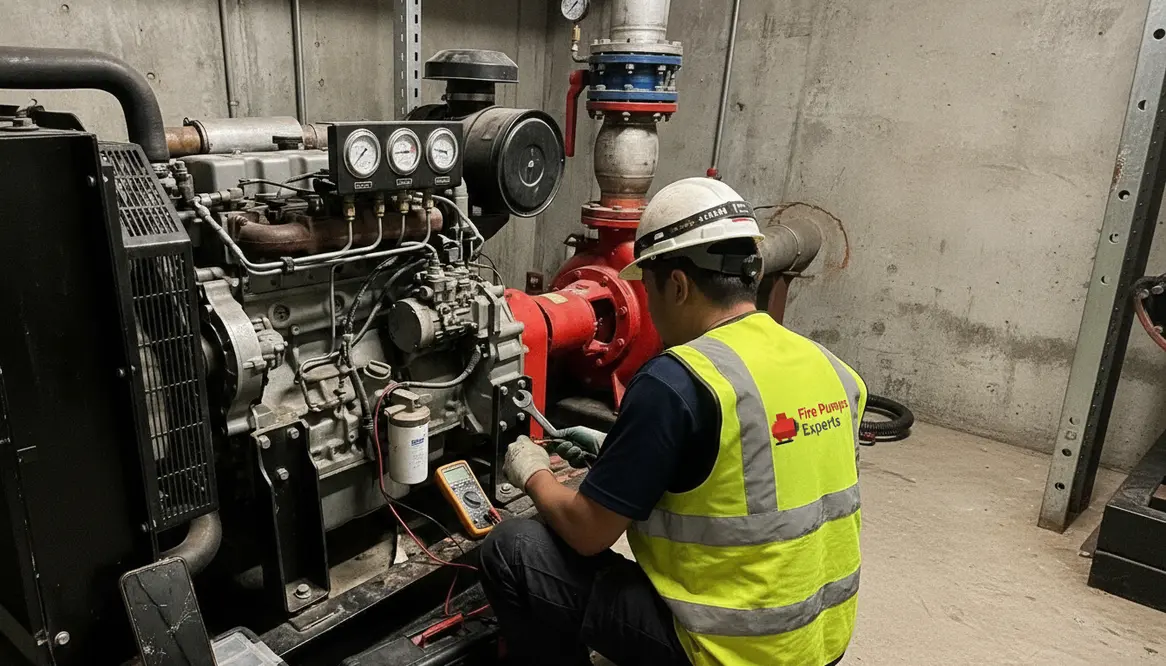
Diesel Fire Pump RPM Hunting What Technicians Check
When I hear a diesel fire pump hunting for RPM, I know the system is sending a warning, and I do not take it lightly. That quick up and down speed change can point to fuel trouble, air in the line, bad governor control, weak batteries, or a load issue that has no business showing up in a life safety system. In a commercial plant, high rise, warehouse, or other major property, that kind of unstable running can turn into a real problem fast. So I go in with a calm plan, a steady hand, and the kind of patience that keeps both people and pressure where they belong.
To keep things useful, I will walk through what I check first, what I check next, and why each step matters. Also, I will keep it practical. No drama. No mystery music. Just the facts, with a little wit along the way because even diesel systems deserve a small amount of personality.
Start With the Basic Signs I Look For
I always begin with the simplest clues, because the machine often tells on itself if I listen closely. First, I watch the RPM swing during start up, idle, and load. Then I check whether the pump surges, stalls, or settles only to drift again. That pattern helps me separate a fuel issue from a control issue.
I also look at the panel, alarms, and history log. If the diesel fire pump rpm fluctuating shows up with low voltage, low fuel pressure, or a governor warning, I get a strong lead right away. In many cases, the pump is not “being dramatic”; it is reacting to something plain and fixable. Machines, like people, rarely misbehave for no reason.
Check Fuel, Air, and Governor Control
This is where I dig into the heart of the matter. Fuel problems often cause the engine to chase speed like it is late for a Marvel premiere. So I inspect the fuel tank level, fuel quality, water in the fuel, clogged filters, and any leaks in the supply line. If the fuel stream cannot stay steady, the RPM will not stay steady either.
Next, I check for air intrusion. A tiny air leak can cause a big mess inside a diesel system. Therefore, I inspect clamps, fittings, suction lines, and filter seals. I also bleed the system if needed, because trapped air can make the engine hunt, stumble, and recover in a very annoying loop.
Then I move to the governor. If the governor misreads speed or reacts too slowly, the engine will swing past the target and then correct itself again and again. That back and forth can make a diesel fire pump rpm fluctuating problem look worse than it is, but the fix still matters. I test the control response, linkages, and calibration so the engine can hold a stable speed under real demand.
Inspect Power, Starting, and Load Conditions in Dual Columns
Here is how I split the check when I want fast, clear results.
Left column
- Battery voltage and charger output
- Starter draw and cranking speed
- Loose cable ends or corrosion
- Ground connection quality
Right column
- Valve position and system demand
- Engine load during run test
- Pressure switch behavior
- Any sign of blocked discharge flow
Even though a diesel fire pump does not run like a passenger car, weak starting power can still set off unstable running. If the engine starts slow or uneven, the governor may hunt while it tries to find a clean speed. Meanwhile, if the system load changes too fast, the pump can react like it just got shoved into a sprint.
I also make sure the discharge path is open and the valves are in the right position. A partially closed valve or a system restriction can force the pump to work harder than expected, and that can show up as speed hunting. In a large commercial building, industrial site, or major property, those details matter because the pump must answer instantly and hold firm.
What I Test in the Engine Room
After the obvious checks, I go deeper into engine health. I look at air filters, exhaust restrictions, oil level, oil condition, and cooling flow. If the engine cannot breathe, burn, or cool correctly, its speed control will suffer. I also listen for rough running, because a miss in one cylinder can make the RPM rise and fall as the governor keeps chasing balance.
At this stage, I compare the engine behavior against a normal test run. That comparison helps me spot whether the issue is new, getting worse, or tied to a specific operating condition. I also check service records, because past repairs often leave a trail. A good log book can save hours. A bad one can make me feel like I am chasing ghosts in a warehouse with a flashlight.
For facilities that also rely on electrical and fire system support, I like to review related service options such as commercial fire pump system support and building fire protection service planning. In some cases, I also reference Australian sprinkler service coordination when I need to align pump performance with the wider protection setup. For a local example, I may point teams to los angeles fire pump service support when they want to understand the kind of maintenance that keeps these systems ready.
Why I Never Skip Follow Up Testing
Once I make a correction, I do not just pat the machine on the hood and call it a day. I run the pump again, watch the RPM, and confirm the engine holds steady through start, demand, and shutdown. Then I verify that the correction solved the real cause, not just the symptom. That step matters because a diesel fire pump rpm fluctuating issue can hide in more than one place.
Follow up testing also protects the facility from a false sense of safety. In a commercial or industrial property, “it seems fine now” is not good enough. I want proof, readings, and a clean run that says the system will respond when the pressure drops and the stakes rise.
FAQ
Quick Answers From the Field
CTA Conclusion
If your diesel fire pump is hunting for RPM, do not wait for the next test to tell the story for you. I recommend a full inspection, a careful run test, and a close look at fuel, air, governor control, and starting power. For commercial, industrial, and major property buildings, steady pump performance is not a luxury. It is a must. So if you want the system checked the right way, schedule service now and keep your fire protection ready for the moment that counts.