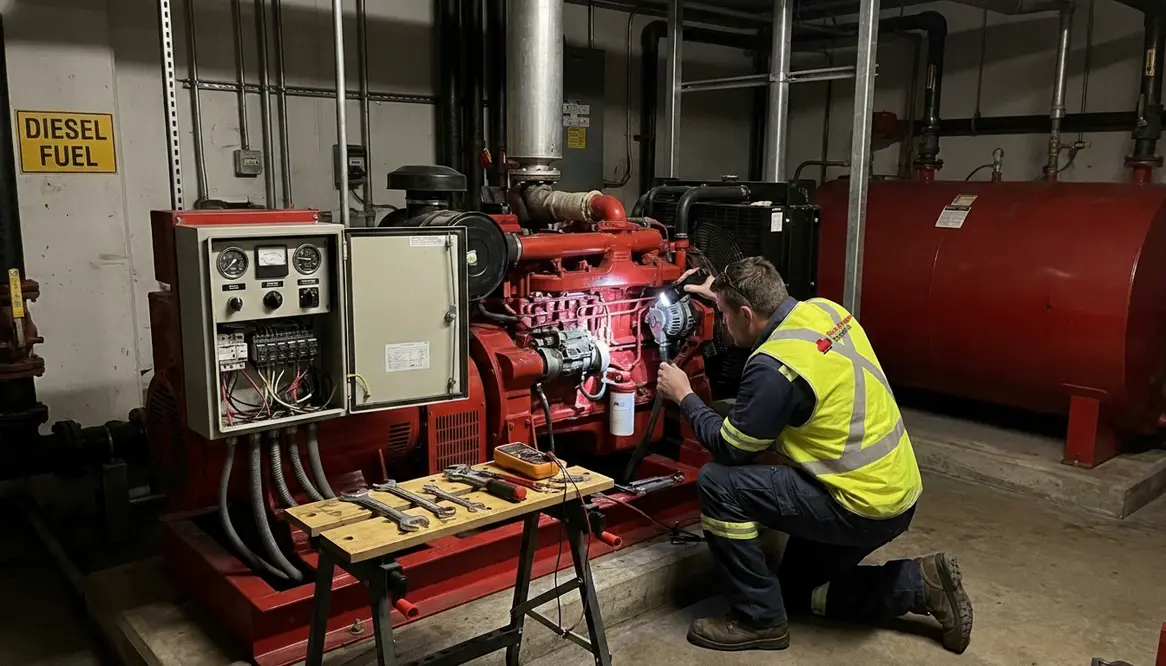
Diesel Fire Pump Rough Run Test and Inspection
When a diesel fire pump running rough during test shows up on the schedule, I do not shrug and hope it clears its throat on its own. I treat it like a warning bell. In a commercial or industrial building, that pump stands guard for the moments when life and property hang in the balance. So, if it stumbles, hunts, smokes, or shakes like it just heard bad news from the engine room, I dig in fast. After all, a fire pump should not behave like a tired old movie extra trying to make it through one more scene.
In this article, I will walk through what I look at first, what I test next, and why each clue matters. If your site depends on a diesel fire pump, this is the kind of checkup that helps keep the system ready when real pressure hits.
First Things I Check When the Pump Sounds Uneven
I start with the basics because the basics usually tell the truth. First, I listen to the engine at idle and during the test run. Then I watch for rough speed changes, heavy smoke, or unusual vibration. If the pump runs rough, I want to know whether the issue comes from fuel, air, cooling, or the engine governor.
I also inspect the gauge readings. A drop in oil pressure, odd exhaust color, or unstable RPM gives me a direction right away. Next, I check the fuel supply. Diesel systems can act up if the tank has water, dirt, or sludge. That is not glamorous work, but neither is a fire event, so I keep my attention where it belongs.
Here is the short version of my first pass:
Diesel fire pump rough run checklist
- Fuel level and fuel quality
- Oil pressure and coolant temperature
- Battery charge and starting performance
- Air intake and filter condition
- Vibration, smoke, and sound changes
How I trace fuel and air problems
Fuel and air sit at the heart of a smooth engine. If either one gets messy, the pump starts acting like it forgot its lines. So I inspect the fuel lines for leaks, loose fittings, clogged filters, and signs of contamination. Water in diesel can cause rough running, hard starts, and sudden sputtering. In commercial and industrial facilities, even a small fuel issue can snowball into a shutdown risk.
Next, I check the air side. A blocked air filter or restricted intake can choke the engine. Likewise, a cracked hose or loose clamp can upset the balance and cause the engine to stumble. I also look at the exhaust path. If the engine cannot breathe out cleanly, it often shows stress in the way it runs. Engines, much like people before coffee, do not enjoy being restricted.
Why I inspect cooling and lubrication so closely
A diesel fire pump can run rough when heat builds too fast or oil flow drops. So I examine the coolant level, radiator condition, belts, and fan operation. If the engine starts to overheat, it may not just run poorly. It may protect itself by changing performance, and that can affect pump readiness.
Then I move to lubrication. Low oil, dirty oil, or poor oil pressure can make the engine feel weak and unstable. I check for leaks, worn seals, and delayed pressure buildup. If the oil looks dark and gritty, I take that seriously. It tells me the engine has been working hard, or that maintenance has slipped. Either way, I want the cause, not a guess.
What I test in controls, battery, and governor settings
Now I look at the parts that help the engine start and stay steady. A weak battery may still crank the engine, but it can do so with poor speed and poor confidence. That matters. A diesel fire pump must start fast and run steady under load. If the battery bank struggles, I test voltage, cable condition, and charger output.
I also check the governor because it controls engine speed. If the governor acts up, the pump may surge, lag, or hunt for the right RPM. That can feel minor during a test, but it points to a bigger control issue. In my experience, a rough-running pump often gives hints long before it fails outright. It is basically the engine’s way of waving a red flag, only less dramatic than a superhero movie and far more expensive if ignored.
How I connect the pump to the building system
The engine is only part of the story. I also check the pump end and the system it supports. If the discharge valve, relief setup, or pressure sensing components misread demand, the engine may appear rough because the load shifts oddly. That is why I review the full setup, not just the diesel unit by itself.
For building owners and facility teams that manage large sites, I often compare the system approach with the guidance found in los angeles fire pump service solutions. It helps frame the inspection around the whole fire protection system, not one piece in isolation. I also keep the broader electrical side in view through resources like commercial electrical support for critical facilities, since reliable power and controls matter just as much as the engine itself. For sites that need wider protection planning, I like to use industrial sprinkler and fire protection services as another reference point.
FAQ
Quick answers for the most common diesel fire pump concerns
Conclusion
If a diesel fire pump runs rough during test, I do not wait for the problem to grow teeth. I trace the fuel, air, cooling, oil, battery, controls, and pump load until the cause stands clear. That is how I protect major commercial and industrial properties from avoidable risk. If your pump shows even small signs of trouble, schedule a full inspection now. A calm, steady system today can save a lot of panic tomorrow.