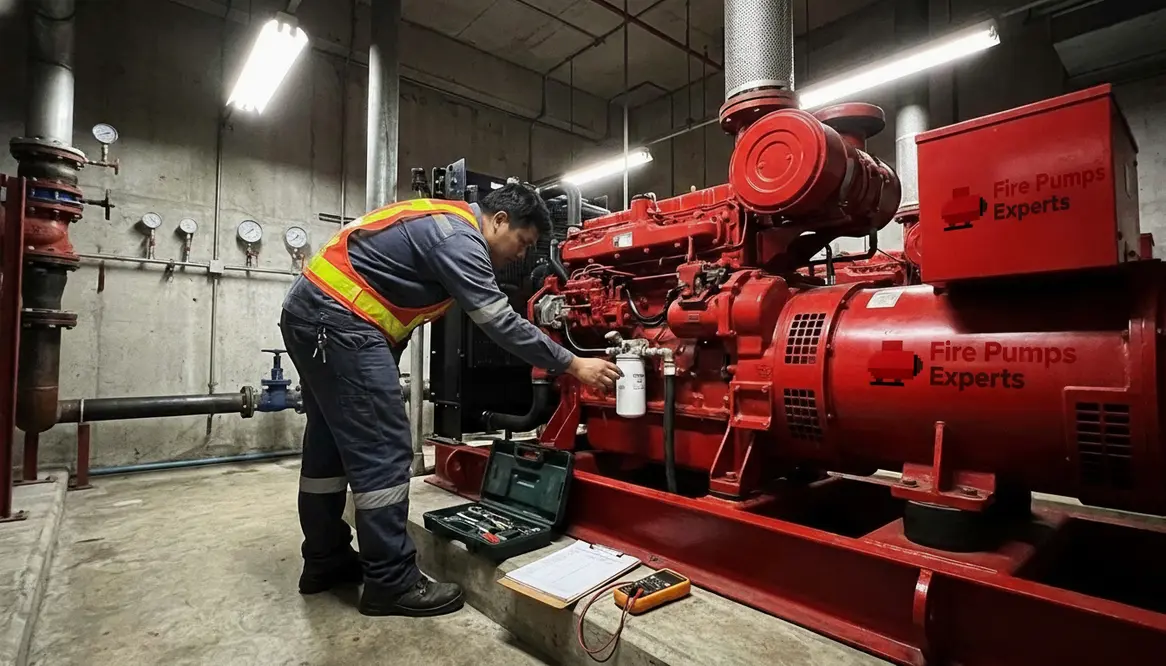
Diesel Fire Pump RPM Fuel, Air, Governor Checks
What Technicians Check When a Diesel Fire Pump Hunts for RPM
When I hear a diesel fire pump hunting for RPM, I do not shrug and hope it settles down like a sleepy movie villain. I treat it as a warning. That up and down engine speed often points to a fuel, air, governor, or control issue, and in a commercial or industrial fire protection setup, that kind of wobble can put real pressure on the whole system. So, I go straight to the parts that matter, because a fire pump should not act like it missed its morning coffee.
In major property buildings, warehouses, plants, and other commercial sites, steady pump speed matters. The pump must respond fast, hold load, and stay ready. So, when I inspect diesel fire pump rpm fluctuating behavior, I focus on the system as a whole, not just the engine on its own. That is where the real answer usually hides.
Check the fuel supply first when the diesel fire pump rpm fluctuating starts
I start with fuel because fuel issues cause a lot of trouble, and they like to show up when the system needs to perform. First, I check the tank level, then I look for water, sludge, or dirty fuel that could block smooth flow. After that, I inspect the fuel lines, filters, and connections for leaks or air leaks. Even a small air leak can make the engine hunt for RPM like it is chasing a bus that already left.
I also check the fuel transfer setup and any day tank controls. If the supply cannot stay steady, the engine cannot stay steady either. Therefore, I look for clogged filters, weak pumps, stuck valves, and poor fuel pressure. In many cases, the fix starts here, because the engine can only burn what it receives.
Inspect air intake and exhaust flow like a technician who trusts evidence
Next, I check air intake and exhaust flow. A diesel engine needs clean air, and it needs to breathe without strain. So, I inspect the air filter, intake piping, and any signs of blockage. If the filter is dirty or the intake is restricted, the engine may surge and settle in a rough cycle.
I also look at the exhaust side. A blocked exhaust path can create back pressure, and that can upset engine speed. In addition, I check for loose clamps, damaged hoses, or parts that have shifted. This matters because airflow problems often hide in plain sight. They do not always shout. Sometimes they whisper, and the engine starts acting dramatic anyway, like a soap opera with pistons.
Review governor, controls, and sensing signals in a clear order
Once fuel and air check out, I move to the governor and control system. This part tells the engine how to hold speed, so if it fails, the pump may bounce between too fast and too slow. I inspect the governor linkage, actuator response, and any signs of wear or sticking. I also test the control signals that tell the system when to start, speed up, or hold load.
Because diesel fire pump rpm fluctuating can come from bad feedback, I verify sensors, wiring, and terminal tightness. Loose wiring or bad signal input can confuse the controls. Then the engine reacts like it got mixed directions from a GPS. I do not trust guesswork here. I test each signal and compare it to the expected reading, because control problems often look simple until you trace them properly.
Use this side by side check to spot the real cause faster
When I want to narrow the issue quickly, I compare a few things at the same time.
Fuel side
filters, leaks, air in lines, weak supply, dirty tank
Air side
clogged filter, intake blockage, exhaust back pressure, loose hoses
Controls side
sensor faults, wiring issues, bad signal, loose terminals
Governor side
sticking linkage, worn parts, poor response, incorrect adjustment
This simple split helps me avoid random part swapping. It also saves time, which matters when I am dealing with fire protection equipment at a large commercial site. No one wants a technician playing detective with a blindfold on.
Test engine condition and load response before I call it stable
After that, I check the engine’s own health. I look at battery condition, starter performance, oil pressure, and coolant level. A weak battery or slow cranking can make the system act unstable from the start. Then I test the pump under load, because an engine may seem fine with no demand and then struggle once the pump works harder.
I also listen for odd sounds, watch for smoke, and check how quickly the engine settles after startup. If the diesel fire pump rpm fluctuating only appears during certain load changes, that points me toward response problems rather than a constant mechanical fault. For that reason, I never stop at a quick visual check. I want proof under real operating conditions.
Use trusted fire pump service for commercial and industrial sites
When I work on fire pumps for major properties, I keep the focus on reliability, code needs, and fast response. That is why I pay close attention to routine service and inspection support from teams that understand these systems. For more on professional support, I often point people to los Angeles fire pump service and to commercial fire sprinkler services as useful references for fire protection care. I also look at fire protection electrical support when control power may be part of the problem.
FAQ
Conclusion
If your diesel fire pump starts hunting for RPM, I recommend a full check right away. Start with fuel, then move through air flow, controls, governor parts, and engine health. For commercial and industrial facilities, steady performance is not optional. It is the whole game. If you want the issue handled with care and speed, reach out for expert fire pump service and keep your system ready before trouble ever shows up.