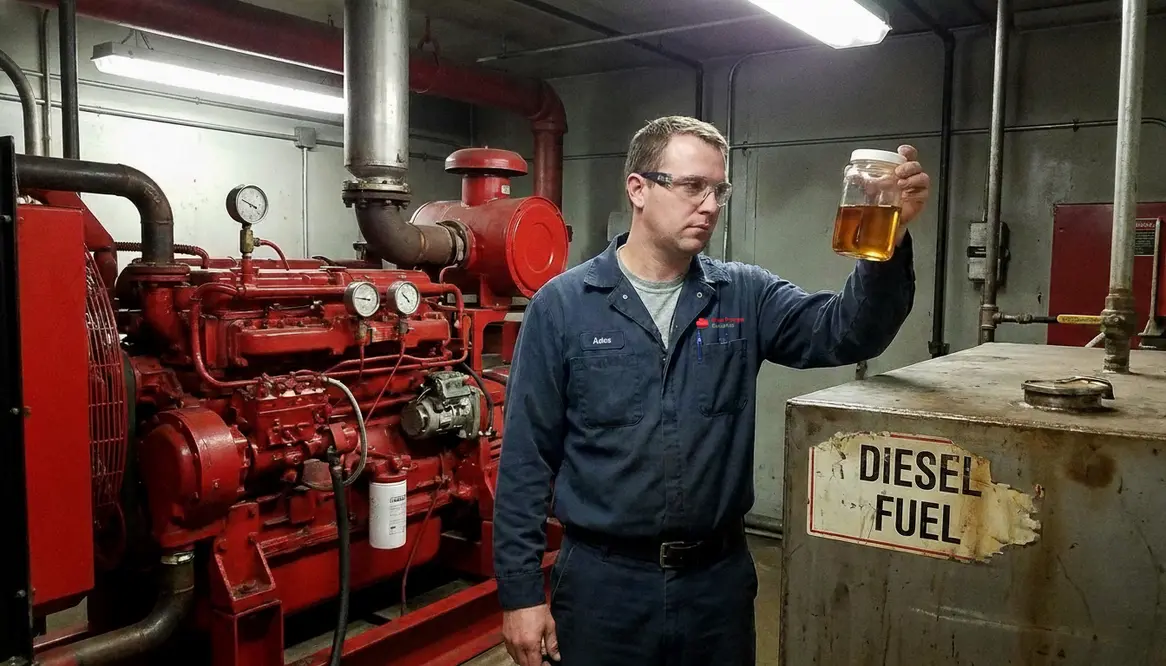
Check Diesel Fire Pump Fuel Condition Before Testing
When I step in to test a diesel fire pump, I never treat the fuel tank like background scenery. I start by checking the fuel because the pump can only do its job if the engine can start cleanly and run hard when it matters. If you want to know how to check diesel fire pump fuel condition, the answer begins with one simple truth: bad fuel can turn a serious test into a very expensive shrug. And in commercial and industrial buildings, that is the kind of drama nobody wants, not even in a Hollywood sequel.
Diesel fire pumps protect major properties, so I inspect the fuel before I press the starter. That habit saves time, protects the engine, and helps me catch issues before the test reveals them the loud way.
Why I check fuel before the first test
I check the fuel first because a diesel engine depends on clean, stable fuel to start fast and carry load. If the fuel has water, dirt, slime, or breakdown from age, the engine may stumble, smoke, or fail to hold speed. Then the test tells me less about the pump and more about the fuel problem hiding inside the tank. That is a bad trade.
Also, fuel problems often grow in silence. A tank can look fine from the outside while the inside collects condensation, rust, or microbial growth. So, I treat fuel inspection as part of the test prep, not an extra chore. It keeps the result honest.
What I look for in diesel fire pump fuel condition
I focus on a few clear signs when I inspect fuel condition. First, I check for water at the bottom of the tank or inside any sample I pull. Next, I look for cloudiness, dark color, or visible particles. Then I check for that sour smell that says the fuel has aged badly. Finally, I review the tank vent, cap, and fill area because dirt often sneaks in through the simplest place. Sneaky, yes. Sophisticated, no.
Here is the fast version of what I look for
| Check | Why it matters |
|---|---|
| Water in fuel | Can cause poor start, rust, and injector trouble |
| Cloudy fuel | Can show contamination or breakdown |
| Sludge or sediment | Can block filters and strain the engine |
| Fuel age | Old fuel can lose quality and burn poorly |
| Tank seals and vents | Can let in dust and moisture |
How fuel problems affect pump testing
Fuel problems change the whole test outcome. For example, water in the fuel can make the engine misfire or shut down under load. Likewise, dirty fuel can clog filters and reduce flow to the injectors. As a result, the pump may not reach the speed needed for a proper fire protection test. That means the system fails to prove what it should prove.
In commercial and industrial facilities, that matters a lot. A diesel fire pump serves critical building protection, so I need every test to reflect the real condition of the system. If I ignore fuel quality, I may miss a deeper issue or create one during the test. And nobody wants the fire pump version of a cliffhanger.
How I check diesel fire pump fuel condition in the field
When I perform a field check, I follow a steady process. I inspect the tank visually, then I take a sample if the setup allows it. After that, I look at the sample in good light. I want to see clear fuel, not haze, layers, or debris. I also check the water separator and drains, because they often tell the real story faster than the tank label ever could.
I also review service records. If the fuel has sat too long, I plan for treatment, polishing, or replacement before testing. In addition, I confirm that the fuel supply matches the pump duty needs. A healthy pump with weak fuel is like a marathon runner on a stale snack. Technically present. Practically useless.
Why fuel inspection supports fire pump reliability
Fuel inspection supports reliability because it reduces surprise failures. It also helps protect injectors, filters, lines, and the engine itself. Over time, that lowers repair cost and keeps the pump ready for an emergency. For large properties, that readiness is not a nice feature. It is a core safety duty.
When I inspect fuel before testing, I also support better maintenance planning. If I find a problem early, the team can act before the next inspection cycle. That makes the whole fire protection program smoother and safer. If you want the practical side of how to check diesel fire pump fuel condition, the goal stays the same: catch contamination and deterioration before the test exposes it.
For more support on system readiness, I often review trusted resources like los angeles fire pump service. I also keep an eye on broader building protection needs through commercial electrical service solutions at https://kordelectric.com/ and fire sprinkler service information at https://kordfire.com.au/australian-fire-sprinkler-services/.
Quick reminders for how to check diesel fire pump fuel condition
- Check for water, cloudiness, dark color, and visible particles before the test starts.
- Look at the water separator and drains because they often show the truth first.
- Review service records and fuel age so the test reflects the real condition, not yesterday’s guess.
FAQ
Conclusion
Before I test any diesel fire pump, I inspect the fuel because that step protects the engine, improves test accuracy, and keeps the whole system ready for a real emergency. If you manage a commercial or industrial building, do not let fuel quality become the weak link. Review the tank, sample the fuel, and act on problems early. If you are building a repeatable checklist for how to check diesel fire pump fuel condition, keep the process consistent, document what you see, and prioritize treatment or replacement when fuel shows contamination or breakdown. If you need help, schedule a professional inspection and keep your fire protection system ready when it counts.