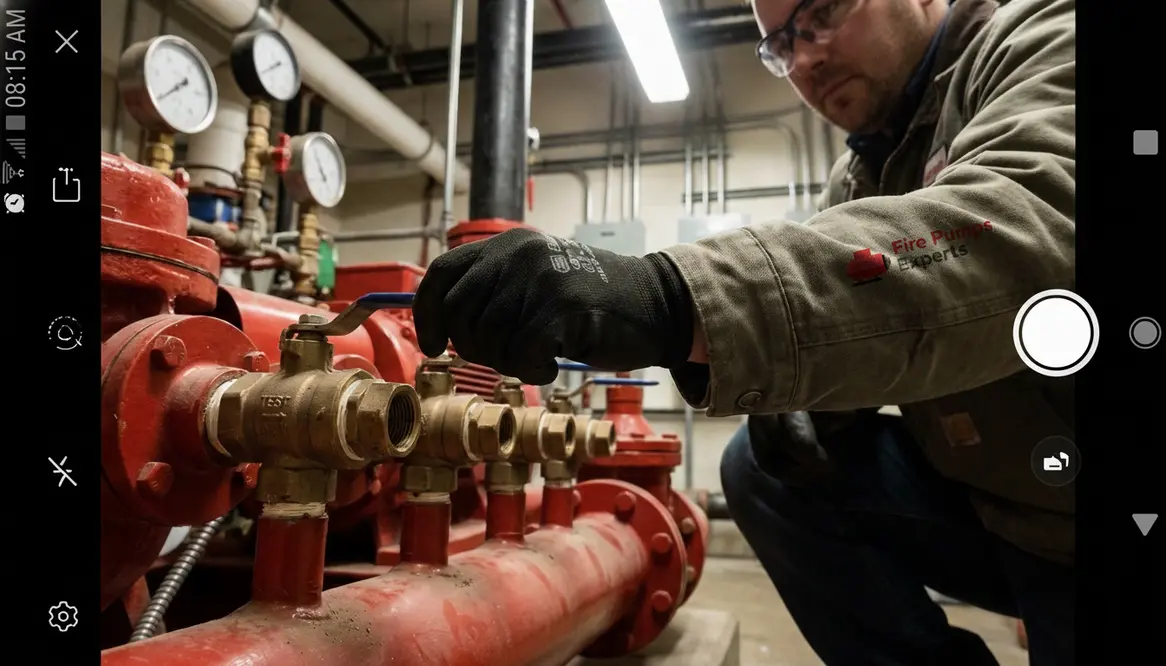
Fire Pump Test Header Valve Inspection Before Flow
When I walk up to a fire pump room, I do not rush the job. I look at the fire pump test header valve inspection first, because that small step can save a big headache later. If the valves look fine, flow testing can move ahead with less drama. If they do not, well, the system may be ready to audition for a disaster movie. For commercial buildings, industrial facilities, and major properties, this check matters because the pump has one job: move water when it counts.
That is why I treat valve inspection like the calm before the storm. It is not flashy, but it keeps the test honest, the system safe, and the results useful. In this article, I will break down why technicians inspect those valves before flow testing, what we look for, and how that step supports the health of a fire pump system.
What I look for before the test starts
Before I open the header and begin a fire pump flow test, I inspect the test header valves for signs of wear, leaks, corrosion, or blockage. I also check that the handles move cleanly and that the valves fully open and close. If a valve sticks, the test can give me the wrong flow reading. Worse, it can hide a problem that only shows up during an emergency. And nobody wants a surprise during a fire pump test, unless it is cake in the break room.
I also confirm that the valve labels match the system layout. In a large facility, that simple check can keep the crew from opening the wrong point and wasting time. Meanwhile, I verify that fittings and caps sit tight and that nothing blocks access. Good access helps me work faster and safer, especially in busy mechanical rooms where space feels tighter than a Marvel plot twist.
Why the fire pump test header valve inspection matters
The test header valves control the release of water during flow testing. Therefore, if they fail, the whole test loses value. A valve that does not open fully can restrict flow and make the pump look weak when it is not. On the other hand, a valve that leaks can cause pressure loss and mess with the numbers. That means the inspection protects both the equipment and the test data.
It also helps me spot issues before I put stress on the system. For example, if I find mineral buildup or corrosion, I can address it early. As a result, I reduce the chance of damage during testing. This matters even more in commercial and industrial properties, where the fire pump supports a larger risk load and often works with complex piping, tanks, and controllers.
How I check the system without wasting time
I follow a simple pattern. First, I look. Then, I feel for movement. After that, I confirm the valve position and inspect the surrounding parts. This approach keeps the inspection fast, but it still goes deep enough to catch trouble. In fact, a good fire pump test header valve inspection works best when I treat it like a full system review, not a box to tick before lunch.
Here is the basic flow I use
Valve inspection checklist
- I check for rust, leaks, and physical damage
- I confirm the valve opens and closes smoothly
- I look for capped outlets, loose fittings, or blocked access
- I verify the valve label and test header layout
- I make sure the area is safe for flow testing
When I find a problem, I document it right away. Then I decide whether the issue needs cleaning, repair, or replacement before the test moves forward. That keeps the test meaningful and avoids a rushed result that looks good on paper but fails in real life. And in this field, real life always has the final word.
What can go wrong if I skip this step
If I skip valve inspection, I risk false readings, wasted water, delays, and damage to the pump system. In some cases, a stuck valve can make the flow test incomplete. In others, a weak seal can create a leak that affects pressure and skews the results. Either way, the system does not get a clean bill of health, and that can create trouble during an audit or maintenance review.
Also, when a technician skips this step, they may miss early signs of failure. That is a bad trade. It is like leaving the lot in a car chase scene before checking if the engine even starts. Sure, it sounds bold. It also sounds expensive. For property owners and facility managers, the inspection helps protect uptime, compliance, and the long term condition of the fire protection system.
How this fits commercial fire pump service
In commercial and industrial settings, fire pump service must support larger systems and more demanding conditions. Because of that, I treat valve inspection as part of the full service picture. It works alongside pump checks, controller review, hose connections, and system pressure verification. If I need a broader service overview, I also look at trusted resources like los angeles fire pump service for related system guidance.
When the job includes a comprehensive test, the fire pump test header valve inspection stays at the center of the process. It is the difference between a flow test that tells you something useful and one that tells you what you hoped was true.
FAQ
Conclusion
If you manage a commercial or industrial property, do not treat valve inspection like a side note. It sets the tone for a clean, accurate flow test and helps protect the whole fire pump system. I always inspect the test header valves first because that step keeps the work honest and the results useful. If you want dependable performance and fewer surprises, schedule a full fire pump review and make valve inspection part of the plan today. And yes, keep the fire pump test header valve inspection in the routine, because the system deserves that kind of respect.