Fire Protection System Commissioning: Design and Testing
I have seen many buildings look ready long before they truly are. The paint is dry, the lights work, and the lobby smells like fresh coffee. Yet the fire protection system can still hide weak spots. That is why fire protection system commissioning matters so much for commercial and industrial facilities, especially major properties where a missed detail can become a costly problem fast.
In plain terms, commissioning confirms that every part of the system works together the way it should. I check the design, test the equipment, verify the controls, and make sure the final result matches the safety plan. It is not glamour work, but then again, neither is a smoke detector until the day it saves the building. Let me walk through what I include in the process and why each step matters.
What Is Included in Fire Protection System Commissioning?
Why I Start With the Design and Documents
I always begin with the paperwork because a system can only perform as well as its plan. First, I review the drawings, specifications, shop drawings, and code requirements. Then I compare the installed system against the approved design. This step helps me catch missing parts, wrong layouts, or equipment that does not fit the building use.
I also confirm that the system matches the property type. For a warehouse, manufacturing plant, or large office tower, the risks change. Therefore, I look at occupancy, water demand, suppression needs, alarm interfaces, and any special hazards. If the design and the building do not line up, the rest of the testing becomes a fancy exercise in disappointment.
What I Test During the Fire Protection System Commissioning Process
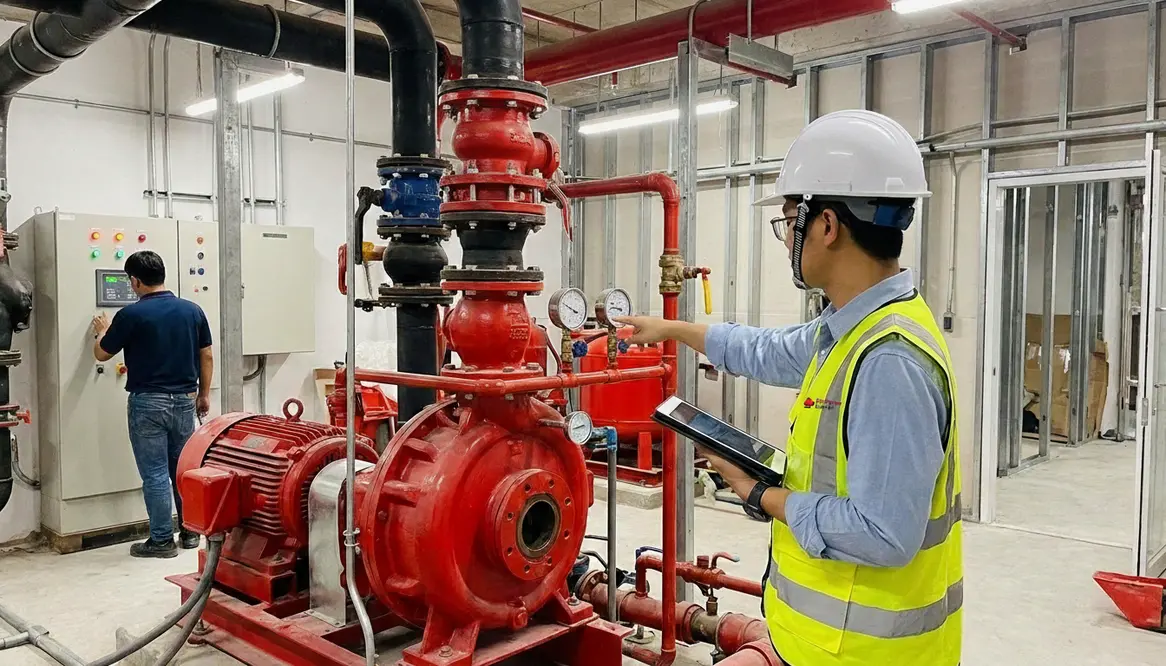
This is where the real work begins. I test each system on its own, and then I test how the systems work together. That includes fire pumps, hydrants, sprinkler valves, alarms, detectors, tamper switches, flow switches, and any related control panels. I also check power sources, backup systems, and signal transmission to the monitoring station if the site uses one.
Here is how I break that work down:
- Water supply checks: I verify that the supply can support the required flow and pressure.
- Fire pump tests: I confirm start up, run performance, alarms, and transfer behavior.
- Sprinkler system checks: I inspect valves, gauges, heads, and water delivery signals.
- Alarm and detection tests: I make sure alerts activate and notify the right people.
- Control integration: I check that elevators, HVAC, doors, and shutdowns respond properly.
For deeper technical context, I often point teams to this AS 2419 fire pump and hydrant performance guide. It helps explain the kind of performance checks that matter when testing pump and hydrant systems in serious commercial settings.
How I Verify Pumps, Hydrants, and Water Performance
Water delivery sits at the heart of many fire systems, so I treat it like the lead actor in a big movie. Everything else supports it. I measure pressure, flow, and response time. I also confirm that pumps start when they should, keep steady output, and recover properly after test runs.
Then I look at hydrants, hose reels, and the piping network. I want to know that the water reaches the right places without delay or weak output. If the building depends on fire pumps, I also review fuel supply, jockey pump action, controller settings, and emergency power. This step is vital for large sites, because a water issue in a small system is annoying, but a water issue in a major facility is a headline nobody wants.
What I Check for Compliance and Safety Sign Off
Commissioning is not just a test. It is also a proof process. I compare the results with the required code, design goals, and owner needs. If I find a fault, I document it and track it until someone fixes it. That may involve adjusting valves, replacing parts, reprogramming controls, or retesting a section of the system.
I also prepare the closeout records. These usually include test results, checklists, punch lists, as built updates, and operation notes. In addition, I confirm that the facility team understands basic use, alarm response, and maintenance needs. A system no one knows how to run is like a sports car with no keys. Nice to look at, very useless in an emergency.
How I Hand Over a Ready System to the Property Team
What I provide
Final test reports, operating notes, defect lists, and sign off records.
What the site team gets
A clear system they can trust, plus basic guidance for daily care and future checks.
I finish by walking the property team through the live system. I explain what passed, what needed correction, and what still needs routine inspection. I also stress maintenance because commissioning proves the system works today, while maintenance helps it keep working tomorrow. That is the long game, and it matters.
FAQ
Need expert support for a major commercial or industrial property? I recommend reviewing los angeles fire pump services if your site depends on reliable pump performance and verified fire protection readiness. When the system matters this much, there is no room for guesswork.
Conclusion
Fire protection system commissioning gives me the confidence that a building’s safety systems will do their job when the alarm sounds. It confirms design, performance, and integration before risk turns real. If you manage a commercial or industrial property, do not leave this to chance. I suggest making commissioning part of your project plan, your handover checklist, and your long term safety strategy. Your building deserves that level of care, and so do the people inside it.